

In China, Tesla could win electric vehicle price battle – but lose the war
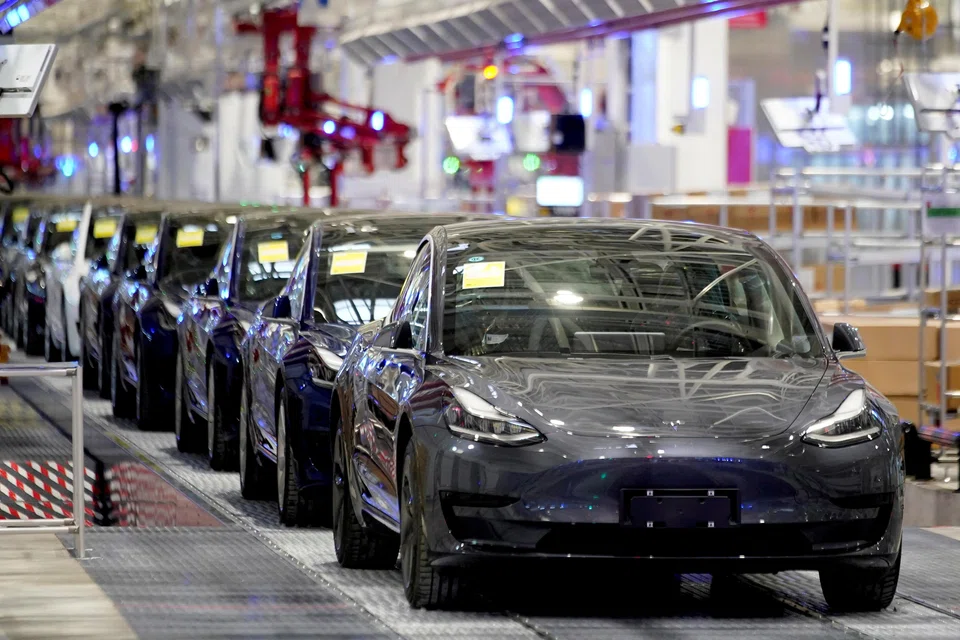
SLASHED prices have given Tesla’s China sales a pop, but analysts, and even fans, warn that the US carmaker needs to up its long-term game to avoid choking on the dust of fast-moving rivals in the world’s biggest electric-vehicle (EV) market.
Most immediately, Tesla’s January price cuts drove deliveries of its China-made vehicles up 18 per cent from December. The group’s thick profit margins have put it in a position to take a price war to competitors in China and beyond, analysts say.
But they also say Tesla has lagged competitors in China in introducing new models, improving navigation systems, and adding luxe interior touches or white-glove customer service to serve the developing range of consumer preferences for EVs.
“Tesla’s facing a serious problem of a very limited product mix,” said Cui Dongshu, secretary-general of China Passenger Car Association (CPCA). “Its slowness to respond to Chinese consumers’ preferences has led to a very passive positioning for Tesla, which relies on few means, such as price cuts, to stay competitive.”
Even Tesla chief executive Elon Musk himself has conceded that China is where his firm could face its toughest competition.
Tesla did not respond to Reuters’ request for comment on its China business. Grace Tao, Tesla’s vice-president in charge of external communications in China, said previously that the price cuts in China reflected engineering innovation, and answered Beijing’s call to encourage economic development and consumption.
China’s Association of Automobile Manufacturers expects sales of EVs and plug-in hybrids to surge by 35 per cent in 2023 to nine million vehicles – nearly a third of China’s total new vehicle sales.
While Tesla has increased sales in China, its second-largest market, it has also lost market share. From 15 per cent in 2020, its share of the China EV market fell by a third to just 10 per cent in 2022, as indicated by data from the CPCA.
Tesla offers two models in China, the Model 3 sedan and the Model Y crossover. That keep-it-simple approach has driven scale and driven down costs.
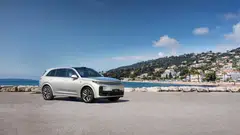
After the latest price cuts, the Model 3 starts at about US$34,000 and the Model Y at US$38,000. But Chinese car shoppers, who were back out in showrooms this year after the end of China’s tough Covid-19 curbs, are being courted by competitors offering a broad range of alternatives.
BYD, which overtook Tesla by global sales volume last year and has a market value well over US$100 billion, offers more than 60 versions of EV and plug-in hybrid cars. Another much smaller but ambitious peer, Nio, has gone from two models to six over the same period, and plans to launch five more this year.
“The ageing product line is a real problem for Tesla,” said Yale Zhang, managing director at Shanghai-based consultancy Automotive Foresight. “Once BYD and other EV startups follow to lower prices, the effect of Tesla’s price cuts could vanish in the blink of an eye.”
Tesla’s self-driving software and navigation systems, touted by chief executive officer Musk as competitive strengths, have also come under criticism from customers about slow updates and errors on Chinese roads. Luxury EV buyers who employ drivers are less interested in paying more for the software.
Chang Yan, a 34-year-old Chinese car blogger who bought a Model 3 in 2018, said that his car still asks him to make U-turns on strictly guarded Chang’an Avenue near Tiananmen Square, where such moves are banned.
“This is a sharp contrast with Nio, (EV brands) Xpeng and Li Auto, whose navigation aids have been working almost perfectly,” said Chang, who also drives a Nio sedan.
Tesla has been considering a marketing shift in China to focus more on energy efficiency and practical features, and less on cutting-edge functionality, a source said.
It has also been studying how its Chinese rivals, led by BYD, win over customers in showrooms, especially in smaller cities, the source said, on condition of anonymity.
One takeaway – BYD ensures that bottles of drinking water offered to showroom visitors are warm in winter, in a nod to local preferences.
Tesla, which early this year promoted its China chief Tom Zhu to head of global sales and production, is also giving its China sales team a more direct line to product development engineers to provide local feedback, the source said.
To be sure, the Tesla design aesthetic, with sparse interiors and synthetic leather, still appeals to many.
Cui Yang, a 31-year-old doctor shopping for a Tesla in Beijing after the recent price cut, said that he was won over by “the minimalist interior style and tech feeling”.
On the flipside, Chinese brands such as Nio and Zeekr tout their buttery-smooth Napa leather and traditional luxury features, such as seats with massage functions aimed as much at the passenger’s experience as the driver’s.
Some EV makers expect the premium segment of the market to grow fast in coming years.
Li Auto is targeting EV buyers looking for family-oriented cars, who expect to pay prices starting at about US$44,000 – higher than Tesla’s current pricing. The group expects this sales category to represent 10 million vehicles in market-wide sales by 2025.
Then there is a “buy local” challenge for Tesla. This includes Chinese consumers such as 50-year-old Lin Wenwei, who wants to support a Chinese brand – even though Tesla makes the EVs it sells in China.
“I have always been more inclined to buy a domestic EV brand for the national industry,” he said while trying out a Seal sedan for his son in a BYD dealership store in suburban Shanghai – after getting a BYD Dolphin hatchback for himself. REUTERS
Decoding Asia newsletter: your guide to navigating Asia in a new global order. Sign up here to get Decoding Asia newsletter. Delivered to your inbox. Free.
Share with us your feedback on BT's products and services
TRENDING NOW

Fed hike throws Singapore banks a margin lifeline; UOB most likely to feel impact

He built the Vingroup empire. Now South-east Asia’s richest man is handing some key roles to his sons

Real-estate veteran Desmond Sim quits from CEO roles at Realion, ETC
Chagee, Mixue and Luckin won the market. Sustaining their edge is the harder part

