

China’s CNOOC posts 11.3% fall in H1 profit
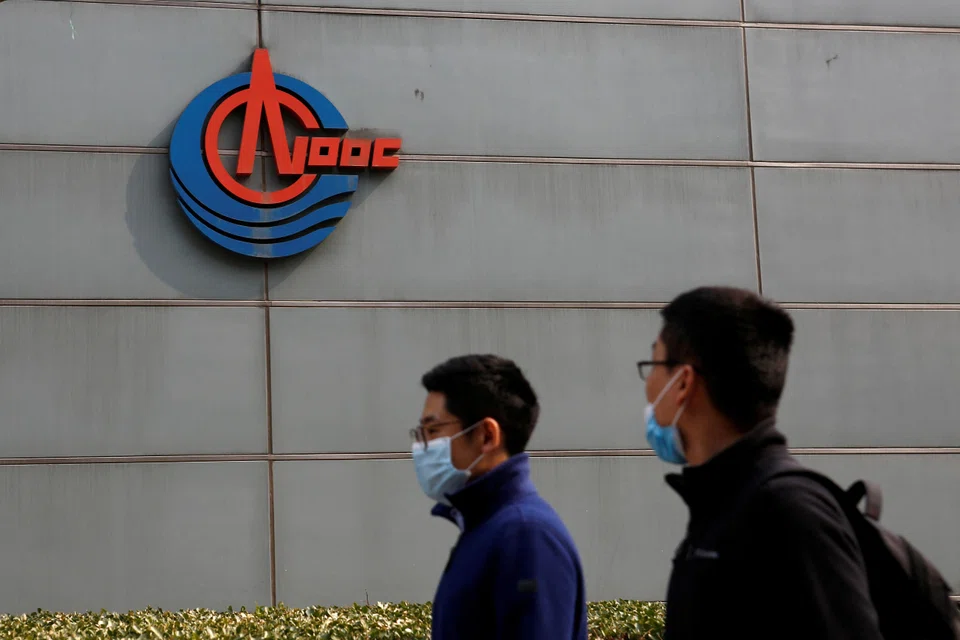
CHINESE national oil and gas company CNOOC on Thursday (Aug 17) posted a 11.3 per cent fall in first-half profit as lower realised oil prices squeezed margins despite higher output.
Net profit fell to 63.8 billion yuan (S$11.9 billion) from 71.9 billion a year earlier, CNOOC said in a filing to the Hong Kong Stock Exchange.
Global oil prices have fallen significantly since last year, having spiked in the immediate aftermath of Russia’s invasion of Ukraine in February 2022.
The company’s reported realised oil price for the period was down 29 per cent on last year,a concurrent filing with the Shanghai Stock Exchange showed.
The listed arm of state-backed CNOOC Group reported a 5.1 per cent year-on-year fall in revenue to 192.1 billion yuan.
An upstream player, CNOOC’s total net production rose 8.9 per cent to 331.8 million barrels of oil equivalent (boe).
Domestic output increased by 6.6 per cent while output from international operations in countries such as Indonesia, Brazil and Guyana increased by 14.4 per cent.
Domestic production accounted for 69.7 per cent of total output, down from last year.
The company has set a production target of a record 650 million to 660 million boe in 2023, as part of its medium-term goal of a 6 per cent increase in average annual production by 2025.

Capex stood at 56.5 billion yuan, up 36 per cent from last year.
In March the company said it planned to increase capex to 100-110 billion yuan for 2023 from 100 billion yuan last year as it targets further development of nine projects and a reserve replacement ratio of greater than 130 per cent. REUTERS
Decoding Asia newsletter: your guide to navigating Asia in a new global order. Sign up here to get Decoding Asia newsletter. Delivered to your inbox. Free.
Share with us your feedback on BT's products and services
TRENDING NOW

He built the Vingroup empire. Now South-east Asia’s richest man is handing some key roles to his sons

Floods compound Philippine growth woes from public-works scandal

Tokyo reverses baby bust with AI matchmaking and generous subsidies

More interest in ETFs, low-cost funds but Singapore still lacks pressure to further lower fund fees

