China’s Netflix revives Hong Kong listing plan after curbing losses
 Add BT as a preferred source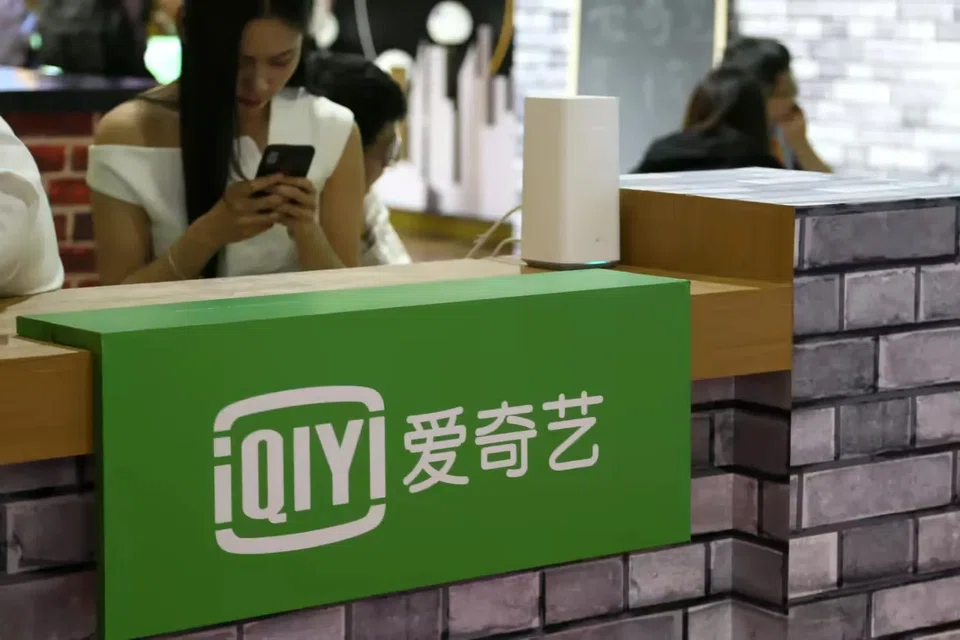
IQIYI is again exploring a second listing in Hong Kong just as China’s answer to Netflix looks on track to reverse years of losses.
The US-listed Baidu subsidiary is keen to bring new investors on board as it finances more original programming and steps up the use of artificial intelligence (AI) to draw viewers from rivals such as Tencent Holdings and Alibaba Group Holding’s Youku, chief executive officer Gong Yu said.
Like its rivals, iQiyi spent billions in past years on acquiring content and developing original series – following Netflix’s well-established playbook – a model intended to fend off upstarts such as ByteDance. But that approach also drove players into the red and triggered a price war that proved unsustainable. The company has since focused on boosting subscriptions with more selective, top-notch content.
Gong also credits cost discipline – for instance on lower-tier programming – for turning things around and buoying cash flow. IQiyi – which has lost nearly US$5 billion on a net income basis since 2018 – is projected to report its first annual profit in six years in 2023. He said he was confident iQiyi will deliver double-digit topline growth this year in line with analysts’ estimates, as China’s post-Covid economy stabilises.
“Profit is of course our No 1 target, but that doesn’t mean we will give up our market share,” Gong told Bloomberg Television days after the company unveiled better-than-expected earnings. “Investors have yet to show full confidence in Chinese tech stocks or realise their long-term growth values. They are more short-term focused.”
IQiyi had picked banks for a second Hong Kong listing as far back as 2021, during Beijing’s crackdown. The company is now working on “technical details” for a Hong Kong share float, Gong said, without elaborating on a timeframe.
It could be challenging to convince some investors. IQiyi has lost some 70 per cent of its value since its 2018 US IPO, a casualty of a tech selloff triggered by Beijing’s sweeping 2020 and 2021 crackdown on the Internet sector. That crackdown also exacerbated the long-running censorship that plagues all content platforms in China, thanks to a ruling Party that brooks no dissent online.
What’s in Gong’s favour is anticipation of a comeback in consumer and corporate spending now that China’s ended its Covid Zero regime, as well as a track record of sustaining hard-earned gains. The Beijing outfit had delivered its first quarterly profit in the first months of 2022 and has since stayed in the black on an operating basis.
“We have positive cash flows, so we don’t actually need to raise more money,” Gong said.


The Chinese market is currently split between three large players: iQiyi, Tencent and Alibaba’s Youku.
IQiyi’s online advertising sales climbed 5 per cent for the January-March period, after having contracted for six straight quarters during a historic trough for China’s online entertainment sector. It still takes time for big brands to loosen their belt for marketing, Gong said, as consumer spending slowly recovers in the world’s No 2 economy.
Longer run, iQiyi is betting its original series will make subscribers stay. Internally, iQiyi ranked about 40 per cent of its 2022 content in the top half of a four-tier rating system, Gong said, and this year the company wants to improve that success rate to more than half.
Aiding that goal are ChatGPT-style AI tools, which Gong says iQiyi creatives have started to use in content production.
“It can’t replace a scriptwriter, but can help producers and directors lower cost and improve efficiency,” he said. “Our industry will have a clearer idea where it’s heading with generative AI in the next two to three years.” BLOOMBERG
Decoding Asia newsletter: your guide to navigating Asia in a new global order. Sign up here to get Decoding Asia newsletter. Delivered to your inbox. Free.
Share with us your feedback on BT's products and services