China’s rare earth stocks plunge as Tesla seeks alternatives

China accounts for almost 60 per cent of global output of rare earth metals, used in electric vehicles
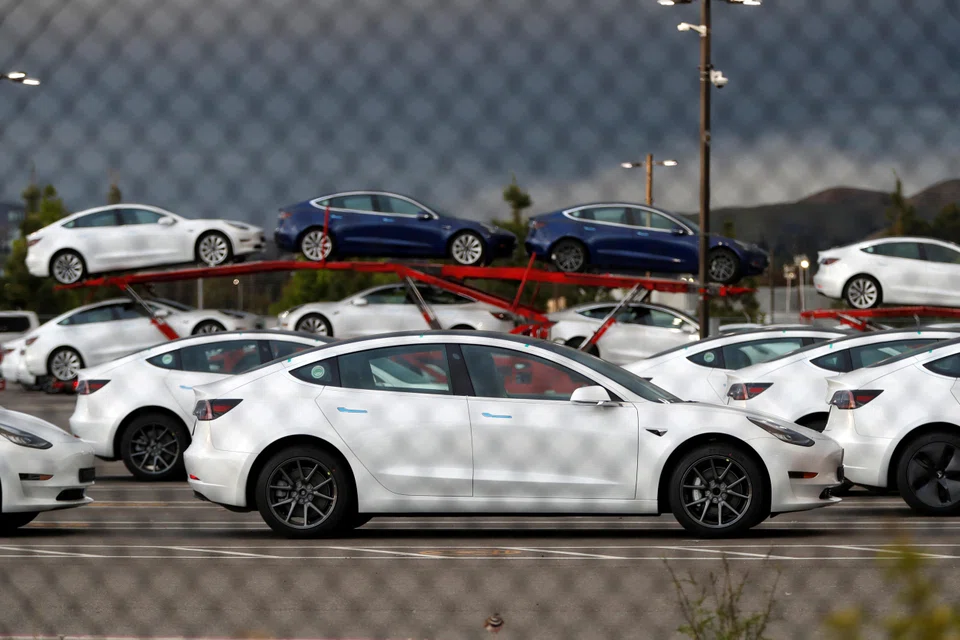
    • New electric vehicles at Tesla's primary vehicle factory in California. The EV maker said it intends to cut its use of rare earth materials.
    • New electric vehicles at Tesla's primary vehicle factory in California. The EV maker said it intends to cut its use of rare earth materials. PHOTO: REUTERS
    Published Sat, Mar 4, 2023 · 05:50 AM

    SHARES of China’s rare earth suppliers plunged Thursday (Mar 2) after Tesla said it will reduce its use of the minerals in future electric vehicles (EVs) to control costs.

    The leading electric-car maker is designing a next-generation powertrain that will use a permanent magnet motor that does not rely on rare earth materials, said Colin Campbell, Tesla vice-president for powertrain engineering, at an investor meeting.

    The change reflects Tesla’s efforts to control material costs and reduce its involvement in the health and environmental risks of mining the minerals, Campbell said.

    The comment swiftly spurred sell-offs of leading rare earth producers in China. The country is the world’s largest exporter of rare earth minerals, responsible for almost 60 per cent of global output, according to the United States Geological Survey.

    Rare earths are a group of elements that are essential for permanent magnets used in wind turbines and EV motors. Demand for the minerals is rising quickly amid global efforts for energy transition.

    China Northern Rare Earth (Group) High-Tech, China’s largest rare earth processor, slumped 4.3 per cent in Shanghai. Inner Mongolia Baotou Steel Union, the world’s largest rare earth mining company, closed down 1.5 per cent. JL Mag Rare-Earth Corporation and Jiangsu Huahong Technology Stock Corporation shares lost more than 7 per cent.

    New-energy vehicles (NEVs) are the main driving force for rare earths demand, Haitong International said in a research note. NEVs include electric-gasoline hybrids and purely battery-powered autos.

    High-performance neodymium-iron-boron magnets are mainly used in the engine and auxiliary motors of NEVs, each of which consumes about 3 kilograms of such minerals, compared with only 0.3 kg to 0.4 kg for traditional vehicles, according to Haitong.

    Research firm EV Tank estimated that global sales of NEVs will exceed 12 million units by 2025. That means global demand for rare earth magnetic materials for such vehicles will reach 36,000 tons in 2025.

    To address investor concerns, JL Mag, a key Tesla supplier, said that it will take a long time to develop drive-train technology without rare earths and to put it into industrial use.

    Some analysts expressed caution over the feasibility of substitutes for the minerals. Advanced technologies in the industry can only lower the use of heavy rare earths such as dysprosium and terbium in permanent magnet motors, and cannot completely replace rare earths, Haitong said in the research note.

    “It would be a big blow to the rare earth industry if there is a complete substitute to rare earth based on current technology,” said Yang Jiawen, an analyst at researcher Shanghai Metals Market. “Without Tesla disclosing any information on possible substitutes, I am cautious on the news.”

    Campbell said Tesla has reduced the use of heavy rare earths in its vehicles by 25 per cent since 2017, which has helped the company reduce production costs.

    Tesla also aims to cut the use of silicon carbide – a key semiconductor material – by 75 per cent in its next-generation transistor package, according to Campbell. CAIXIN GLOBAL