

Chinese AI chipmakers poised to gain from Beijing’s tech push
The country’s firms raise orders after Beijing mandates local tech firms find alternatives to Nvidia products
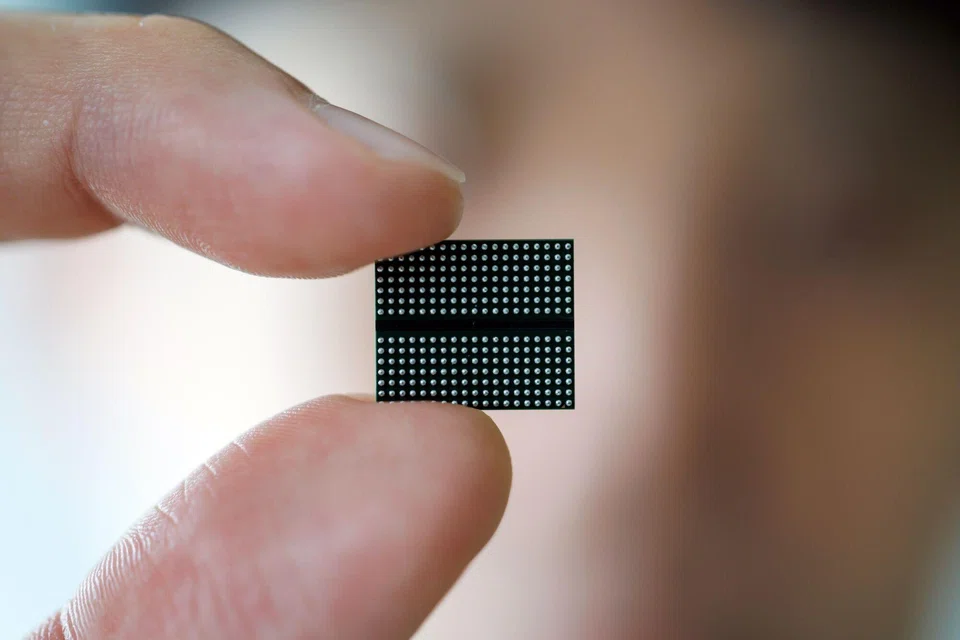
CHINA’S artificial intelligence chip designers are expecting bumper sales this earnings season off the back of Beijing’s push to get local firms to use homegrown components and reduce their reliance on American tech.
Cambricon Technologies is projected to post surging revenue for the first half of 2026 with up-and-coming Shanghai Iluvatar CoreX Semiconductor expected to see sales triple over the same period.
Beijing-based Moore Threads Technology said in July it expected revenue for the first six months of 2026 to grow as much as 149 per cent.
Chinese firms are ramping up orders after Beijing ordered local tech firms to find alternatives to Nvidia’s cutting-edge products.
Washington has for years restricted China’s access to advanced chips, but it recently cleared sales of Nvidia’s H200, the most powerful AI processors ever allowed by the US to be sold in the country.
However, US officials said last month that the actual number of Nvidia processors shipped to China since then has been “trivial”.
Privately-held Huawei Technologies and Alibaba Group’s chip unit T-Head are also expected to boost their domestic market shares at a time when Nvidia and US chipmaker Advanced Micro Devices are virtually locked out of the market.
Huawei is sharply ramping up production of its most advanced AI chips in 2026, aiming to produce about 600,000 of its marquee 910C Ascend chips, Bloomberg News reported in 2025.
As a result, Chinese companies expect to spend 46 per cent of their AI accelerator budget in the next 12 months to acquire locally-made chips, compared to 30 per cent now, according to a survey of Chinese technology executives by Bloomberg Intelligence in June.

AI accelerators produced by Cambricon and Hygon Information Technology were being evaluated by a large pool of respondents to the survey.
In the longer term, Chinese chipmakers are set to benefit from Beijing’s ambitious data centre buildout that aims to spend 2 trillion yuan (US$295 billion) over the next five years.
The massive project will rely on local suppliers including Huawei for at least 80 per cent of technology such as AI chips. That would push China’s self-sufficiency level in AI chips to 70 per cent at the end of this decade, up from 42 per cent in 2025, according to estimates from Morgan Stanley.
Nvidia boss Jensen Huang has consistently advocated for the use of his firm’s chips in China to ensure America’s lead in cutting-edge technology.
His arguments alerted Beijing to the prospect of over-relying on foreign technology and creating vulnerabilities in the nation’s quest for global AI leadership, according to Morningstar analyst Phelix Lee.
“Most people would privately agree that having access to Nvidia would always be ideal, but in the absence of that, the trend I’m seeing is more Chinese chips being used,” Lee said.
China-made chips, when it comes to single-unit performance, are still years behind those built by Nvidia.
It’s partly the result of a years-long US-led campaign that restricts the most advanced chipmaking machines including the state-of-the-art extreme ultraviolet lithography systems made by Dutch company from flowing to China, the kind of gear that industry leader Taiwan Semiconductor Manufacturing uses to make the world’s most powerful AI accelerators.
As customers start to shift from using chips for training AI models to integrating them into their businesses, Chinese chipmakers are winning orders from their ability to generate tokens at competitive pricing, Morgan Stanley analysts including Charlie Chan said in a research note at the end of July.
“Purchasing decisions are increasingly driven by deployment economics rather than absolute peak silicon performance,” Chan wrote.
Chinese chipmakers also have concluded that they can compensate for a lack of computing power in a single chip with scale.
At China’s premier AI summit held in Shanghai in July, Chinese chipmakers from Huawei to Moore Threads and MetaX Integrated Circuits Shanghai showcased their server racks capable of integrating tens of thousands chips.
“What they are trying to reassure is that we have enough chips and we have the infrastructure to link all these chips together so we can outnumber you,” Morningstar’s Lee said.
“It also demonstrates how China, given enough time, will eventually narrow the gap to much narrower levels than today.” BLOOMBERG
Decoding Asia newsletter: your guide to navigating Asia in a new global order. Sign up here to get Decoding Asia newsletter. Delivered to your inbox. Free.
Share with us your feedback on BT's products and services
TRENDING NOW

Government to bring forward raising of retirement age, give employers more financial support to create flexi-load jobs

If Europe goes to war, the fallout will be felt in East Asia

Indonesia stocks suffer worst plunge in nearly 30 years as MSCI proposes standalone status

Vietnam’s northern provinces, not Hanoi or Ho Chi Minh City, are powering near 10% GDP growth

