Chinese chip giant weighs IPOs, land sales to slash debt burden
 Add BT as a preferred source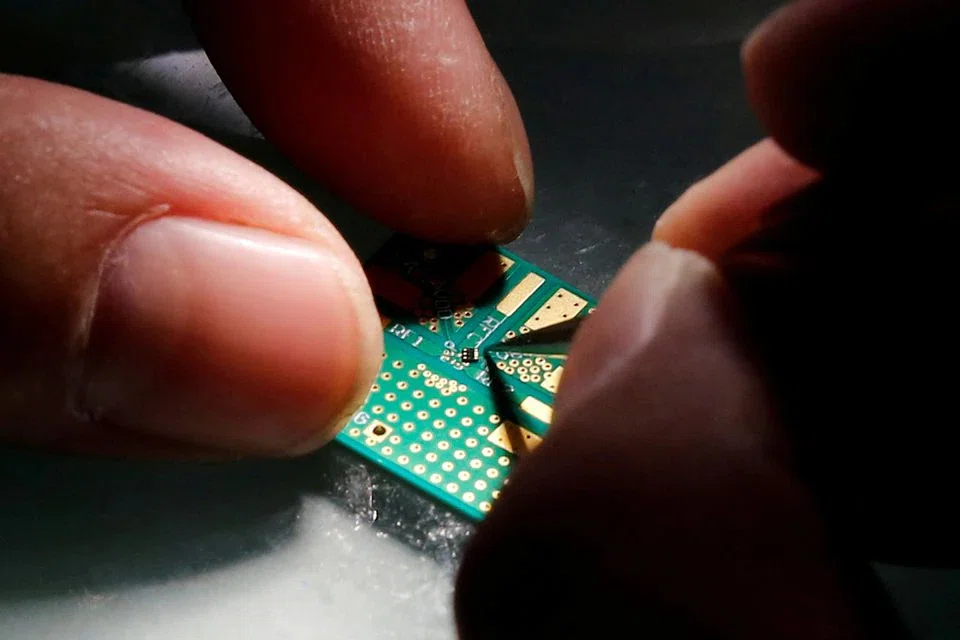
DeeperDive is a beta AI feature. Refer to full articles for the facts.
TSINGHUA Unigroup’s new owners are exploring ways to stave off creditors after completing a US$9 billion takeover, including industrial property sales and floating fast-growing business units such as a local rival to Qualcomm.
Executives at Unigroup have discussed initial public offerings (IPOs) for three subsidiaries including Unisoc, which develops 5G chips for smartphones and drones, a person familiar with the matter said. That could lead to one of the more prominent debuts in China’s semiconductor industry, where advanced homegrown chips are scarce. Other candidates include cloud arm Unicloud, the person said, asking to remain anonymous discussing private deliberations.
Unigroup, until recently affiliated with the prestigious university linked to Xi Jinping, once helped lead China’s efforts to build a world-class semiconductor sector but is now struggling after years of massive spending, including on building domestic giant Yangtze Memory Technologies. In 2022, Unigroup endured a contentious restructuring — which former chairman Zhao Weiguo fought against — before JAC Capital led a consortium that acquired the embattled firm and sold off Yangtze, the nation’s biggest maker of memory chips for servers, PCs and mobile devices.
The discussions are in their early stages and there’s no guarantee Unigroup will eventually go ahead with public market floats. But the company needs to raise cash to bring its debt-to-equity ratio below a target of 50 per cent within two years, the person said. While still preliminary, executives haven’t ruled out an overseas listing eventually, the person added. Unigroup may also decide to milk more profit from insurers, after-school tutoring services and real estate companies that it controls, the person said.
Unigroup representatives didn’t respond to an email seeking comment.
Unigroup, like a broader Chinese chip sector now grappling with escalating US technology export sanctions, is at a crossroads.
Navigate Asia in
a new global order
Get the insights delivered to your inbox.
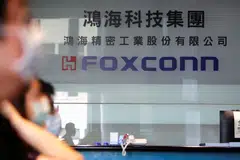
Having hived off Yangtze Memory — once the crown jewel of its operations — the company and its new owners haven’t divulged their longer-term plans to regain its footing in the chip industry. An arm of Taiwan’s Foxconn Technology Group — the world’s biggest assembler of iPhones — took a small stake only to be forced by the island’s government to unwind it because of national security concerns.
Adding to the uncertainty, Zhao was implicated last year in a wide-ranging probe into corruption in the Chinese chip industry and the fund that spearheads many of the government’s highest-profile investments into its players. At that point, China’s top leadership had grown increasingly frustrated with a years-long failure to develop semiconductors that can replace US circuitry — an embarrassment capped by the US$9 billion rescue of Unigroup.
For years, China was the world’s biggest spender on chip incentives, a scale unmatched from Washington to Tokyo. Now, the effort to combat Covid and deal with the threat of a global recession is depleting state coffers and forcing Beijing to rethink that controversial approach. Policy-makers are searching for other ways to help homegrown chip firms.
Turning Unigroup around would go a long way towards restoring confidence in the ability of local firms to succeed in chipmaking. Unigroup, once at the forefront of the industry alongside peers such as Semiconductor Manufacturing International, aims to first tackle its debt load before setting longer-term plans, the person said.
In 2022, Unigroup’s new chairman, Li Bin, said the company intended to eventually expand beyond chips and into sectors like genetics and artificial intelligence.
“History has proven that all scientific development and national prosperity depends, among other things, on realising where one is ignorant,” Li wrote in a memo to his staff. “And then it’s the ability to remain curious, endless explore and learn, and seek progress.” BLOOMBERG
Decoding Asia newsletter: your guide to navigating Asia in a new global order. Sign up here to get Decoding Asia newsletter. Delivered to your inbox. Free.
Share with us your feedback on BT's products and services