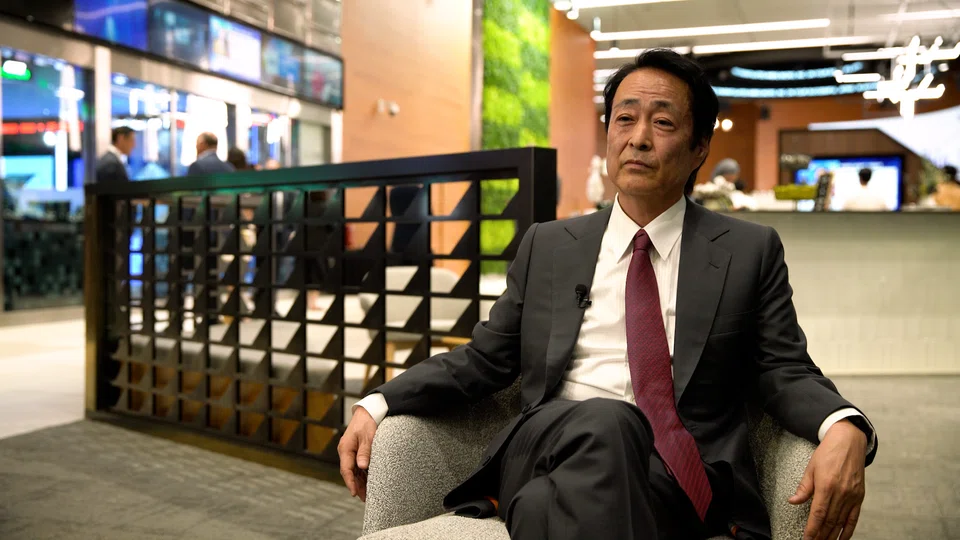
Chip designer Ambiq Micro’s secondary listing on SGX a ‘reflection of commitment’: CEO
The company is embarking on a multi-year R&D programme based in Singapore for its Spot platform

[SINGAPORE] For chip designer Ambiq Micro, doing a secondary listing on the Singapore Exchange (SGX) is part of its pledge to being a global company.
“So many companies claim to be global, but they are often US-centric,” Ambiq CEO Fumihide Esaka told The Business Times. The secondary listing, he added, is a “reflection of commitment” to Singapore and the Asia-Pacific region.
Ambiq is currently listed on the New York Stock Exchange, having raised US$96 million in its July 2025 initial public offering.
Esaka said the secondary listing in Singapore will serve investors from Asia who have asked for easier access to invest in the company.
South-east Asian investors’ interest in technology is “growing”, the CEO noted, adding that he believes the real interest lies in artificial intelligence and edge AI.
Ambiq designs chips based on its sub-threshold power optimised technology (Spot) platform, which offers more power efficiency for AI use directly on devices or edge AI, giving better battery performance.
Its chips can be found in products such as smart watches, hearing aids and fitness trackers.
Bringing down the power requirement allows customers to add more AI functionality to their products. “AI requires energy, and edge AI products which are battery-powered products can have meaningful function with meaningful battery life, that’s what Ambiq provides,” said Esaka.
Investors in Ambiq include Singapore-based EDBI, now an arm of SG Growth Capital, and August Global Partners.
The company opened its Asia-Pacific headquarters in Singapore in 2021; it opened an R&D centre here in 2025 to support its global product development.
Esaka said that being in Singapore has allowed Ambiq to tap the talent and cultural mix to operate not only in the Asia-Pacific, but also around the world.
“Our R&D centre here in Singapore and the engineering team is a key part of the global R&D engineering team,” he added. “We believe that we will invest in that, so you will see the expansion of our team here in Singapore and Asia.”
Ambiq currently has more than 30 employees in Singapore; Esaka declined to disclose any headcount targets for the expansion.
The company is embarking on a multi-year R&D programme based in Singapore for its Spot platform, supported by the Economic Development Board.
Being in Singapore has also allowed Ambiq to tap the intellectual property (IP) protections offered in the Republic. Esaka said the company has confidence that its IP will be kept secure here without fear of it being leaked.
List first, raise later
Ambiq’s secondary listing on SGX is somewhat different from others, as the company did not issue new shares or allocate existing shares to be sold.
Doing the listing first will give the company the ability to pick the right timing for a capital raise, said Esaka. “If I did a capital raise today, I must say that it might not be the right timing.”
Singapore is one of the places where Ambiq will look to raise capital, he added, noting that the company will be investing in its R&D and engineering capability here.
For now, Ambiq is sufficiently capitalised, having netted about US$179.4 million in a capital raise this July. Despite concerns about slowing capital expenditure spending in AI, Esaka said that Ambiq’s customers show no signs of easing off.
Instead, their requirements are growing, with demands for new product capabilities. These, Esaka said, will eventually lead to a capital raise to provide more AI functionality to customers’ devices.
Ambiq’s most recent results for the first quarter of 2026 showed net sales growing 59.3 per cent year on year to US$25.1 million, from US$15.7 million.
Losses also grew, to US$10.2 million in Q1 2026 from US$8.3 million a year earlier.
The outlook for Ambiq’s industry remains bright, Esaka said, with the AI and edge AI market growing faster than expected. The total addressable market (TAM) number that Ambiq saw in January has been surpassed, he added.
“TAM is growing much faster than anybody has expected, so you will see that AI adoption will have this strong growth for years to come.”
Geopolitical tensions and the Middle East conflict have had minimal impact on Ambiq. Esaka said that moving forward, execution will be the company’s biggest challenge and focus.
“Our requirements for product development are accelerating, our customer is asking us to develop a product faster than we originally committed,” he said. “So definitely, we need to staff up our engineering, software and AI teams; delivering our commitment is our focus.”
TRENDING NOW
MAS allocates S$1.45 billion to five asset managers in third EQDP batch: Chee Hong Tat
UOB found ‘grossly negligent’ over Stamford Land rights issue advice, to pay S$1.9 million
East Coast Road, Serangoon North View private-housing sites launched for sale
‘My grandfather’s legacy’: Sherman Kwek lays out three-year plan for CDL to drive returns