CICT leans on ‘bold acquisitions’ and asset recycling to drive growth
Manager says it has not shied away from bold moves to upgrade portfolio amid AGM questions on Paragon’s S$3.9 billion acquisition

[SINGAPORE] The manager of CapitaLand Integrated Commercial Trust (CICT) said it is constantly on the lookout for deals, including “bold acquisitions” and selective asset sales, to sharpen its portfolio.
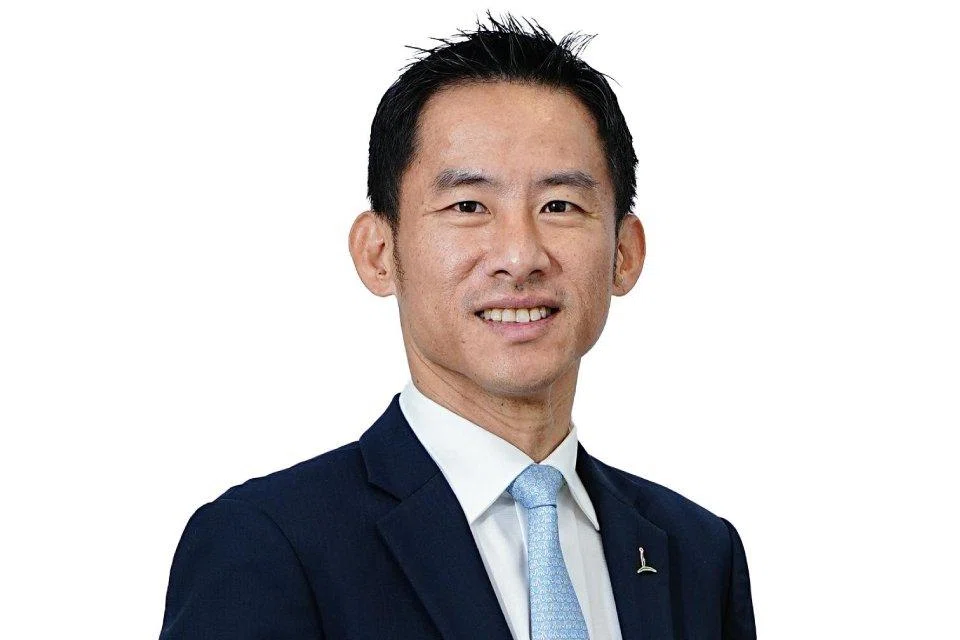
“The recent transactions that we have undertaken is a reflection of the opportunities that we are trying to do,” said Tan Choon Siang, CEO of the manager, at its annual general meeting (AGM) on Wednesday (Apr 22).
“CICT as a real estate investment trust (Reit), we have not shied away from making some of these bold acquisitions when the opportunity arises.”
He was responding to concerns raised by several unitholders over the S$3.9 billion price tag for Paragon mall.
On Monday, the manager said the acquisition will be funded by debt, a private placement to raise at least S$600 million and proceeds from the divestment of the Marina Bay area office property, Asia Square Tower 2, for S$2.48 billion.
Unitholders questioned the pricing and timing of the deal amid broader market uncertainty. The freehold asset has an agreed value of S$3.9 billion, based on independent valuations done as at Mar 31, 2026. This is markedly higher than a end-2024 valuation of S$2.9 billion, when Paragon was held as a 99-year-leasehold property with some 80 years left on its lease.
At the time, Paragon’s owner, Cuscaden Peak, had also proposed a privatisation of the Reit, saying the mall needed an overhaul, which was estimated to cost between S$300 million and S$600 million.
Tan declined to comment directly on the transaction, citing an extraordinary general meeting to be held in Q2 or Q3, but said the manager was “constantly looking” for opportunities to strengthen its portfolio.
In 2025, CICT acquired the remaining 55 per cent interest in the Grade-A office tower CapitaSpring for S$1 billion. The year before, it acquired a 50 per cent stake in Ion Orchard and its connecting underpass, Ion Orchard Link, for S$1.85 billion.
“If we need to sell something to buy those assets, we have also demonstrated our ability and our willingness to sell some good, well-performing assets to upgrade our portfolio,” he said.
Tan said that opportunities in city-state are limited, and that CICT is a Singapore-centric Reit. “There are not very many opportunities, so we do have to think very hard.”
He pointed to CICT’s bid for a Hougang Central state site as an example of expanding beyond its “natural opportunity set”.
In December 2025, a joint venture between CapitaLand and UOL group companies acquired the 99-year leasehold, mixed-use site for S$1.5 billion. CICT will develop and fully own its commercial component of about 300,000 sq ft in net lettable area. The total development cost is estimated at around S$1.1 billion.
“This is something we’re venturing out as a Reit… but we think it’s something where the cost-benefit analysis makes sense,” he said at the AGM.
“Ultimately, the (distribution per unit) has gone up in the last two years, and it’s because of the acquisitions and divestments we’ve done,” he added. In FY2025, DPU rose 6.4 per cent year on year to S$0.1158. The latest transaction is expected to lift investors’ payout by about 2.1 per cent.
“It’s not just churning the portfolio for the sake of churning the portfolio,” said Teo Swee Lian, chairman of the manager. “It’s always to try and achieve a better portfolio.”
When asked about its ideal asset allocation, Tan said CICT is positioned as an integrated commercial Reit with a strong focus on the Republic.
“We would like to remain predominantly in Singapore, as investors, unitholders or stakeholders all view us as a proxy… to the Singapore commercial (real estate market),” he said.
On asset mix, Tan said the manager was “very happy” to hold both retail and office properties due to their synergies, especially when co-located. “Office tenants contribute to the footfall and vibrancy of the retail mall, and the retail mall serves as an amenity to office tenants.”
“That is why we pride ourselves as an integrated commercial trust.”
Lagging markets
At the AGM, unitholders also raised concerns over CICT’s overseas portfolio.
In FY2025, its Australia assets generated S$53.1 million in gross revenue, down 2.7 per cent from FY2024’s S$54.6 million. Germany assets posted S$28.9 million, a 5.5 per cent decline from S$30.6 million a year earlier.
Tan acknowledged that these markets have lagged Singapore, but said efforts have been made to improve asset performance.
Australia, for instance, has performed “relatively well” over the past year. “The market consensus is that last year was the bottom. If you look at our asset occupancies in our properties, they are actually quite stable,” he said.
“We think the worst is over for Australia, and occupancies and tenant discussions that we’ve been having reflect improved momentum.”
On Germany, Tan said conditions remain more challenging, though the Reit has taken steps to “de-risk” its portfolio.
One asset has been retrofitted and secured a long-term lease with the European Central Bank, which took over in February 2026.
The other asset, near the airport, has a “slightly lower” occupancy and remains the weaker performer within CICT’s overseas portfolio.
“We are continuously reviewing the relevance of our assets and whether they contribute to the overall portfolio,” Tan added. Divestment decisions will also depend on market conditions and the ability to achieve a price that “makes sense and is fair to unitholders”.
Separately, Tan said the manager was monitoring the risk of higher oil prices amid geopolitical tensions in the Middle East. “(This could) feed into energy costs, broader inflation and interest rate conditions.”
“On a prolonged basis, it will affect our operating costs, tenant cost structures and business outlook, as well as consumer sentiment.”
To manage interest rate risk, Tan said CICT maintains a disciplined capital management, with its fixed-rate hedging ratio typically kept at around 70 to 80 per cent. As at end 2025, about 74 per cent of borrowings were on fixed interest rates.
“Most important for us is to maintain a consistent position,” he said.
He added that as tenancy durations are typically three to five years, the Reit aims to match debt maturities to its lease profile “so liabilities match the tenancies that we have”.
CICT units closed 0.8 per cent or S$0.02 higher on Wednesday at S$2.49.