CICT posts 1.5% rise in H1 DPU to S$0.053


Daphne Yow &
Raphael Lim
CAPITALAND Integrated Commercial Trust (CICT)’s distribution per unit (DPU) rose by 1.5 per cent to S$0.053 for its first half ended Jun 30, 2023, from S$0.0522 the year before.
Gross revenue for the half-year period was up 12.7 per cent to S$774.8 million, from S$687.6 million in the same period a year earlier.
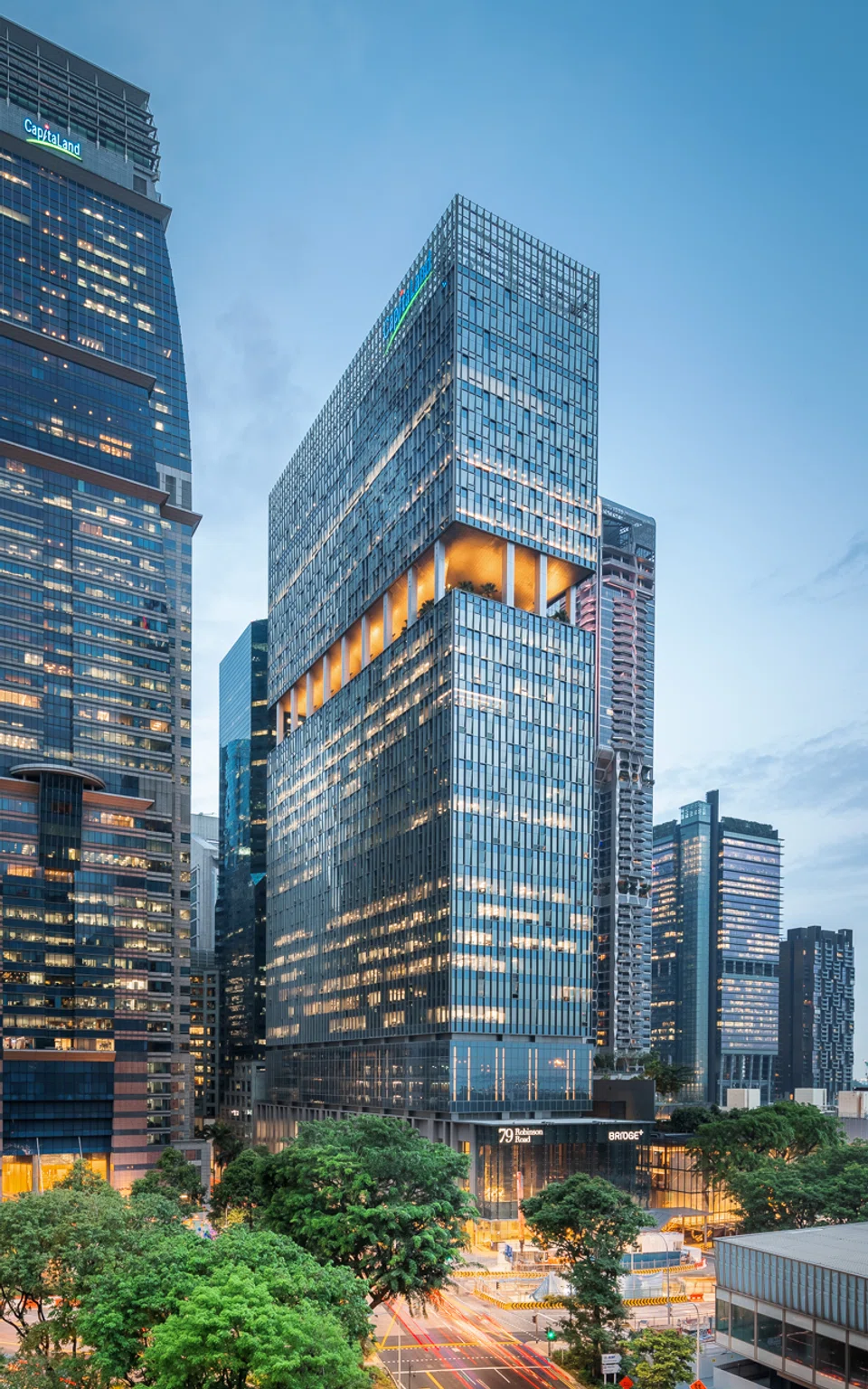
This was mainly due to contributions from CICT’s acquisitions of CapitaSky and its Australian portfolio, its asset enhancement initiative (AEI) at Raffles City Singapore, and increased rental income from most of its Singapore properties, the trust’s manager said on Tuesday (Aug 1).
These gains were partially offset by a 47.4 per cent year-on-year increase in finance costs from additional borrowings for the acquisitions and higher interest rates.
Net property income (NPI) grew 10.1 per cent on the year to S$552.3 million for the half year, from S$501.6 million.
CICT had also received a one-time government grant of S$34.4 million in the half-year period to defray the costs for construction of an underground pedestrian link at Funan Mall.
Distributable income rose 1.7 per cent year on year to S$353.2 million, from S$347.3 million.
The distribution will be paid out on Sep 15, 2023, after the record date on Aug 10, 2023.
CICT’s financial performance in the second quarter was boosted by full contributions from CapitaSky in Singapore, as well as 101-103 Miller Street and Greenwood Plaza in Sydney, as the acquisitions of these assets were completed during the quarter.
This resulted in an 11 per cent year-on-year growth in gross revenue to S$386.3 million for the quarter, along with a 9 per cent higher NPI of S$276 million for Q2.
Top line improvements for the latest quarter, however, were offset in part by higher operating expenses, largely due to utilities, noted the manager.
Strong occupancy
As at Jun 30, CICT’s committed portfolio occupancy was up by 0.5 percentage point at 96.7 per cent from 96.2 per cent as at Mar 31. Committed occupancies for its retail, office and integrated development portfolios stood at 98.7 per cent, 95.4 per cent and 97.8 per cent, respectively.
Tenant sales for CICT’s retail portfolio increased year on year, with downtown malls rising 10.2 per cent and suburban malls up 3.7 per cent for the year to June 2023
Tony Tan, chief executive of the trust’s manager, said at the results briefing that tenant sales for the portfolio are currently 8.3 per cent higher than pre-Covid-19 levels.
The manager believes the momentum for tenant sales could continue in the second half.
Lee Yi Zhuan, head of portfolio management, noted that Chinese tourists are at a fraction of pre-Covid levels. Meanwhile, concerts and events being held in the second half could also drive more tourists to Singapore.
The manager, however, is more cautious on the office sector for the second half. Shadow space, as well as a major completion in the market coming from IOI Central Boulevard Towers, could temper rent growth.
But Lee added that the manager is not overly concerned.
“On a Singapore portfolio basis, we actually see more expansion requirements than downsize requirements, both in terms of the number of tenants as well as the amount of space,” he said.
He added that rent reversions for the office sector may come off a little by year-end, but the manager still expects it to be “firmly in the positive territory”.
For the half-year period, the office and retail leases in its Singapore portfolio reported positive rent reversions of 9.6 per cent for office and 6.9 per cent for retail.
Right composition
In response to a question on whether the manager would consider pivoting more of the portfolio to retail, Tan noted that the Reit currently has 53 per cent of its portfolio revenue coming from retail.
“We will see how things will shape up… but at the moment, I think we are quite happy with the composition,” he said.
In terms of acquisitions, Tan noted that there is still a gap between buyers and sellers over price expectations, but the manager remains open to opportunities across its markets.
“Ideally, we still want to build our base in Singapore as much as possible,” he said. Apart from acquisitions, the manager would also consider portfolio expansion through development to grow CICT’s asset size.
The weighted average lease expiry (Wale) for the trust’s overall portfolio stood at 3.6 years. Wale for its portfolios stood at 2.2 years for individual retail, 3.6 years for office and 5.3 years for integrated development portfolios.
Tan noted that the CQ @ Clarke Quay development will finish its phased AEI works by late H2 FY2023. The asset is expected to contribute positively to the trust’s performance in FY2024 when its tenants progressively begin operations.
As at June 30, CICT’s aggregate leverage stood at 40.4 per cent, down from 40.9 per cent three months earlier. Total borrowings amounted to S$9.6 billion, with 78 per cent of this on fixed rates.
CICT’s adjusted net asset value per unit, after excluding H1 2023 distributable income to unitholders, rose to S$2.07 as at Jun 30, up from S$2.06 in Dec.
As at 1.06 pm on Tuesday, units of CICT were trading flat at S$2.04.