

CICT's Q3 net property income more than doubles to S$242.6m, with room for retail recovery
Result comes amid enlarged portfolio from merger of CapitaLand Mall Trust and CapitaLand Commercial Trust last year

Singapore
CAPITALAND Integrated Commercial Trust's (CICT) net property income (NPI) more than doubled to S$242.6 million for Q3 ended Sept 30, from S$104.5 million previously, thanks to its enlarged portfolio from the merger of CapitaLand Mall Trust and CapitaLand Commercial Trust last year.
The trust's portfolio recorded a committed occupancy of 94.4 per cent as at end-September, with a weighted average lease expiry of 3 years, CICT disclosed in its quarterly business update on Friday.
Gross revenue for the quarter stood at S$329 million, more than double from S$150.3 million a year earlier. Retail assets contributed S$136.6 million of the latest quarter's gross revenue, up from S$109.9 million in Q3 last year. NPI in this segment rose 31.5 per cent year-on-year to S$97.7 million.
However, there is still room for recovery in the retail segment. The average monthly retail tenants' sales per square foot (psf) for the first nine months of this year is still only 83.8 per cent that of the FY2019 average. Nevertheless, it is slightly higher than the average figure for the first nine months of 2020.
In the office segment, CICT recorded S$97.3 million in gross revenue from its assets, with S$74.7 million in NPI. The Singapore and Germany office assets had an occupancy rate of 92.6 per cent as at end-September. The top three business segments by space requirement are IT, media & telecommunications; business consultancy and banking; insurance & financial services.
Meanwhile, Q3 gross revenue from integrated developments stood at S$95.1 million, more than double from the year before. NPI also more than doubled to S$70.2 million. This segment recorded an occupancy rate of 96.2 per cent as of end-September.
Overall, for the first nine months of 2021, CICT's gross revenue and NPI stood at S$974.7 million and S$714.8 million respectively, both more than double last year's figures.
Looking ahead, CICT believes that the retail segment is poised to benefit from improvements in economic activity and consumer sentiment, with the progressive easing of border restrictions in 2022 and higher vaccination rates, barring any unforeseen setbacks.
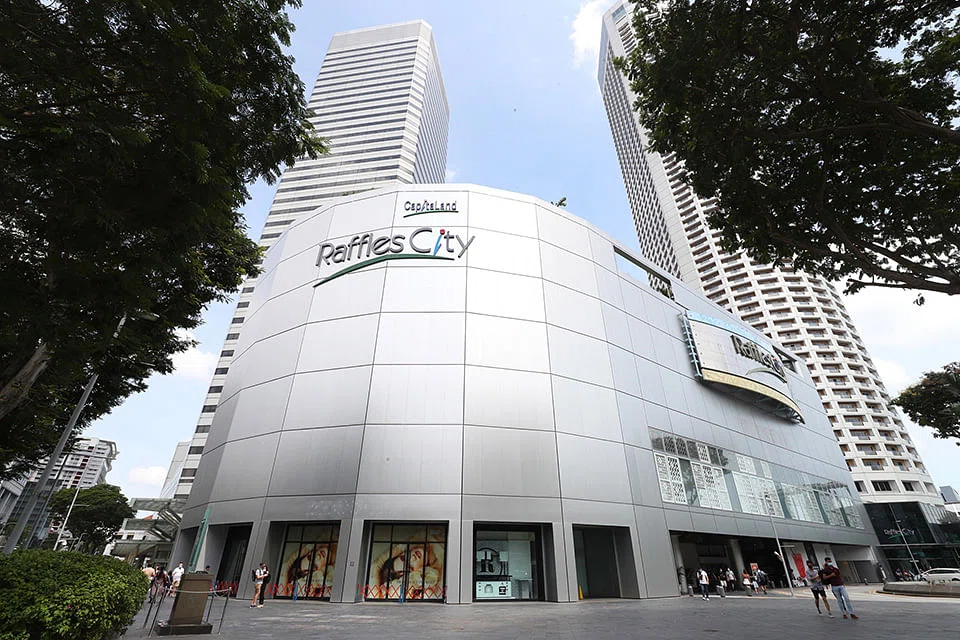
Asset enhancement of Raffles City Singapore is targeted to complete by Q4 2022, with the trust in "advanced negotiations" with international fashion, beauty and lifestyle retailers.
The CapitaSpring development has also achieved a committed occupancy of 83.1 per cent, with another 7.2 per cent under "advanced negotiation". Committed leases are set to contribute income progressively from H1 next year.
CICT has S$9.5 billion in total borrowings as at end-September, with an aggregate leverage of 40.9 per cent. Its units closed flat at S$2.13 on Friday.
TRENDING NOW
Far East Organization’s The Serra Residences sells less than a quarter of units released at average S$3,460 psf

Once staunchly pro-China, Malaysian Chinese businesses are now distancing themselves from Beijing

Ageing in Asia: Huge potential for the consumer economy

DBS, OCBC, UOB face rate hike reality check

