Cinema operators need to rethink business model
Industry watchers see difficult times for theatre chains and say to survive, companies will have to restructure and embrace technology to reinvent the theatre experience
Claudia Tan HS
Singapore
DELAYS in blockbuster releases, reduced seating capacities and the increasing popularity of streaming services amid the ongoing Covid-19 pandemic have heightened anxieties over the future of cinemas, threatening the attractiveness of theatre chains as an asset class.
But mainboard-listed mm2 Asia appears to be betting that there is appetite in the market for cinema assets.
The company, which already owns the Cathay brand of cinemas in Malaysia and Singapore, announced late last year a potential merger of its own cinema operations with Golden Village cinemas.
Concurrently, mm2 is working to spin off the cinema business in a separate Catalist listing.
Shares of mm2, which also produces films, recently sank to a 52-week low of 7.7 Singapore cents following news of a potential new investment as well as a proposed rights issue.
The company posted a net loss of S$22.4 million for the half-year to Sept 30, against a net profit of S$9.18 million in the year-ago period.
Would a successful listing of an enlarged cinema operation revive its fortunes?
Guillaume Sachet, a partner at KPMG in Singapore, does not think cinemas are an attractive asset class in the short term.
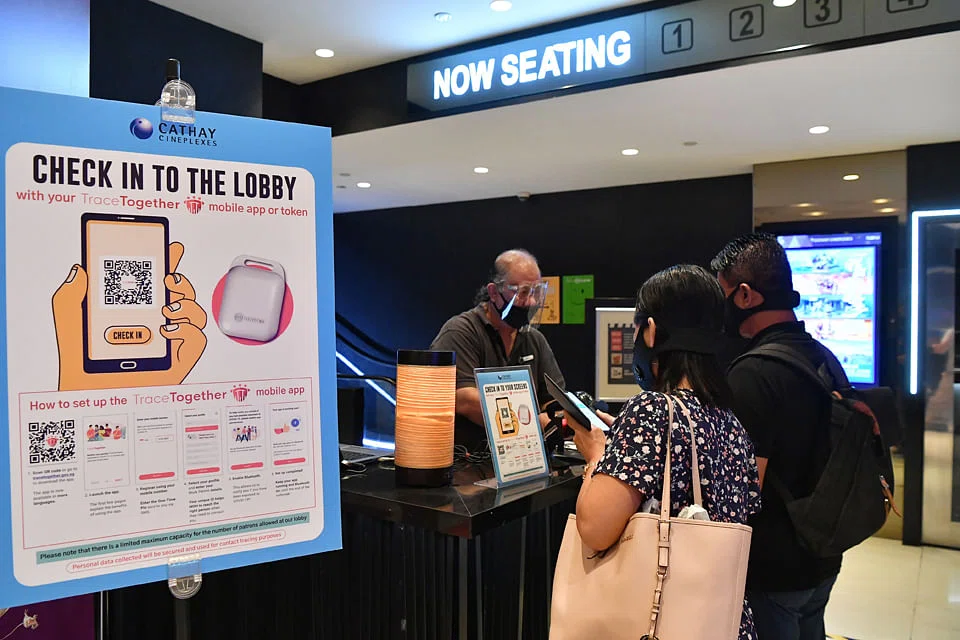
Cinema operators here were forced to close during the "circuit breaker". And although they can now open, he noted their permitted seating capacity has been cut by as much as 50 per cent.
There has also been a dip in available content. The James Bond film No Time To Die, for instance, was delayed thrice in hopes of securing it a larger audience. The film's release is now expected in October.
Singapore's box office takings last year are estimated to have fallen to S$106 million from S$259 million a year earlier, according to data from PwC's Global Entertainment and Media Outlook 2020-2024.
At mm2, revenue from cinemas for the six months to September shrank to just S$3.6 million from S$49.5 million before. The segment clocked a pre-tax loss of S$16.5 million.
Business is likely to have remained slow in the last quarter of 2020. Independent cinema operator EagleWings Cinematics said its revenue fell by about a third in Q4 2020 compared with a year earlier.
An EagleWings spokesperson said there is also a "psychological impact on people which may result in some resistance to head to the theatres".
On top of all this, there has been a slowdown in the production of films amid global lockdown measures.
Karen Tan, co-founder of independent cinema The Projector, said that global studio closures will impact the supply of new films for years to come.
Meanwhile, a structural shift that was taking place even before Covid-19 has been accelerated.
Oliver Wilkinson, entertainment and media leader at PwC Singapore, said content delivery over the Internet "has jumped significantly in 2020, and we foresee that high penetration persisting".
On Feb 23, Disney+ launched in Singapore, offering over 650 films under The Walt Disney Company's brands. These include Marvel, Star Wars and Pixar.
Consumer spend on subscription video-on-demand (SVOD) overtook consumer spend on box office in South-east Asia for the first time in 2020, according to data from PwC. It is projecting the compound annual growth rate of revenue from SVOD in Singapore to grow 15.4 per cent between 2019 and 2024.
Blaise Trigg-Smith, another of The Projector's co-founders, expects that mainstream content will increasingly be produced by streaming sites and may not even be licensed for theatrical screenings in venues like theirs.
Pixar film Soul and Disney's Mulan, for instance had premiered on Disney+ on the same day they made their debuts in theatres. Meanwhile, WarnerMedia is releasing every single one of its movies in 2021 on streaming service HBO Max and in theatres simultaneously.
To survive, KPMG's Mr Sachet suggests cinema operators should embrace technology to reinvent the theatre experience.
Most industry players here took to the online space to cushion the impact of the circuit breaker.
The Projector launched streaming platform The Projector Plus (P+), offering a curated mix of arthouse, foreign films, cult classics, documentaries and local films.
Setting itself apart from traditional streaming services, P+ kept its library to a "manageable size" to prevent "choice fatigue", said Ms Trigg-Smith.
The Projector was also able to be more adventurous in the choice of films to screen as it did not face the commercial limitations of having to fill a physical hall, she said.
Likewise, mm2 announced a streaming platform called Cathay CineHOME and a regional video streaming platform for Chinese language short-form content called mPlay.
In spite of the hurdles ahead, industry watchers are confident that there is a future for the cinema.
"The feedback we get is that our audiences want both (the cinematic and the home theatre experience)," said The Projector's Ms Tan.
That is because the product on offer is not exactly the same.
"People do not go to the cinema to consume a movie in the same sense in which they go to a retail store to buy a product," said PwC's Mr Wilkinson. "They go for a night out, for the shared experience of watching with a crowd, because they enjoy the tradition of popcorn, and for many other reasons not (fully) replicable at home."
And if travelling remains restricted, said KPMG's Mr Sachet, cinemas may attract those looking for some entertainment or leisure activity.
EagleWings is already adapting by allowing patrons to dine while enjoying a film at its premium halls, with gourmet dishes from its restaurant served directly to them.
Meanwhile, the Projector is experimenting with novel cinema experiences through an upcoming 18-month takeover of an abandoned Chinese disco in the heart of the city.
KPMG's Mr Sachet thinks cinema operators must make changes to their cinematic experience: "To remain relevant and capture the need for entertainment and experiences, the cinema industry will first need to focus on customer experience by continuing to integrate with a broader ecosystem to include shopping, F&B, attractions, and go beyond the physical premises of the theatre by capturing other spaces in the mall."
If mm2 hopes to have a chance with investors, it must demonstrate that it is able to do more than lean on economies of scale.