Citi downgrades Singapore banks to 'sell'; trio down 4%
Published Mon, Mar 9, 2020 · 12:47 AM

    CITI Research on Monday downgraded the Singapore banks to "sell", seeing further material downside on the trio's share prices as the bank-brokerage expects short-term Fed interest rates to hit and stay at zero for much of the next nine months.

    Singapore banks also may not defend their dividend levels, Citi added, as it slashed target prices again from its lowered estimates on March 4. This is one of the rare "sell" calls on the Singapore banks, checks on Bloomberg showed.

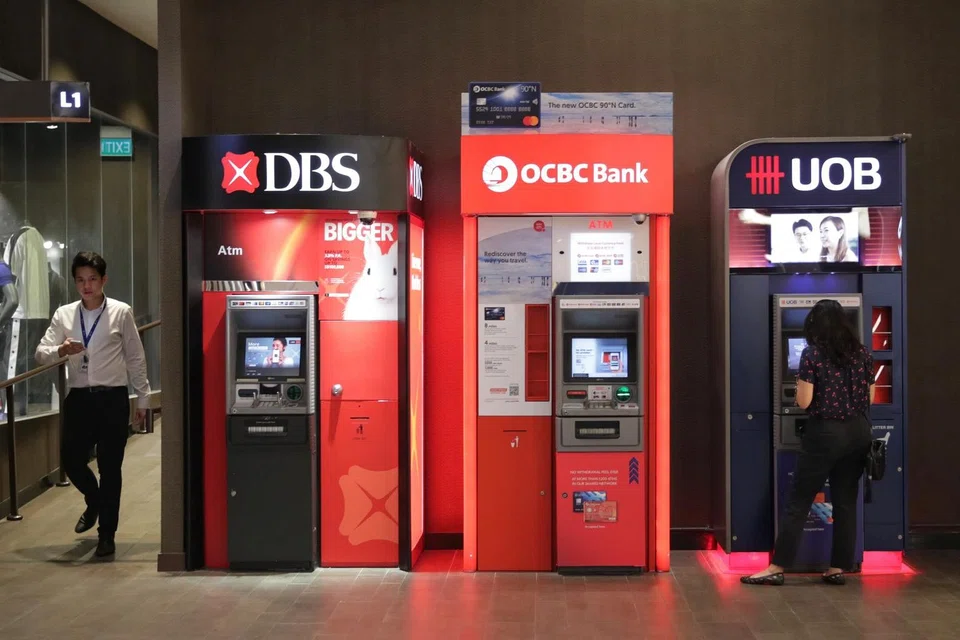
    Shares of Singapore banks tumbled at market open on Monday, and are down roughly at least 4 per cent. As at 9.45am, shares of DBS were down at S$21.99, shares of UOB fell to S$22.26, while shares of OCBC fell to S$9.81.


    Citi has cut target prices for the trio. Its target price for DBS is S$17.50, down from S$24.40, that for OCBC has fallen to S$8.85 from S$11, while its target price for UOB is S$19.30, down from S$$24.40.

    The "sell" call from Citi comes as the Federal Reserve earlier this month made an emergency rate cut of half a percentage point overnight in response to the Covid-19 outbreak.

    "Our prior neutral view was premised on a soft growth outlook but stable Fed rates with banks' dividend yield commitments providing downside support," said Citi analyst Robert Kong.

    "Post the 50 basis point (bps) inter-meeting Fed cut, Citi US economists now view that the Fed will cut rates aggressively, reaching the zero lower bound by or before June, with rates staying at zero through the rest of the year."

    The Fed may "gradually" raise rates sometime next year instead, according to Citi.

    Furthermore, Citi rates strategists expect that a US recession this year is "increasingly likely at this point".

    With Singapore rates tracking US rates, the expectation of weak Fed rates will squeeze net interest margins (NIMs) of banks, while a slowdown in growth raises asset quality risks, bringing higher credit costs. Citi expects NIMs could fall to similar lows experienced after the global financial crisis, which was the last time Fed rates fell to the zero lower bound. The zero lower bound reflects that interest rates can no longer fall any further below zero per cent.

    Citi has also assumed credit costs to hit about 40 bps, higher than the 25 bps on normalised levels.

    "Against such a backdrop we view that returns on equity (ROEs) could trend below 10 per cent and if so, banks may no longer defend recent dividend levels, removing a key price support."

    To be sure, Citi said that with record low bond yields, banks could monetise the unrealised gains in their securities portfolio, lifting one form of income. As such, Q1 results for 2020 could look "exceptionally strong" due to such bond gains, while NIMs captured for the quarter would not have reflected the sharp Fed cuts yet.

    "Nor is there likely to be such early signs of asset quality stress," Mr Kong added.