CLCT’s H2 DPU falls 11.8% to S$0.03 on slightly enlarged unit base, distribution reinvestment plan

Wong Pei Ting &
Vivienne Tay
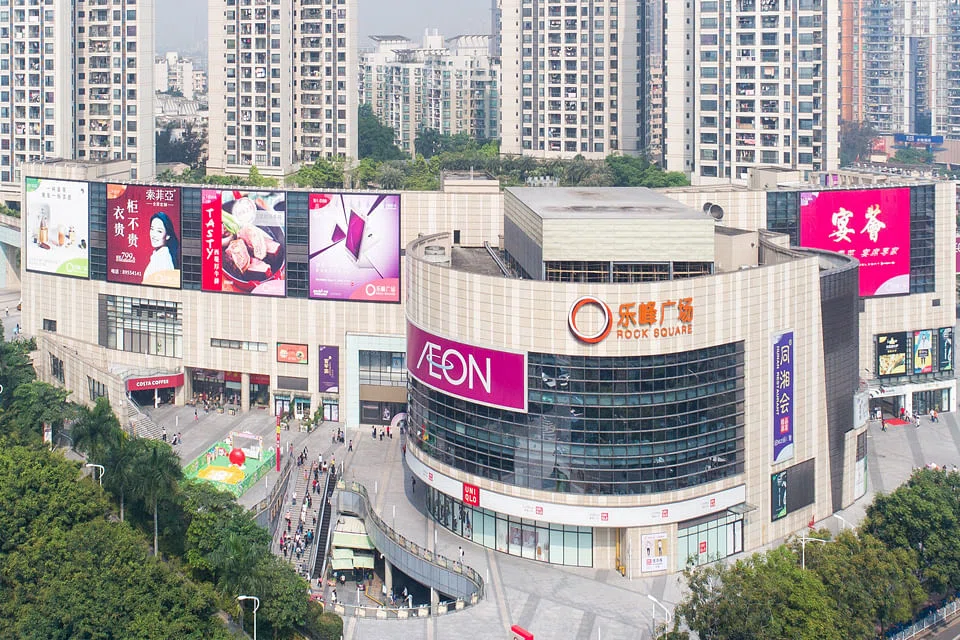
CAPITALAND China Trust (CLCT) on Tuesday (Jan 30) posted an 11.8 per cent decline in distribution per unit (DPU) to S$0.03 for the second half ended Dec 31, 2023, from S$0.034 in the same period the previous year.
This was due to a slightly enlarged unit base owing to management fees, and its distribution reinvestment plan, which was turned on for the 2022 and 2023 financial years.
There was also an absence of a one-off distribution paid out in the same period in 2022. In H2 2022, the manager released S$3.6 million in distributable income – which was retained in H1 of that same year – to unitholders.
Without that amount, distributable income would have been at S$53.3 million. That would result in a DPU of S$0.0318. This means the fall in H2 2023 DPU would be narrower at 5.6 per cent instead of 11.8 per cent.
The China-focused real estate investment trust posted a 2 per cent decrease in gross revenue to S$180.2 million from S$183.9 million in the same period the prior year, due to a stronger Singapore dollar against the yuan.
On a yuan basis, gross revenue climbed 5.9 per cent year on year.
The manager attributed this increase to higher contributions from CLCT’s retail portfolio. CapitaMall Wangjing, CapitaMall Yuhuating and Rock Square benefited from asset enhancement initiatives. Proactive lease management in CapitaMall Xizhimen, CapitaMall Nuohemule and CapitaMall Xuefu drove revenue contributions as well.
The gain was partially offset by a loss of contribution from CapitaMall Qibao, as the mall ceased operations at end-March 2023. The Reit also recorded lower revenue from Singapore-Hangzhou Science and Technology Park Phase I and II and Chengdu Shuangliu Logistics Park due to lower occupancy rates.
Net property income for the second half stood at S$117.5 million, up 2.5 per cent from S$114.7 million recorded in the same period a year earlier.
Distributable income, meanwhile, was down 10.9 per cent on the year to S$50.7 million, from S$56.9 million in H2 2022. The distribution will be paid out on Mar 28, after the record date on Feb 7.
For the full year ended Dec 31, 2023, DPU was 10.1 per cent lower at S$0.0674, as distributable income fell 9.4 per cent to S$113.9 million. Gross revenue was down 4.8 per cent to S$364.7 million, and net property income fell 2.9 per cent to S$246.7 million.
Gearing as at Dec 31, 2023, stood at 41.5 per cent, down from 42.4 per cent as at Sep 30, 2023. Around 82 per cent of the Reit’s total debt has been on fixed interest rates.
Its weighted average lease expiry stood at two years by gross rental income and 3.3 years by let net lettable area.
Logistics slump
The gross rental income contributed by CLCT’s logistics park business dipped to 3.7 per cent as at Dec 31, 2023, from 5 per cent in H1 2023. This comes as the manager reported a negative rental reversion of 20.5 per cent for this business segment in the year.
The rental reversions for its retail and business park segments stayed positive, at 0.2 per cent and 1.6 per cent respectively in FY2023.
CLCT’s logistics tenants had also shrunk to 82 per cent as at Dec 31, 2023, versus 91.2 per cent as at Jun 30, 2023.
Asked why this is happening despite growth in China’s e-commerce, the manager’s chief executive officer Tan Tze Wooi noted in an earnings call that demand is softening.
“If you look back at the high exponential growth of, let’s say, 2015 to 2022, a lot of those were driven by very aggressive assumptions, but I think post-Covid, adding some of these assumptions start to be a little bit more realistic,” he said.
Given the over-expansion and over-capacity, a cycle of consolidation has started, he added.
“A lot of the third-party logistics are receiving fewer orders… Coupled with there being more supply and more choices, you do see a little bit of that short-term challenge over the demand-supply kind of balance,” he said.
In Wuhan Yangluo Logistics Park and Kunshan Bacheng Logistics Park particularly, Tan said the manager will likely have to lower rents by 15 to 20 per cent to retain its key tenants.
On the retail side of the business, Tan said the manager is now turning its attention to dilute the portfolio weightage of its two smaller and weaker mall assets in 2024, namely CapitaMall Aidemengdun and CapitaMall Xinnan, which saw their valuations fall by over 5 per cent in FY2023.
Noting that they currently contribute to less than 10 per cent of CLCT’s retail portfolio, Tan said: “We intend to take a stepped approach – strengthen the dominant ones, and de-weight the weaker ones and look for an opportunistic exit.”
The manager is already in the midst of this trimming process, with the divestment of CapitaMall Shuangjing for 842 million yuan (S$157.6 million) that was announced on Dec 6, 2023. “The top five or six of our key dominant malls essentially are already contributing 80, 90 per cent of our performance. The idea is to really dilute down some of the weaker ones, look for opportunities to exit, such that the overall portfolio can continuously be trimmed to be stronger,” Tan added.
CLCT’s units closed 0.6 per cent or S$0.005 higher at S$0.825 on Monday.
TRENDING NOW
Grab CEO’s wife Chloe Tong on life with Anthony Tan and finding her purpose
Stocks to watch: DBS, DFI Retail, Frasers Property, Clint, ESR-Reit, Centurion, Coliwoo
DFI Retail to bag US$340 million, Starbucks business in Asia in deal with Maxim’s Caterers
Green fuels, autonomous ships: How Singapore is future-proofing its shipping industry