

Cloud kitchen boom serves up opportunities for industrial, retail landlords

IT HAS been widely documented by now that the pandemic has transformed consumer habits, not the least of which is the way people eat.
Having tasted the delicious convenience of that pizza delivered to the doorstop with the click of a button, this isn't a trend that consumers are going to abandon any time soon either.
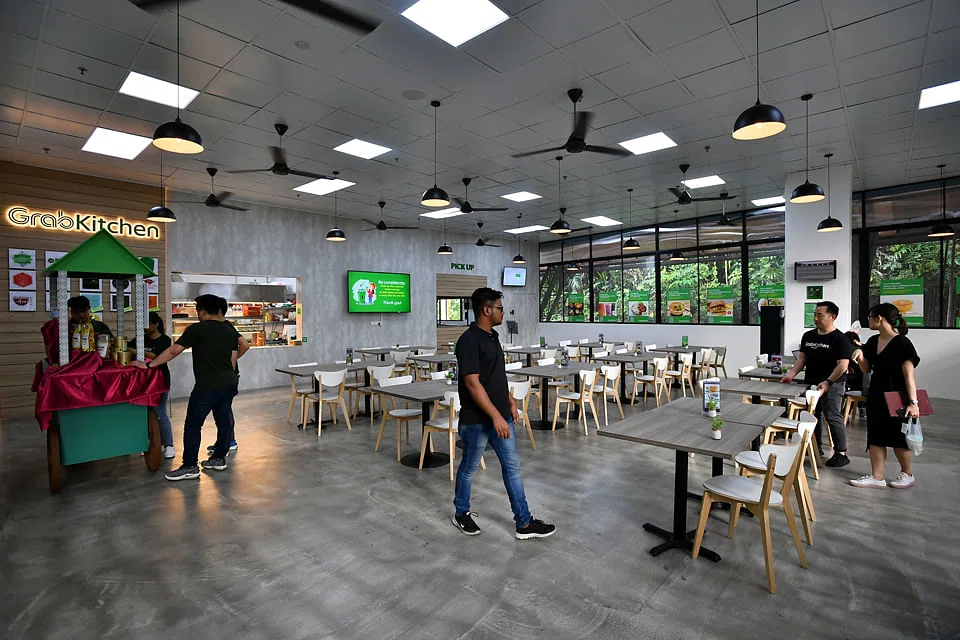
Enter cloud kitchens. Also known as ghost or dark kitchens, they are centralised kitchens where food is prepared primarily to cater to food delivery. Some in Singapore also have a small area set aside for dining-in.
Cloud kitchens make financial sense for food and beverage (F&B) players that are contending with high overheads, shrinking margins and brisk competition. Safe distancing measures arising from the pandemic haven't helped matters either as they limit the number of patrons a restaurant can entertain.
Other perks touted are the ability for a brand to scale via a presence in different parts of Singapore - thus getting food delivered more swiftly to hungry customers - as well as the flexibility to experiment with new concepts but with less risk.
Little wonder then that food delivery players and businesses alike have been venturing enthusiastically into this space. Grab is ramping up its existing network of cloud kitchens across South-east Asia. TiffinLabs - backed by RB Capital chief executive Kishin RK - is planning to establish some 1,000 cloud kitchens across the Asia-Pacific, Europe and the United States.
Last week, Select Group - which is behind F&B concepts Pho Street and Hong Kong Sheng Kee Dessert - announced it would channel S$10 million over the next five years to invest in cloud kitchens in densely populated heartland areas such as Clementi and Tampines. In addition to some of its own brands taking up units within the cloud kitchen, space will also be leased out to other food operators.
With the cloud kitchen market still in its infancy, the sector is likely to continue expanding. More spaces are likely to be converted to cloud kitchens until the market matures, said Lee Nai Jia, deputy director at the National University of Singapore's Institute of Real Estate and Urban Studies.
By 2027, the global cloud kitchen market is expected to mushroom to US$71.4 billion - up from US$43.1 billion in 2019 - according to estimates from Allied Market Research.
In order to house a cloud kitchen, the premise will need to be able to cater to F&B operations. This means a ready water supply and an exhaust system to disperse fumes. Cloud kitchen operators also need to get the necessary approvals from the relevant authorities to handle food on-site, such as from the Singapore Food Agency and, where necessary, from agencies such as JTC.
But the viability of a cloud kitchen ultimately hinges on factors such as location and rent, consultants say. In the case of the former, it should be in close proximity to its target audience. Rents, meanwhile, should be affordable.
Cushman & Wakefield's executive director for logistics and industrial, Brenda Ong, expects industrial landlords to be among the prime beneficiaries of the cloud kitchen boom.
The cost-effectiveness of industrial parks and industrial canteens make them an attractive choice as a premise for cloud kitchens, she said. HDB shops and coffee shops are a suitable alternative for that same reason.
On the retail front, Ms Ong reckons shophouses should make for suitable locations - those already approved for F&B use would be ideal - while some retail landlords with ageing malls can capitalise on the growing trend too. Older suburban malls, in particular, are seen as likely candidates owing to their proximity to residential areas, as well as their cheaper rents vis-a-vis more popular malls or those in prime areas.
Crafting a cloud kitchen with a fresh concept - along with a dine-in area - could have the added advantage of attracting diners from the surrounding catchment area, thus driving traffic to the mall.
The pandemic has compounded challenges for the retail industry over the past year, as evidenced by brands such as Wing Tai shuttering stores and others - Robinsons being a notable one - throwing in the towel altogether. This has in turn put downward pressure on rents, which slumped close to 15 per cent last year, while the island-wide vacancy rate stood at 8.8 per cent at the end of the fourth quarter of 2020.
Mall owners, including the retail real estate investment trusts, will need to look at creative ways to fill retail space and tweak their tenant mix to position themselves for an evolving retail landscape. Those with appropriate assets can look to incorporating cloud kitchens as one of the ways to help them do so.
READ MORE: Suburban malls can still thrive despite retail disruption from online shopping
TRENDING NOW

Prima to move out of historic Keppel Road flour mill building in 2028

Temasek-related Azalea, SeaTown, Seviora Capital to merge in 2027

Family offices see more tailored products, leverage ‘collective firepower’ for direct deal access

Singapore room rates soar, but hotels seeing mixed demand from F1 race and events

