ComfortDelGro sees China and Singapore as key robotaxi markets
It aims to operate 3,000 autonomous vehicles, comprising 10% of its fleet, by 2030

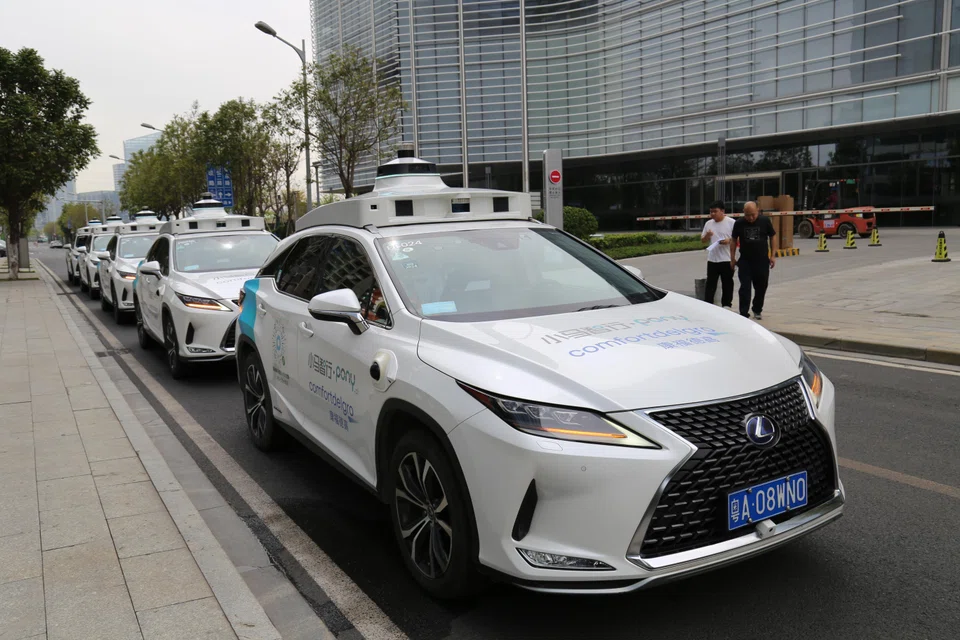
[SINGAPORE] Transport operator ComfortDelGro (CDG) expects China and Singapore to be its prime markets for autonomous vehicles (AVs) in the near future.
At a media briefing on the company’s AV strategy on Friday (Jun 12), Michael Huang, CDG’s head of its Singapore point-to-point mobility business, called China “ground zero” for AVs, describing Singapore as one of the places in the Asia-Pacific most ready for adoption.
The UK and Australia, markets where CDG also has a significant presence, could follow later, he added.
In February, the company said it hoped to convert 10 per cent of its fleet into AVs by 2030. Assuming its fleet size stays at 30,000, one can estimate the figure to be 3,000 vehicles.
Plenty of demand
“We think there is going to be a lot of demand for (robotaxis) in first-tier cities in China,” Huang said, naming Beijing, Shanghai and Shenzhen as densely populated cities with people receptive to new technology.
“We see that AVs are easily accepted by the public for day-to-day use (in Guangzhou)... and we think it is a very good use case for AVs. People use it to go to work, they use it to go for meals, and they use it to go back home.”

It is still small scale in Guangzhou, where CDG has had five robotaxis in commercial operation since March 2025.
“We think that commercialisation can be faster in China than in Singapore,” he added. “In Singapore, we will start with our pilot, and then work closely with the regulators to see how AVs evolve over time.”
China’s central and regional governments have been supportive of AV technology and electric vehicles, having provided incentives, flexible frameworks and sandboxes for operators to gain experience.
SEE ALSO





China thus has some of the world’s leading robotaxi players – including Baidu, Pony.ai and WeRide – which is crucial for widespread adoption and mass production.
“You need to be able to build AVs in a mass manner. There is no point building 10 or 20; you need to be able to build thousands at a time. You need the whole cost of the AV to come down,” Huang said.
He noted that the cost of AVs has come down from between two million and three million yuan (between S$380,000 and S$570,000) a few years ago to around 300,000 to 400,000 yuan now.
But cost remains a significant barrier to mass adoption of robotaxis, he said, so large-scale adoption is still some time away.
One advantage CDG has in China is that it is not tied to any one city or region, unlike the local operators.
“That is how we managed to grow our business in China from one city to many,” Huang said.
The company’s 2025 annual report said 9,569 of CDG’s vehicles were in operation in 10 cities in China.
Ready for more
Outside China, but within the Asia-Pacific, Singapore is the most ready for robotaxis.
“I’m sure there are some small regions within Asean that could be suitable for AVs, but not (in Singapore) at the moment,” Huang said. “For us, we are focused on AVs at scale; where we can scale (is in) China, Singapore, then London, UK and Australia, maybe a bit later.”
He added that CDG’s competitive advantage, both in Singapore and abroad, lies in its experience in transport operations, including building infrastructure and talent, all developed from its decades of operating in various countries and regulatory environments.
Its transport ecosystem ranges from vehicles and support infrastructure to customer service and bookings.
Company representatives cited this breadth of experience as a key factor behind the company being able to pull off a pilot AV project for Singapore in eight months.
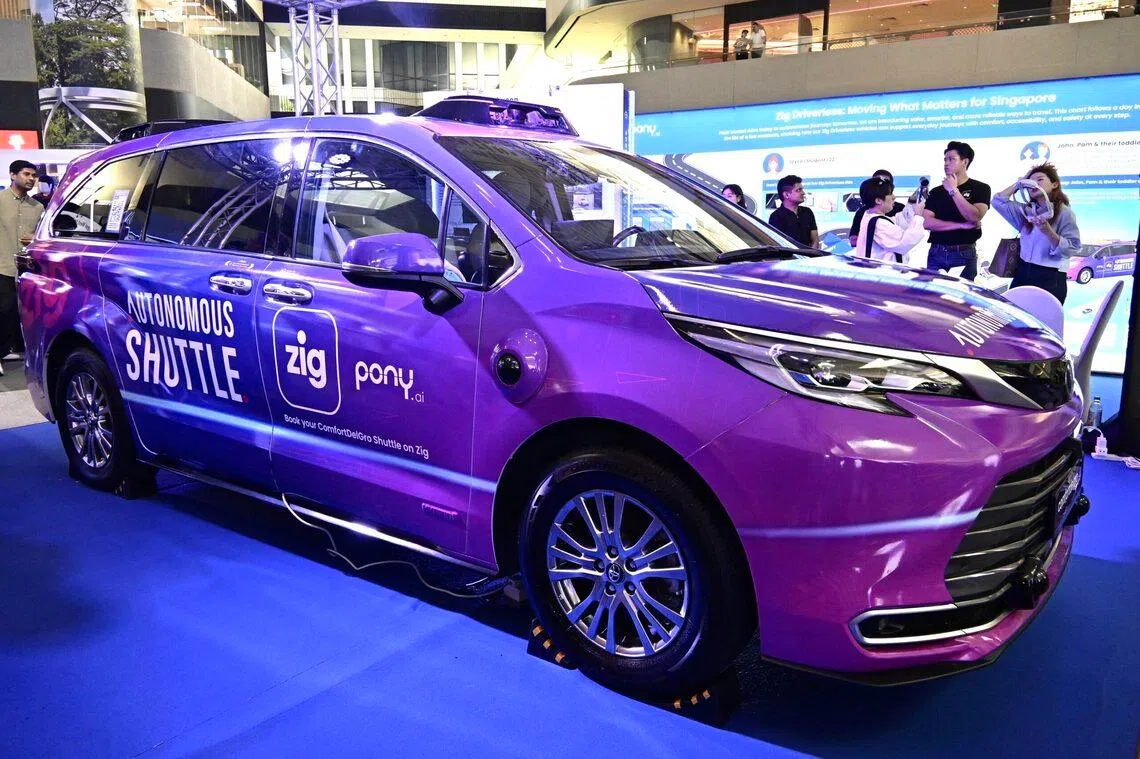
CDG and Pony.ai have been testing five AVs in Punggol since receiving approval in December 2025; invitational rides started in April.
The company is already reaping cross-market benefits: It sends its AV safety operators to China for training, as the road situations there are more complex than in Singapore.
CDG’s AVs are likely to become ready sooner because training these vehicles to do the job is easier in Singapore, said Huang.
He declined to discuss specific commercial fares, saying it is too early.
While the company has partnered Pony.ai for Guangzhou and Singapore, Huang said that CDG remains technology agnostic and open to systems by other players.
“We want to understand how the technology develops and what new cases can develop for us,” he said.
Decoding Asia newsletter: your guide to navigating Asia in a new global order. Sign up here to get Decoding Asia newsletter. Delivered to your inbox. Free.
Copyright SPH Media. All rights reserved.