ComfortDelGro should disclose its strategic options to assure investors and avoid exit from STI

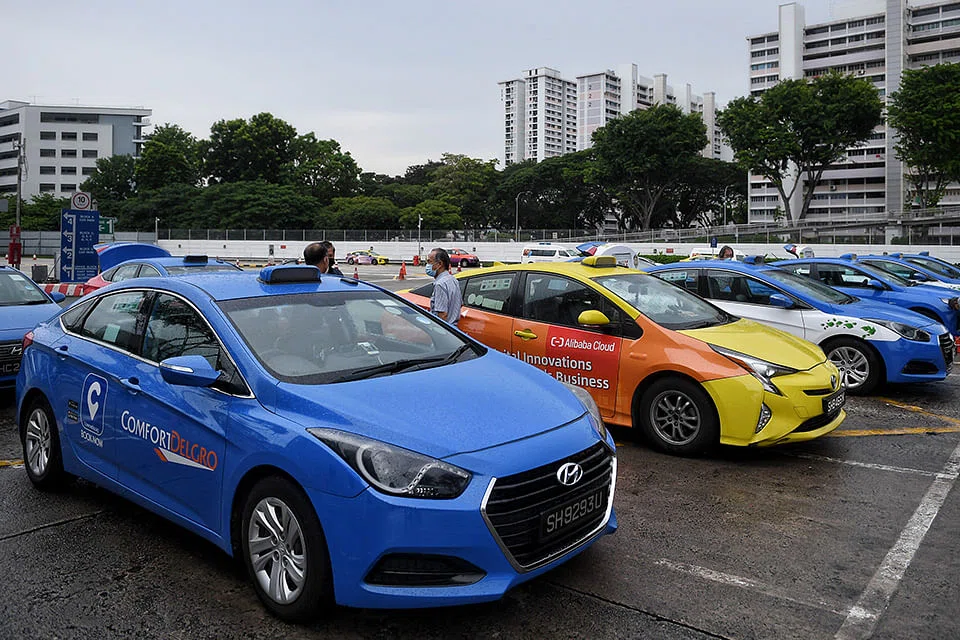
COMFORTDELGRO Corporation shares hit a 52-week low a week ago on Nov 30 when it closed at S$1.37. This was in line with the decline in the blue-chip gauge Straits Times Index (STI) as the World Health Organization warned that the Omicron coronavirus variant poses a very high risk of infection.
Unlike the STI, however, the level that ComfortDelGro hit on Nov 30 was actually lower than the lows it hit back on Mar 23, 2020 - when the onset of the pandemic triggered a meltdown in markets across the world.
ComfortDelGro's share price has not only been relatively weak since the pandemic started, it had also been sliding since it announced on Nov 10 that it had put the brakes on the listing plan for its Australian unit.
The land transport heavyweight explained then that market conditions Down Under had "become more challenging and other strategic options have presented themselves". Yet, the pulling the plug on the listing plan was not necessarily a bad thing.
This column has previously said the flotation, had it gone ahead, might not have unlocked value for the company's shareholders. ComfortDelGro's Australian business contributed 20.3 per cent of its revenue for the first half of FY2021, and 28.2 per cent of its operating profit.
Hence, a spin-off would have reduced the group's stake in what some might consider a gem of a business - Australia was the best performing overseas location for the group in 2020 despite the pandemic and bushfires.
So, why has ComfortDelGro's share price been sliding since backing out of plans to list its Australian unit?
Perhaps it is due to the company failing to elaborate on the other strategic options it plans to pursue.
By not providing any information, it has left investors in a state of uncertainty - especially as the announcement came just one day before the company provided a dour third quarter business update.
On Nov 11, ComfortDelGro said its third-quarter operating profit was 30 per cent lower than the second quarter's; which, in turn, was 38 per cent lower than the first quarter's.
Undoubtedly the land transport operator has been impacted by lockdowns and border restrictions, which has resulted in tourists staying away and locals staying at home.
Despite the reopening of borders via the quarantine-free Vaccinated Travel Lane scheme, the number of short-term visitors and long-term pass holders who entered under the arrangement as at Nov 25 was only 20,510 - since the arrangement was launched on Sep 8.
After the emergence of the Omicron, restrictions have been tightened globally, and this has added to the headwinds ComfortDelGro faces.
Meanwhile, its Downtown Line operations by subsidiary SBS Transit will transition to a different financing framework, which will result in a net S$15 million saving. However, its bus contracts extension would bring in operating profit that is S$34 million lower.
Given these material changes to its business, on top of operating amid the pandemic and competition from private ride-hailing players, ComfortDelGro ought to be stepping up its investor communications efforts and explaining what strategic options it can pursue.
Notably, ComfortDelGro has entered into a joint venture in construction logistics to deliver concrete in China - its maiden venture into this field. Could this be one of the strategic options it is pursuing? What are the others?
ComfortDelGro must act quickly to regain the confidence of investors and arrest the decline in its share price.
As it is, some analysts have speculated that ComfortDelGro is at risk of being dropped as a component stock of the STI. If it does fall out of the index, investors will have even less reason to own the stock.
ComfortDelGro shares shed 1 cent on Tuesday (Dec 7) to close at S$1.41.