

ComfortDelGro taxi fare hike paves way for peers to take a similar tack
Increase is ComfortDelGro's first in 10 years


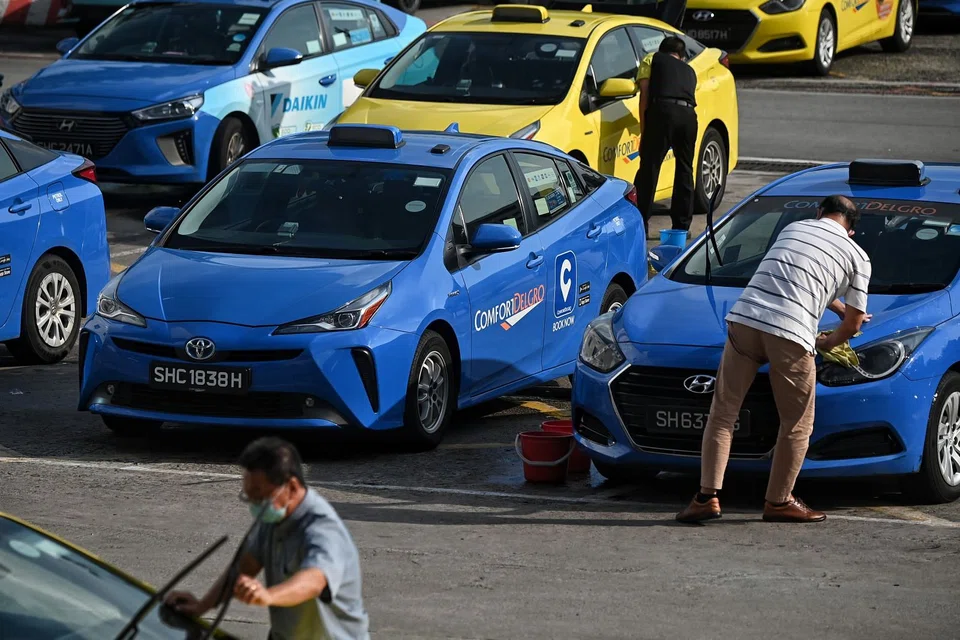
THE move by leading taxi operator C52 to raise fares appears to have paved the way for its smaller peers to undertake a similar exercise or mulling one.
Neo Nam Heng, chairman of Prime Group - which owns Prime Taxi - told The Business Times (BT) that the smallest cab operator with a fleet of about 600 in Singapore will be writing to the Public Transport Council to indicate its intention to raise fares.
Neo said it would be the company's first fare hike in 10 years.
His response came hot on the heels of the taxi fare hike announcement on Tuesday (Feb 8) by ComfortDelGro, which explained that this first fare increase in a decade is "necessary to help cabbies defray higher operating costs resulting from rising fuel prices and inflation".
Yeow How Pheng, head of Strides Mobility Services, replied to BT queries that its Strides Taxi is reviewing its current fare structure.
As with its peers, Strides Taxi furnished reasons for contemplating a fare hike, including higher fuel prices and inflation.
ComfortDelGro's flag-down fares will rise by 20 Singapore cents across its entire fleet from Mar 1, bringing the rates to between S$3.90 and S$4.10 from its current range of S$3.70 to S$3.90.
Meanwhile, metered charges will increase by 2 cents to S$0.24 for normal taxis and 3 cents to S$0.33 for limousine taxis.
All other fare tariffs will remain unchanged.
As a result, the company estimates that a 10 km off-peak normal taxi trip, for example, will increase by 7.7 per cent or S$0.84 to S$11.82 from S$10.98.
ComfortDelGro's existing cab fares are on a par or lower than its competitors, most of which charge S$3.90 for flag-downs and metered charges tick up by S$0.22 for standard taxis.
Jackson Chia, chief executive of ComfortDelGro's Private Mobility Group and ComfortDelGro Taxi, said: "This fare adjustment will help our cabbies defray the higher costs of operation. Given that the last fare revision was more than a decade back, we seek the understanding and support of our commuters."
Prime Taxi, stated Neo, will standardise its flag-down fares for basic taxis at S$4.10, up from S$3.60 and S$3.80 while that for premium taxis remain unchanged at S$4.50. Also, the company will be rolling out Toyota 7-seater hybrid taxis in March, charging a flag-down fare of S$4.30. The metered charges will increase by 2 cents to S$0.24 for basic taxis and to S$0.35 for premium ones.
Prime Taxi, noted Neo, is unfazed by the rivalry from ride-hailing service provider. Beaming with confidence, Neo said that cabbies in general have "more driving experience", "well-trained" and have built up their customer base. He doesn't see this as a sunset industry as he asked "Which country has no taxis?"
Would it be cheaper to use a ride-hailing service then?
Not necessarily, because ride hailing service operators like Grab use dynamic pricing. Passengers who drop ComfortDelGro after the fare hike and flock to private hiring would bump up demand, and assuming supply of drivers does not change, this could drive up the ride hailing fares.
When asked by BT if they're contemplating a fare hike, ride-hailing service providers Gojek and Ryde pointed out instead that the support they are giving to their drivers. Nasdaq-listed Grab did not respond. BT reported last year that the company raised base fares by S$1 from June 2021 across most of its ride-hailing services.
ComfortDelGro's taxi unit and former top-performing division was in the red for the third quarter to September, even after government aid of S$2.1 million, posting an operating loss of S$5.9 million.
The unit has been under pressure ever since Uber and the likes started offering ride-hailing services, giving it a run for its money.
Meanwhile, equity analysts expect the hike by mainboard-listed ComfortDelGro to be somewhat favourable for the transport heavyweight.
Higher flag-down taxi fares could boost taxi rental interest, wrote DBS analysts in a report, although it is unlikely to move the needle, as ComfortDelGro's 2011 fare increase exercise led to the number of taxis rented out rising by 677 or 4.3 per cent in the year following the hike. There was a decline of 155 taxis rented out in the year before the fare increase.
"Still, given new market dynamics where only about 21 per cent of taxi trips are street-hailed trips based on flag-down rates as of September 2021 and the introduction of surge pricing to ride-hailing trips, any positive interest in taxi rentals is likely to be lower compared to in 2011," added the analysts.
Ong Khang Chuen, an analyst at CGS-CIMB, expects the latest pricing adjustment to help improve drivers' earnings and in turn lower the need for ongoing rental rebates from ComfortDelGro, although there will be minimal impact to its revenue as ComfortDelGro does not rely on a fare commission-based model.
Shares of ComfortDelGro closed at S$1.44 on Tuesday, up three cents or 2.13 per cent.
READ MORE:
- ComfortDelGro sells 60% stake in China driving school for S$0.5m, expects delay for UK acquisition completion
- Taxi fares in Singapore poised to rise in March
- Grab to raise base fare by S$1 from June across most ride-hailing services
- ComfortDelGro should disclose its strategic options to assure investors and avoid exit from STI
TRENDING NOW

Once staunchly pro-China, Malaysian Chinese businesses are now distancing themselves from Beijing

Looking beyond looming CEO succession, should UOB potentially pursue a transformative merger?

Could stablecoins be the future of money?

Grab CEO’s wife Chloe Tong on life with Anthony Tan and finding her purpose

