

ComfortDelGro’s H1 net profit slips 31.9% to S$78.5 million; SBS posts 0.4% gain in H1 net profit


Tay Peck Gek &
Yong Hui Ting
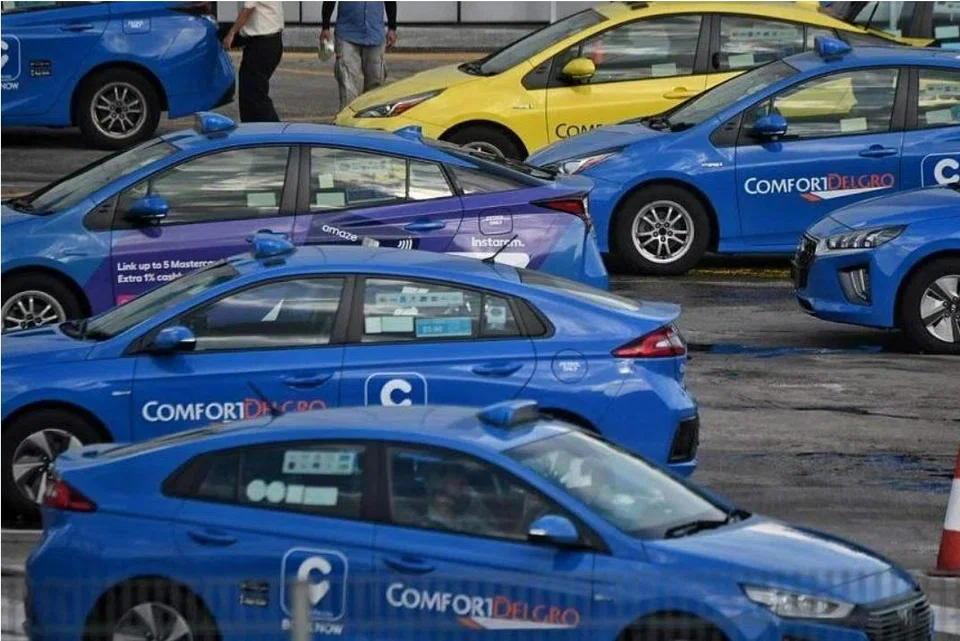
COMFORTDELGRO Corporation (CDG) on Monday (Aug 14) reported a 31.9 per cent fall year on year in net profit to S$78.5 million for the first half of the year to June 2023 from S$115.3 million, mainly due to higher operating costs and the absence of a one-off disposal gain.
Nonetheless, the transport behemoth has raised its dividend payout ratio to a minimum of 70 per cent from 50 per cent as it wants to reward shareholders “more appropriately with what is going to be the traditional strong cash flow from current businesses”.
The higher operating costs in H1 FY2023 were caused by post-pandemic inflation and the Russia-Ukraine war, but inflationary cost pressures and driver shortages are subsiding, said CDG.
Excluding the one-off gain recognised in H1 FY2022 from the sale of a property, the mainboard-listed land transport operator’s net profit would have been down 7.4 per cent or S$6.3 million.
Revenue, on the hand, rose 1 per cent to S$1.86 billion in H1 FY2023, from S$1.84 billion a year earlier.
Earnings per share for the latest half-year stood at S$0.0362, down from S$0.0532 for the same period last year.
Net asset value per share was S$1.1854 as at the end of H1 FY2023, marginally lower than the S$1.1879 as at Dec 31, 2022.
The group has declared an interim dividend of S$0.029 per share – or 80 per cent of its net profit – payable on Sep 1 after closure of its books on Aug 22. The corresponding payment the preceding year was S$0.0285.
CDG chairman Mark Greaves, who assumed the role in April, said on Monday of the higher dividend ratio: “We can introduce some gearing for specific activities that we’re looking at getting engaged in, and we will be making our balance sheet work a little bit harder to provide returns for shareholders and appropriate growth.”
Group chief executive officer Cheng Siak Kian pointed out that the second-quarter earnings of S$45.7 million were about 39 per cent higher than in the preceding quarter. “So this is what we meant (when we said) that our pace of recovery is picking up.”
The better showing was attributed to improved performance from CDG’s public transport and taxi and private-hire vehicle segments.
The group has observed higher rail ridership for both the Downtown Line and North East Line in Singapore, with a recovery to over 90 per cent of pre-pandemic levels. For its British business, many contracts were renewed at “much better rates”; its metro line business there is “improving very rapidly, and we should see that improving further going forward”.
“ComfortDelGro is still first and foremost a land transport company; that will not change fundamentally, so we’re happy to state that we continue to be very invested in this. But what has really changed for us is that now we are looking into defending our core,” said Cheng.
CDG is now focused on winning public transport tenders, said the helmsman who took over the reins this year. Another strategy the operator has adopted is to tie up with partners to win contracts.
Demand for taxi and private-hire vehicles remains high, but competition is also increasing, he noted.
On private-hiring rival Grab’s planned purchase of Trans-cab, Cheng does not anticipate that the disruptors will dominate completely, at least in the short term. He said he believes that taxi business still has value, because taxi drivers work two shifts, unlike private-hire drivers who appear to work fewer hours.
“We believe that we can sweat our assets much better,” he said.
CDG is also not ruling out the acquisition of other taxi operators.
But it has reversed its intention to float its Australian business. It had put the brakes on the listing plan as it hit roadblocks when market conditions Down Under became challenging in November 2021; it then said in March 2022 that it had not given up on its Australian subsidiary’s plan to go public.
“Not at this point in time,” Cheng said of the plan, “because clearly there are various options that we could be looking at… But we are constantly in talks, and there are also other potential private equities that have also been talking to us, so there are various ways of raising capital if we want to, if we need to.”
Separately, CDG’s 75 per cent owned subsidiary SBS Transit posted a 0.4 per cent increase in its net profit for the half-year ended June 2023 to S$34.8 million, up from S$34.6 million in the corresponding period last year.
Its H1 revenue also grew 1.6 per cent to reach S$744.4 million from S$732.4 million driven mainly by higher rail revenue from higher ridership. This was, however, offset by lower bus revenue due to lower service fees, it said in a results filing on Monday.
The group’s earnings per share went up 0.4 per cent to S$0.1115, from S$0.1111 in H1 FY2022.
It has declared an interim dividend of S$0.0558 per share, to be paid out on Aug 30 after books closure on Aug 22.
The company expects total revenue to stabilise, though it maintained a “cautious outlook due to cost uncertainties arising from inflation, tight labour market and energy prices”.
Shares in CDG rose S$0.01 to S$1.27 while SBS Transit closed up 2.4 per cent at S$2.61 on Monday, before the announcements.
TRENDING NOW

World’s largest offshore wind platform by Seatrium consortium on track to be completed by 2028

Is stamp collecting enjoying an analogue revival or are its best days over?

GovTech retrenches another 38 staff in second round of layoffs

MBS adjusted property Ebitda falls 20.6% in Q3 with fewer high-roller visits, weaker hold

