Companies should offer guidance on how share buybacks are in their best interests
Amid adverse structural shifts in their operating backdrop, firms should diversify or stick to paying out dividends

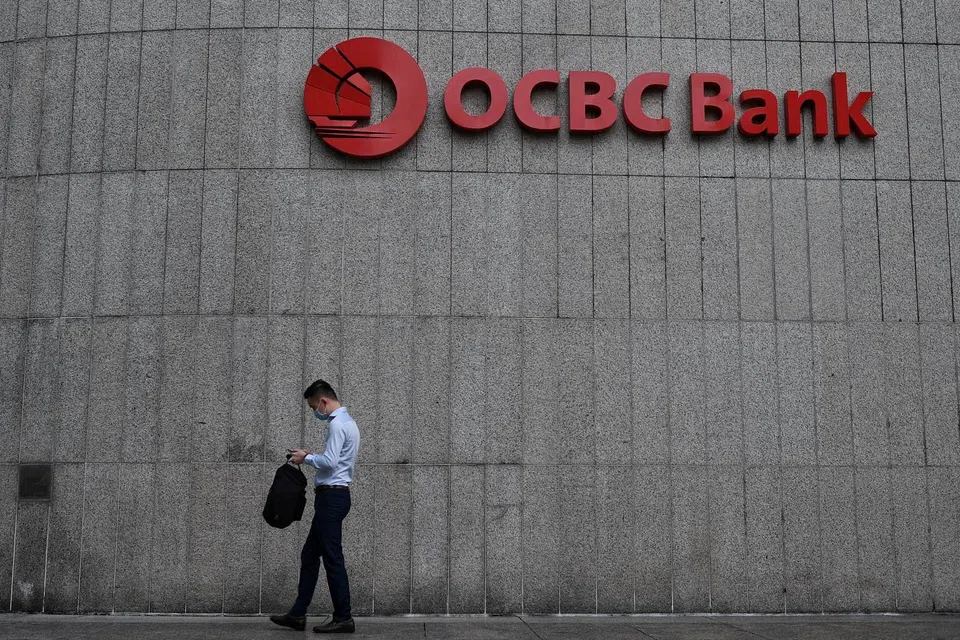
TWO stocks I happen to own - OCBC and The Hour Glass - accounted for nearly two-thirds of all the share buyback activity in the local market last month.
OCBC repurchased 7.017 million shares in September for nearly S$81.4 million, or about S$11.60 per share.
The Hour Glass repurchased 2.757 million shares for almost S$4.3 million, or about S$1.55 per share.
A total of 20 companies with primary listings in Singapore repurchased S$133.9 million worth of their own shares last month, according to a report by Singapore Exchange (SGX).
This marked a monthly high in share buyback activity for 2021.
There was S$96.3 million worth of share buybacks in the local market in the month of August, according to the SGX report, and S$11.2 million in July.
Besides OCBC and The Hour Glass, another stock that saw significant buyback activity in September was UOB - it repurchased 1.5 million shares for over S$38.8 million, or S$25.65 per share.
Other prominent stocks that also saw buyback activity last month included OUE (2.3 million shares repurchased at S$1.41 per share), GK Goh (1.7 million shares repurchased at S$1.12 per share), and Boustead Singapore (670,000 shares repurchased at S$0.97 per share).
As an investor, I suppose I should be excited. Companies that repurchase their shares are effectively returning cash to their shareholders; and signalling that their boards and management believe their businesses are thriving and their share prices are too low.
Unlike dividend payouts, share buybacks only return cash to shareholders who choose to exit. Shareholders who hold on to their shares benefit from an increased share of the company's future earnings - as the reduced share count inflates the company's earnings per share.
Indeed, during its annual general meeting (AGM) on July 28, The Hour Glass told its shareholders that it had increased its dividend and engaged in a share buyback programme as it "recognised the earnings and cash generative capabilities of (its) business had been altered".
The luxury watch retailer trebled its dividend to S$0.06 per share with respect to its FY2021 ended March 31.
Meanwhile, the company was holding 17.6 million treasury shares as at Oct 7, up from just 1.03 million treasury shares as at June 7. This suggests The Hour Glass has repurchased 16.6 million shares - or nearly 2.4 per cent of its total issued shares - in just four months.
Drawbacks of buybacks
Yet, as an investor, I have never been entirely comfortable with companies buying back their own shares - because most of them do not explain how they determine that their shares offer good value before doing so.
It is also sometimes precisely when a company gains the wherewithal and inclination to repurchase its shares that its share price would have already run.
The Hour Glass, for instance, was actively repurchasing its shares last week even though its stock price had nearly doubled since the beginning of this year, fuelled by its solid financial performance and the significant hike in its dividend payout.
Some companies claim they conduct share buybacks only to support their employee share schemes, the implication being that it is irrelevant whether their shares offer good value.
Yet the share purchase mandates these companies put before their shareholders at AGMs are no different from those of other companies, enabling them to act opportunistically if they so choose.
Back in March 2020, when the market swooned in the face of the Covid-19 pandemic, a total of 65 companies with primary listings in Singapore repurchased S$502 million worth of their shares, according to a report by SGX.
This pushed the total value of share buybacks for the first quarter of 2020 to S$600 million, which exceeded the S$590 million worth of share buybacks during the entire 2019 calendar year.
DBS accounted for the bulk of the share buybacks in March 2020. It bought 19.65 million shares for nearly S$388.4 million, or S$19.765 per share.
The other two local banks were in a distant second and third place. OCBC bought nearly 3.916 million shares for almost S$34.7 million, or S$8.852 per share. UOB repurchased 993,300 shares for S$19.955 million, or S$20.09 per share.
As it happened, all three banks remained profitable through the pandemic; and their shares have since rebounded strongly.
On Friday, DBS closed at S$30.43, OCBC at S$11.62, and UOB at S$26.29.
Yet, this was at least partly because the government tapped its past reserves to unleash a massive fiscal programme to support the whole economy.
Were the three banks counting on the government's whatever-it-takes fiscal response to the pandemic?
Should they even have been conducting share buybacks In March 2020?
In April 2020, the Monetary Authority of Singapore (MAS) loosened certain capital and liquidity requirements in order for the banks to better support borrowers in the face of the turmoil.
MAS warned the banks not to use this release of capital buffers to pursue share buybacks.
More information needed
To be clear, I am not suggesting that local listed companies should abandon share buybacks altogether.
Yet, simply because a company is generating more cash than it needs to support and expand its business does not necessarily make share buybacks a good idea.
Investors should press local listed companies to provide guidance on how they gauge the intrinsic value of their shares, and disclose the circumstances under which share buybacks would be in their best interests.
This is especially so given that many Singapore listed companies have delivered very weak total returns over the past decade as a result of adverse structural shifts in their operating backdrop - technological disruption not least among them.
Rather than repurchasing their own shares, it may make more sense for many local listed companies facing a long-term decline in profitability to use any excess cash at their disposal to push into more promising new fields.
If this proves too daunting, then returning cash to their shareholders through dividend payouts could be the next best alternative.