

Companies shut Ukraine operations, brace for sanctions on Russia
 Add BT as a preferred source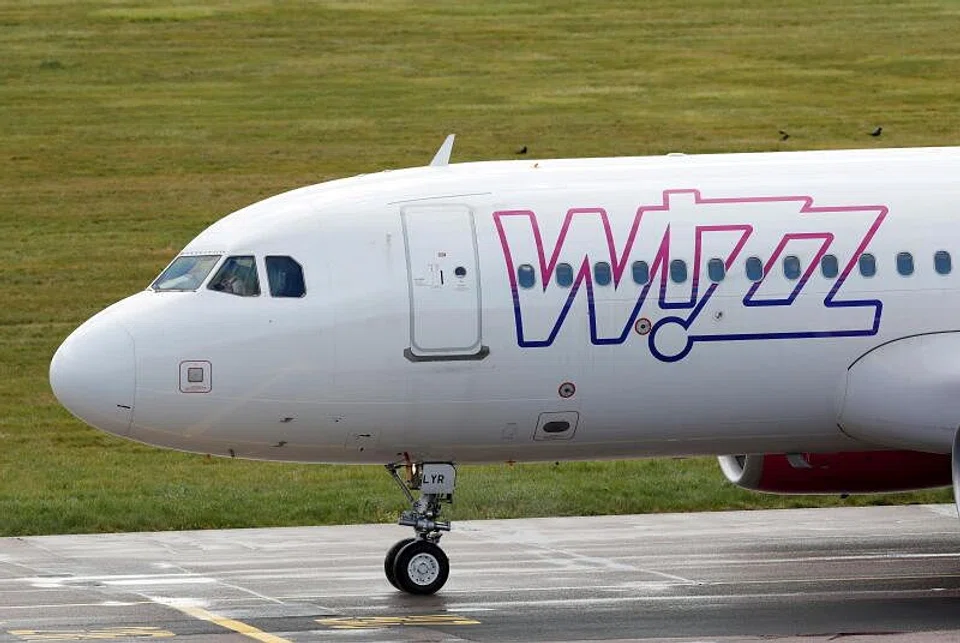
DeeperDive is a beta AI feature. Refer to full articles for the facts.
[LONDON] Danish brewer Carlsberg and a Coca-Cola bottler shut their plants in Ukraine on Thursday (Feb 24) following Russia's invasion while global logistics firms UPS and FedEx Corp suspended services in and out of the country.
Ukraine closed its airspace as Russian forces attacked in the early hours, leaving budget airline Wizz Air trying to evacuate its Ukrainian-based crew, their families and 4 planes stuck in Kyiv and Lviv.
Many companies with exposure to Russia are now waiting for more clarity about how sweeping promised Western sanctions will be before announcing any action. Brussels, London and Washington are all set to announce more details on Thursday after Moscow launched its land, sea and air invasion of Ukraine.
Washington has already imposed sanctions on the company behind the Nord Stream 2 gas pipeline, and European Commission chief Ursula von der Leyen said Brussels would block Russian access to key technologies and markets.
Carlsberg, which has a 31 per cent share of Ukraine's beer market, suspended production at all 3 of its breweries in the country, while Coca-Cola HBC said it had triggered its contingency plans which included shutting its bottling plant.
Global shipping giant Maersk halted port calls in Ukraine until the end of February and closed its main office in Odessa on the Black Sea coast while Danish freight forwarder DSV said it had shut its operations in the country.
Navigate Asia in
a new global order
Get the insights delivered to your inbox.
"All air traffic has stopped, and the border crossings are also impacted and closed so in reality everything is shut down today," DSV's head of investor relations, Flemming Ole Nielsen, said, adding that new sanctions were likely to have a major impact on trade in Eastern Europe.
Europe's aviation regulator expanded a safety warning triggered by the attack, advising airlines to "exercise caution"when flying through parts of Russian airspace controlled by regional centres in Moscow and Rostov.
Shares in German utility Uniper, which has significant interests in Russia and a US$1 billion exposure to Nord Stream 2, plunged on Thursday and its controlling shareholder, Finland's Fortum, took a knock.
Fortum said the 2 companies together owned 12 power plants in Russia and employed 7,000 people there but because energy production had not been sanctioned, their operations had not been directly hit.
Another of Nord Stream 2's financial backers, Wintershall Dea, said the fact the project was suspended on political grounds meant its operator could seek compensation.
Shares in German chemical company BASF, which co-owns Wintershall with Russian billionaire Mikhail Fridman's LetterOne investor group, were down 6 per cent while other Nord Stream 2 backers OMV and Engie were also hit.
Britain's biggest domestic bank, Lloyds, warned that it was on heightened alert for cyberattacks from Russia while companies making products from jet engines to semiconductors warned that supplies of key raw materials could suffer.
Jet engine makers Rolls-Royce and Safran both said on Thursday they had been ramping up supplies of titanium as Western aerospace companies brace for fallout from the Ukraine crisis.
Titanium, much of it supplied by Russia, has been used in jet engines for decades but its use has soared in recent years as planemakers try to make jets lighter.
"We have been watching this situation for several weeks and have decided since the start of the year to increase our stocks of titanium especially through distributors in germany," Safran chief executive Olivier Andries told reporters.
The French company is also looking to diversify its sources of the metal, as was Britain's Rolls-Royce, which said 20 per cent of its titanium came from Russia.
Large chip companies said they expected limited supply chain disruption from the conflict for now, thanks to stockpiling and diversified procurement, but some industry sources said there could be an impact longer term.
Ukraine supplies more than 90 per cent of US semiconductor-grade neon, critical for lasers used in chipmaking. The gas, a by-product of Russian steel manufacturing, according to market research firm Techcet, is purified in Ukraine. REUTERS
Decoding Asia newsletter: your guide to navigating Asia in a new global order. Sign up here to get Decoding Asia newsletter. Delivered to your inbox. Free.
Share with us your feedback on BT's products and services
TRENDING NOW

From 1MDB to ‘corporate mafia’: Is Malaysia facing a new governance test?
Higher costs, lower returns: Why are Singaporeans still betting on real estate?

South-east Asian markets account for 8.8% of global capital inflows from 2021 to 2024: report

Richard Eu on how core values, customers keep Singapore’s TCM chain Eu Yan Sang relevant

