Connecting clients, portfolio companies is next for Japan’s MUFG in Asia-Pacific
Leveraging stakes in banks in Indonesia, Thailand, Vietnam and the Philippines enables MUFG to extend more support to its customers


[SINGAPORE] The appointment of Nobuya Kawasaki as chief executive for the Asia-Pacific at MUFG is a homecoming of sorts, with him having spent seven years – from 2013 to 2020 – in Singapore leading the investments team at the Japanese financial services group.
Notable startups that MUFG took stakes in during his tenure include Grab, Indonesia-based digital lender Akulaku and Netherlands-based lender Home Credit, which also has operations in the Philippines and Indonesia.
“Since this April, I am also responsible for MUFG’s global corporate (clients) and Japanese corporate (clients). I am now trying to connect our traditional customer base and our new customer base, as there is a lot of potential to grow in this area,” Kawasaki told The Business Times.
His background in investments has helped in customer discussions, especially on the topic of expansion. With any entry into a new market, a search for suppliers would mean having to deal with small and medium-sized enterprises, which MUFG could not support in the past.
But now with subsidiary banks – Danamon in Indonesia and Krungsri in Thailand, along with VietinBank in Vietnam and Security Bank in the Philippines – in which MUFG has stakes, there is a network that enables more support to be extended to its customers.
Portfolio companies that MUFG has invested in can also be tapped to help its customers, such as extending consumer financing to drive sales, noted Kawasaki.
“For us, this is a kind of end-to-end solution for our clients’ activities. I believe it is a quite unique set-up even in this region,” he said. This, in turn, makes customer discussions more fruitful and strengthens the relationships with customers, he added.
Even as Kawasaki holds the chief executive role, he is still focused on investments. MUFG has invested close to US$16 billion in Apac, and is a long-term bank, he said. Rather than focus on short-term share-price movements, it is more interested in growing with its portfolio companies.
“It’s not the amount of money (we can earn), but how we can find good companies and be a good partner; we are very keen on this, and I am involved in those discussions,” he said.
One area Kawasaki is keen to focus on is in terms of connecting MUFG’s portfolio companies. He aims to have them discuss and learn from one another, and even co-create together. This was part of MUFG’s Asia X Digital Strategy in 2024, which led to the establishment of MUFG Openly-connected Digital Ecosystem (Mode).
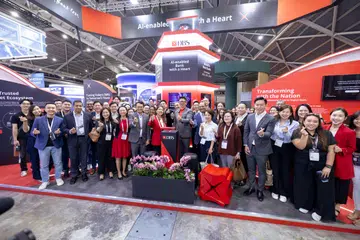
The flagship event for Mode is the MUFG Fintech Festival, which was held this year for the second time, and brought together some 50 companies and more than 200 participants, including non-portfolio companies. There were also over 50 business-matching sessions.
“We want to expand this kind of investment and relationship in this region, and we want to be in the centre of those kinds of discussions,” said Kawasaki.
Deeper into Apac
The Apac region will continue to be a focus area for MUFG, and the bank is looking to expand its footprint here. Kawasaki is on the lookout for good opportunities in each country the lender is in.
MUFG is looking for potential targets that have a strong foundation of good technologies, good people and a good ecosystem. Kawasaki reiterates that the bank wants to bring value to the portfolio companies.
“If those elements match our strategy, we are very keen to invest,” he added.
Besides investments, he is also focused on the shifting trade flows that are taking place in the current macroeconomic and geopolitical climate. As clients shift or change strategies to diversify their portfolio geographically, Kawasaki expects to see new trade flows from clients into South-east Asia that MUFG can support, including transaction banking and foreign exchange.
“This could be a very good opportunity for our bank, leveraging our unique strengths,” he said.
The bank is also looking to tap artificial intelligence (AI). But beyond using it to boost efficiency and productivity, Kawasaki sees other opportunities. As data centres sprout to meet AI demands, the bank could benefit from the project financing of data centres and the infrastructure needed, such as sustainable energy to power those data centres.
In fact, one of MUFG’s strengths is in the area of sustainable financing. Kawasaki noted that it has been ranked as the top bank providing project financing for renewable energy for the last 10 years.
“Apac is the focus of MUFG, and Apac’s growth is based on fundamentals and is strong; so I believe our strategy will not change,” he said.