Construction companies see uneven recovery as they clear pandemic backlog

Yong Jun Yuan
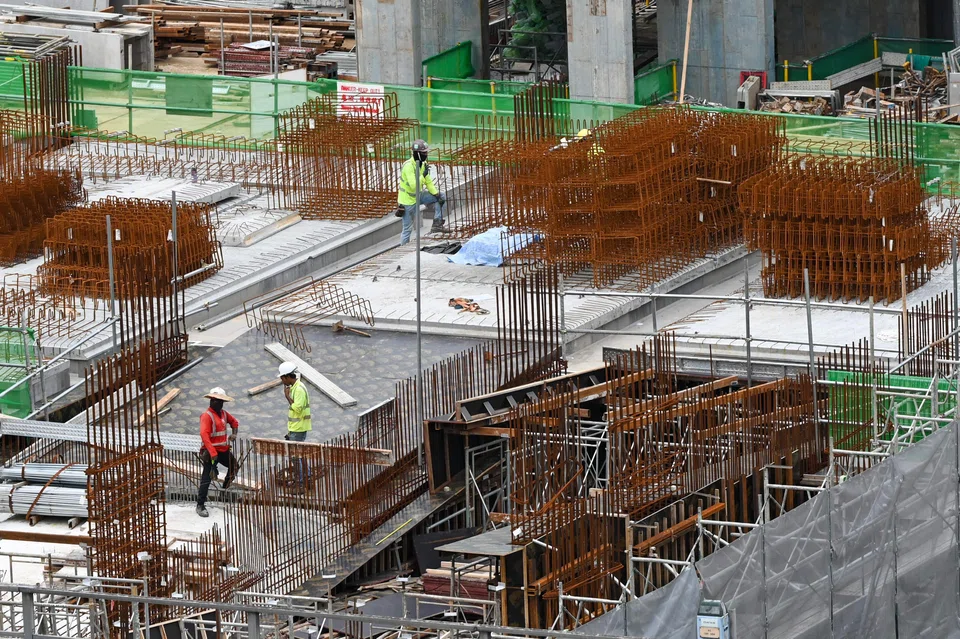
THE revenues of construction companies in Singapore have improved as work has resumed and pandemic-era supply chain issues eased.
But even so, pre-pandemic contracts and other headwinds have continued to pressure their bottom lines.
The Building and Construction Authority’s (BCA) tender price index has risen 30.8 per cent between 2019 and 2022. Prices rose a further 3.9 per cent in the first quarter of this year.
Construction companies have seen some positives from this increase in prices.
For instance, Tiong Seng Holdings posted a 95.6 per cent rise in revenue to S$198.8 million for the six months ended Dec 31, 2022. In particular, its construction segment revenue grew 123 per cent to S$179.2 million on the resumption of construction work.
Yet, it also reported a gross loss of S$24.6 million in the same period. The company cited cost pressures, such as higher material prices, and the re-awarding of subcontract works, as reasons for the loss.
Tiong Seng had to re-award subcontracts after some subcontractors could no longer carry on with works as the government’s support schemes were wound down.
The Singapore Contractors Association’s (Scal) immediate past president Kenneth Loo said companies may still be fulfilling pre-pandemic contracts that were issued when material and manpower prices were relatively lower.
“If you have (pre-pandemic) jobs that are still being completed, you will probably be hit with the extra cost pressure that you can’t pass down,” he said.
Loo added that contractors take about three years to construct typical mid-rise developments. He believes most pre-pandemic contracts should be completed by the end of this year or early next year, taking into account the loss of productivity during the pandemic.
Infrastructure work, such as MRT projects, typically run for between five and eight years, he said.
Companies that are stuck completing pre-pandemic contracts without being able to commit more resources to newer, better-paying projects will face greater challenges, he added.
Ho Kong Mo, managing director of quantity surveyor Threesixty Cost Management, said mechanical and electrical (M&E) prices should stay elevated; although copper prices, which are a major cost driver, should stabilise.
“We anticipate M&E prices to stay elevated due to the shortage of specialist subcontractors with a few major M&E contractors having already suffered from insolvency due to losses sustained during the pandemic,” he said.
Manpower woes
Construction companies are also struggling with a lack of dormitory spaces to house the workers needed to do more jobs.
BRC Asia reported a 9.6 per cent fall in revenue to S$717.1 million for the six months ended Mar 31, 2023, while net profit declined 34.1 per cent to S$26.2 million.
In its financial statement, the company cited “lower contractual offtake because of slower site progress” as the primary reason for its revenue decline.
Group chief executive Seah Kiin Peng said he has heard contractors gripe about the lack of dormitory spaces, although they are expecting more beds to be made available towards the end of this year.
He added that there has been no lack of contracts being launched in the sector, but rather a lack of progress at sites in the last six months.
Still, he noted that construction activities have resumed substantially since the second half of April.
Linesight South-east Asia director Michael Murphy said the labour crunch could push contractors to adopt more efficient methods of construction.
Hong Leong Asia completed the group’s integrated construction and prefabrication hub manufacturing facility in December 2022, which the company said will enable it to “substantially automate” its precast division.
The company posted a 22.2 per cent rise in its building materials segment revenue to S$303.4 million for the six months ended Dec 31, 2022, but the segment’s profit fell 3.1 per cent to S$17 million.
Coming recovery
A strong pipeline of potential projects and a smaller surviving pool of contractors should, nevertheless, be positive for the industry.
BCA in January projected the value of construction contracts awarded in 2023 to be between S$27 billion and S$32 billion. Of this, 60 per cent would be from public sector works.
Scal’s Loo noted that much of the sector’s capacity should also be “sucked up” by the ongoing ramp-up in Housing and Development Board Build-To-Order flats, as well as mega projects such as the construction of the integrated resort extensions and Changi Airport Terminal 5.
Construction material prices should also stabilise as companies diversify their sourcing.
Linesight’s Murphy said companies have begun sourcing steel from the US and Europe in anticipation of increased domestic demand in China.
“That has probably helped… so there wasn’t the massive jump that we all expected,” he added.
As at Jun 1, construction-related stocks listed on the Singapore Exchange have gained 6 per cent on average this year. The best performer, OKP Holdings, is up 58.1 per cent. The worst, BRC Asia, is down 9.4 per cent. (*see amendment note)
Amendment note: The article earlier said that Lian Beng Group was the top performer among construction stocks.