

Amazon raises hourly wages at cost of almost US$1b a year
 Add BT as a preferred source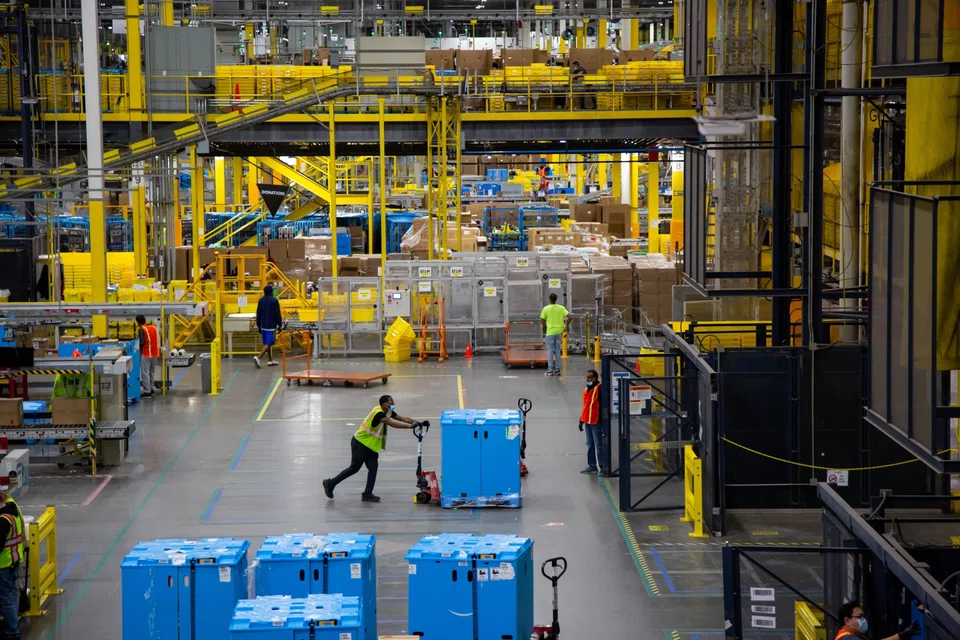
DeeperDive is a beta AI feature. Refer to full articles for the facts.
AMAZON.COM announced a pay increase for hourly workers in the US that it says will take average starting wage for most front-line employees in warehousing and transportation to more than US$19 an hour.
The company’s minimum level of US$15 an hour for all hourly workers in the US remains unchanged. For jobs in Amazon’s customer fulfilment and transportation groups, the starting pay will increase to US$16 an hour, a spokesperson said on Wednesday (Sep 28) in an email.
The Seattle-based company said the raise represents additional spending of almost US$1 billion over the next year. Amazon is the second-largest private employer in the US, behind Walmart. Amazon employed more than 1.1 million people in the US at the end of 2021. The company’s total workforce was more than 1.5 million as of Jun 30. Most of those employees are hourly workers who pack and ship items or work in retail stores like Whole Foods Market and Amazon Fresh.
The company also is expanding access to a programme that lets employees get paid more frequently than once or twice a month, according to a statement.
Amazon faces employee activism and union drives at some of its facilities, including at an Albany, New York-area warehouse where a vote is scheduled for next month. The company is challenging an election last April in which more than 8,000 workers at a Staten Island, New York, warehouse won the right to be represented by a union. BLOOMBERG
Decoding Asia newsletter: your guide to navigating Asia in a new global order. Sign up here to get Decoding Asia newsletter. Delivered to your inbox. Free.
Share with us your feedback on BT's products and services
TRENDING NOW

Air India asks Tata, Singapore Airlines for funds after US$2.4 billion loss

‘Boring’ is the new black: The stars are aligning for a Singapore stock market revival

From 1MDB to ‘corporate mafia’: Is Malaysia facing a new governance test?
South-east Asian markets account for 8.8% of global capital inflows from 2021 to 2024: report

