

Aussie vineyards expecting better earnings as their hedges wind down
Exporters can now lock in the weaker exchange rate with new, more favourable contracts
Sydney
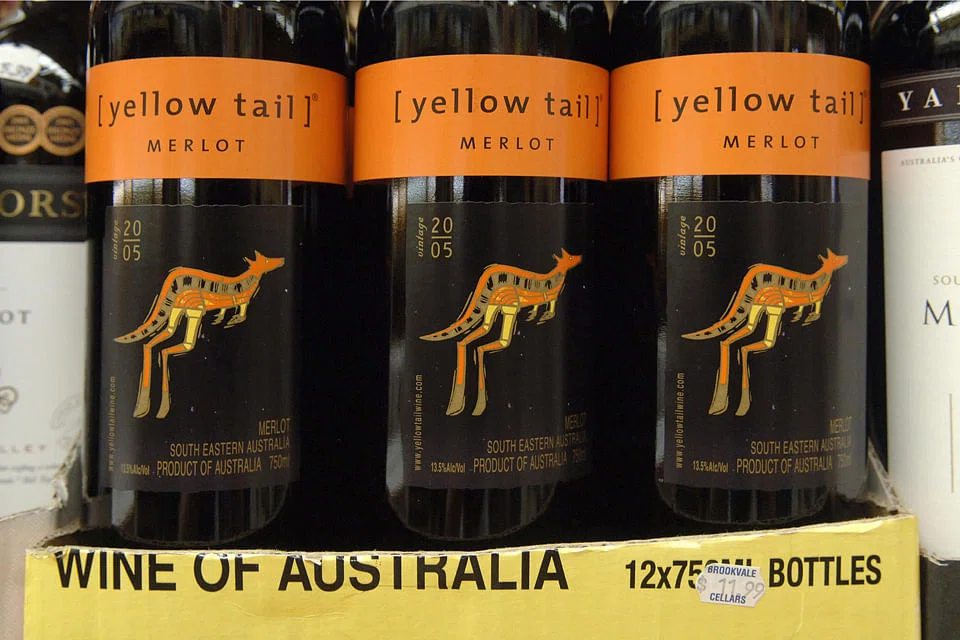
THE Australian dollar has completed its third year of declines yet John Casella, whose family exports Yellow Tail wine around the world, is only now starting to fully savour its benefits.
Mr Casella expects improved earnings as unfavourable currency hedges wind down and his company can lock in the weaker exchange rate with new contracts. A survey by National Australia Bank showed exporters Down Under had about a third of their currency exposure protected by hedges in the third quarter and the contracts were more favourable than in the past, because they improved as the local dollar depreciated.
"We are very profitable today and are going to be even more profitable this coming year as that hedging wears off and we begin to take advantage of the low currency," said Mr Casella, managing director of Casella Wines. "Our business is wine, not currencies, so we manage that the best we can."
While the initial benefit of the Aussie's slide was felt in sectors such as tourism and mining, the impact will spread through the economy with time and spur investment and spending decisions this year, according to Commonwealth Bank of Australia. The boost is particularly important at a time when the central bank and the government have been reluctant to add the stimulus needed to spur investment and hiring in non-mining sectors as a once-in-a-century commodities boom continues to unwind.
Australia's dollar fetched 71.80 US cents as at 10.30 am in Sydney on Tuesday and is predicted to weaken to 69 by year-end, adding to a three-year, 30 per cent plunge. It rallied towards the end of 2015 after reaching a 6 1/2-year low of 68.96 in September, climbing 3.8 per cent in the final quarter. The Aussie has averaged about 91.50 since the end of 2008, or 20 per cent stronger than its mean over the 32 years since currency controls were scrapped.
"At a level of 70 cents, the economy is a lot more competitive than at US$1.05," said Riki Polygenis, the Melbourne- based head of Australian economics at NAB. "The lags can be quite long, so even though the currency may have stabilised you're still going to get follow-on benefits for some years to come."
NAB's survey found that companies have responded to the lower currency by focusing more closely on foreign-exchange protections and import substitution. Exporters - probably in an attempt to insulate their earnings from both a sudden bounce in the Aussie as well as market volatility - increased the amount of exposure they hedged in the third quarter to near the highest level since 2001. For large exporters, that proportion increased to more than 40 per cent from 27 per cent at the start of 2014, the poll found.
At the same time, the average term for contracts declined to less than eight months versus more than a year in 2011, when the currency averaged over US$1, signalling that the impact of future weakness would flow through more quickly.
Mr Casella says he didn't know "when the dark clouds were going to leave us", referring to the days when the Aussie was soaring. The company chose to maintain pricing in its overseas markets at the time, pushing it into losses of A$29.9 million (S$30.5 million) in the year through June 2012 and A$11.9 million in 2013, before swinging back to a profit of A$37.8 million the following year, according to documents filed with the Australian Securities & Investments Commission. The company is "comfortably profitable" at about 80 to 85 US cents, he said.
"In maintaining then our market share, maintaining our volume, we are now in a position that we are quite profitable and able to reinvest a lot of those profits in building the brands even further," he said in a Nov 18 interview. He said he had hedges in place for 16 to 18 months.
The company has expanded its sales and marketing team, adding eight new roles over the past year and a half. It last month acquired Brand's Laira Winery following its 2014 purchase of Peter Lehmann Wines.
Michael Blythe, chief economist at Commonwealth Bank, Australia's biggest lender, said businesses need to have confidence that the currency is going to remain at lower levels before you see the flow-through into capital spending and hiring plans. It isn't just exporters of goods and services who eventually benefit, he said, with import substitution in areas such as retail spending at home, rather than online, or foreign investment in domestic real estate widening the economic impact.
Philip Moffitt, Goldman Sachs Asset Management's head of fixed income for Asia Pacific, said the real effects of the Aussie's depreciation have become apparent during trips overseas. A GoPro was on his Christmas shopping list and he was surprised to find a better price for the action camera at Sydney's Kingsford Smith airport than at J&R in Manhattan.
"That hasn't been the case in forever, or for a long time," he said, recalling a period when a trip to the US meant taking empty bags and filling them with things you didn't need because it all seemed so cheap.
Such shifts can take time. A permanent 10 per cent depreciation in the currency is estimated to increase gross domestic product by about one per cent after two to three years and raises year-ended inflation by as much as half a percentage point over the same period, a 2014 research report from the Reserve Bank of Australia's economic analysis department showed.
"When it comes to changing behaviour like deciding whether to build up an export market or deciding you're going to build a new factory because where the currency is now makes it attractive to do so, that takes time," said CBA's Mr Blythe. "We are yet to see the full impact of the lower Aussie dollar flow through and 2016 should be the year when a lot of it happens." BLOOMBERG
TRENDING NOW

Nvidia reinstates Jensen Huang as CEO; Trump says move poses no national security risk

Beyond the greenback, Vietnam’s big borrowers turn to Asian-currency bonds

Indonesia’s coal tycoon Low Tuck Kwong replaced as Bayan Resources president-director

Six workers file employment claims against Crystal Jade Food Manufacturing

