

Australian farmers pressured by South-east Asia's wheat demands
Supplies already curbed by dry weather, limits on amount of arable land
Singapore
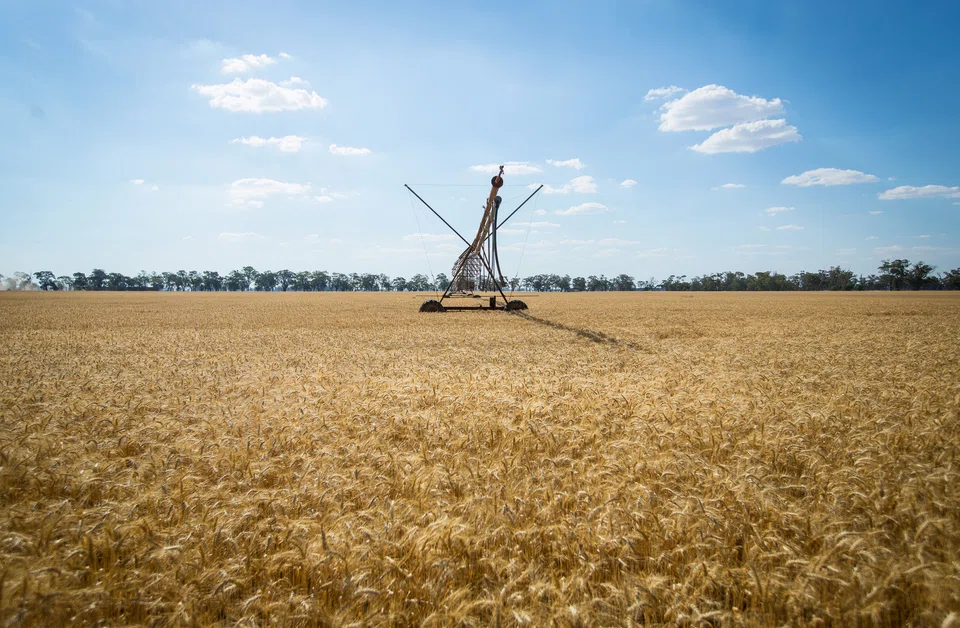
WHEAT farmers in Australia, the world's fourth-biggest shipper, will face an increasing challenge keeping up with their neighbours' appetite for bread and noodles.
Demand from Indonesia, the Philippines and three other South-east Asian nations is set to jump 40 per cent to 13.2 million tonnes by 2020, said Greg Harvey, CEO of Interflour Group Pte. That may outpace the ability of Australia to supply the variety used in soft bread and noodles, he said in an interview in Singapore.
Faster growth and an expanding population are boosting consumption of everything from wheat and sugar to cooking oils in the region, which has more people than the European Union. Indonesia will become the world's second-largest wheat importer this year and has overtaken India as the top user of palm oil, the US government estimates. The US, Canada and Russia could fill any shortages in Australian supply, he said.
"It's a bullish story for Australian wheat," said Mr Harvey, whose company is a venture between Salim Group in Indonesia and CBH Group, Australia's biggest grains shipper. "There will be more demand in 2020 than the ability to supply, at least on paper. That's a good problem to have."
Wheat in Chicago entered a bear market last month as world stockpiles of grains excluding rice head for the highest since mid-1980s, the International Grains Council estimates. Prices fell 13 per cent this year to US$5.12 a bushel on Thursday.
The states of Western Australia and South Australia, top producers of the low-protein white wheat used in noodles and soft bread, are the country's main suppliers to South-east Asia, Mr Harvey said. His projections assume that farmers will have difficulty increasing exports from the 11.1 million-tonne annual average in the five years to 2014.
Dry weather and limits on the amount of land suitable for cultivation are already curbing supplies. Total wheat shipments from Australia may drop 7.2 per cent to 16.99 million tonnes in the 12 months to June 30, the lowest in five years, after the hottest spring on record, according to the Australian Bureau of Agricultural and Resource Economics and Sciences.
While wheat imports by South-east Asian countries from all origins will reach 17.75 million tonnes in 2014-2015, or 8.6 per cent more than the average in the past five years, exports from Australia are estimated to be 8.2 per cent below the five-year average, US Department of Agriculture data show.
"We have a productivity growth rate at about one per cent a year and I hope this will continue," said Simon McNair, CEO at Australian Grain Growers Co-Operative. "There's a finite amount of farmlands. There's competition from other agricultural products like cattle, and other crops," he said by phone from Adelaide.
South-east Asian nations are still expanding. The International Monetary Fund forecast last month that growth in the five-biggest economies will accelerate to 5.2 per cent in 2015 and 5.3 per cent in 2016 from 4.5 per cent last year.
Demand for wheat flour will increase at the fastest pace in Indonesia, Vietnam and the Philippines, with the average exceeding 7 per cent a year in the decade through 2020, Mr Harvey said on Jan 28. Consumption per person in the region will climb to 29kg in 2020 from 20kg last year, he said.
Interflour will complete a mill at Subic Bay in the Philippines by mid-2016, the seventh in the region, boosting combined annual capacity by 175,000 tonnes from 1.5 million tonnes now, he said. Interflour also owns a mill in Turkey. BLOOMBERG
TRENDING NOW

Nvidia reinstates Jensen Huang as CEO; Trump says move poses no national security risk

Indonesia’s coal tycoon Low Tuck Kwong replaced as Bayan Resources president-director

Nvidia surges 33% after reinstating Jensen Huang, reviving AI trade; stocks soar in US and Europe

Consider lowering homeownership barriers for some non-resident foreigners

