Australia’s retail sales beat forecasts in May, higher prices a factor
 Add BT as a preferred source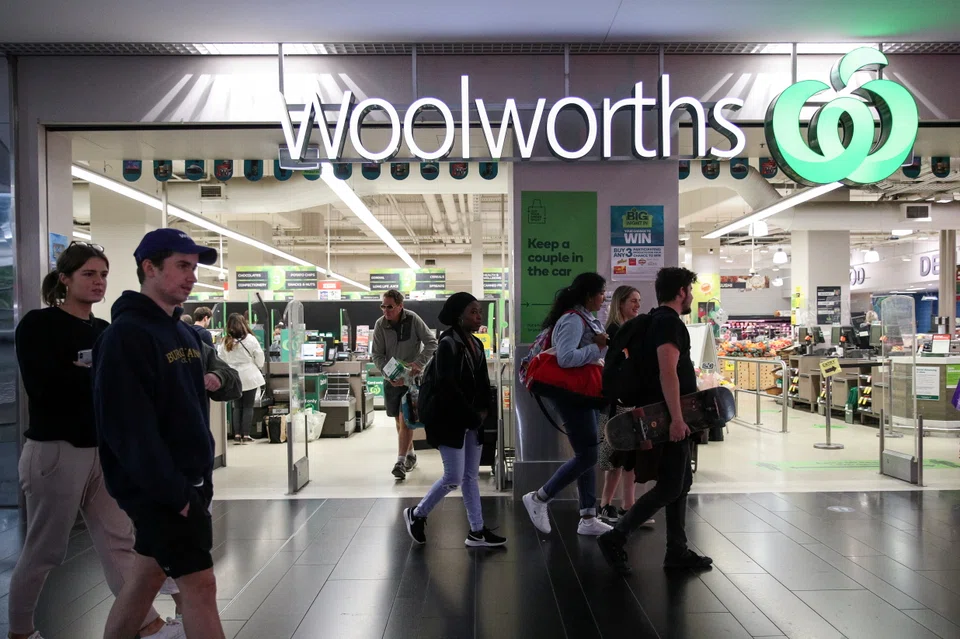
DeeperDive is a beta AI feature. Refer to full articles for the facts.
AUSTRALIAN retail sales again beat expectations in May as consumers spent more on eating out and in department stores, suggesting demand is proving resilient in the face of surging inflation and rising interest rates.
Retail sales rose 0.9 per cent in May, the fifth straight month of growth and double market forecasts of a 0.4 per cent increase, data from the Australian Bureau of Statistics showed on Wednesday.
Sales rose to a record A$34.2 billion (S$32.8 billion), up a hefty 10.4 per cent on May last year, though some of that reflects an increase in prices rather than volumes.
“Higher prices added to the growth in retail turnover in May,” said Ben Dorber, ABS director of quarterly economy wide statistics. “This was most evident in cafes, restaurants and takeaway food services and food retailing.”
Spending on eating out climbed 1.5 per cent in the month, while department stores enjoyed a 5.1 per cent jump in sales. That resilience supports the Reserve Bank of Australia’s (RBA) confidence that consumption can withstand higher borrowing costs.
The central bank has already raised interest rates twice since May and is considered certain to hike again at its July policy meeting next week, likely by 50 basis points to 1.35 per cent.
Navigate Asia in
a new global order
Get the insights delivered to your inbox.
Policy makers are hoping a 50-year low jobless rate and some A$260 billion in excess savings accumulated by households during the pandemic will underpin demand. However, real incomes are being squeezed as inflation runs far ahead of wages, while house values are falling.
Energy costs have spiked recently and widespread flooding has sent vegetable prices soaring. Analysts at Goldman Sachs think consumer price inflation could peak at 8 per cent in the third quarter, a 32-year top and higher even than the RBA’s upwardly revised forecast of 7.0 per cent.
The RBA has emphasised that it is uncertain how consumers will fare, one reason investors have pared back expectations for how fast rates will rise.
Markets have the 0.85 per cent cash rate hitting 3.25 per cent by year-end, compared with 3.75 per cent just a couple of weeks ago.
“The RBA’s own rate hikes will weigh directly on disposable incomes, by sharply increasing household interest payments,” warned Paul Bloxham, head of Australian economics at HSBC, who expects house prices to drop 14 per cent over the coming 18 months.
“Although it is not our central case, high inflation and rising interest rates mean an increasing risk that Australia’s economy faces a recession in the next 12-18 months.” REUTERS
Decoding Asia newsletter: your guide to navigating Asia in a new global order. Sign up here to get Decoding Asia newsletter. Delivered to your inbox. Free.
Share with us your feedback on BT's products and services