Black Friday discounts fade as demand, inflation power ahead
 Add BT as a preferred source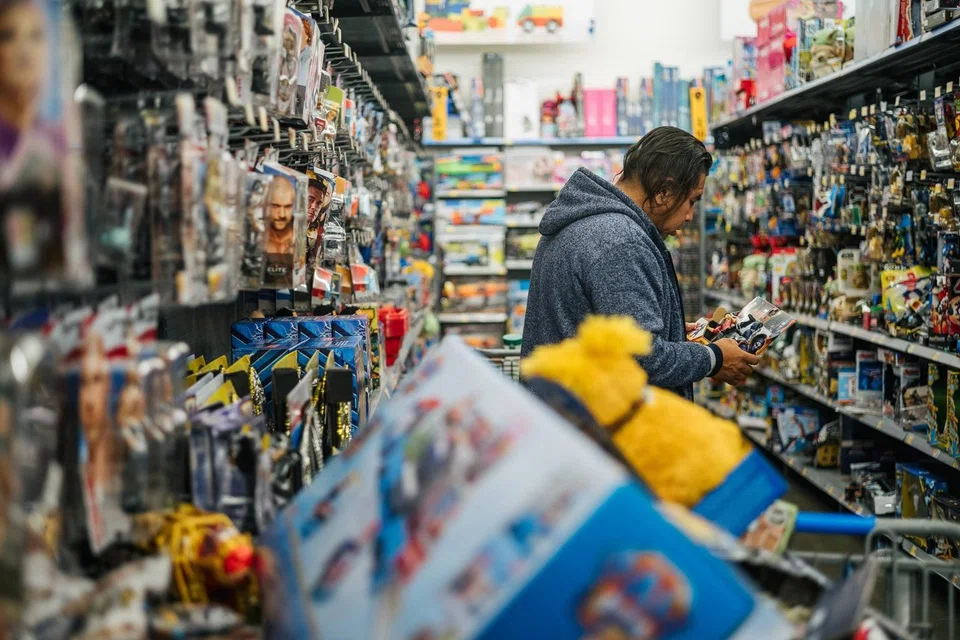
DeeperDive is a beta AI feature. Refer to full articles for the facts.
[DALLAS] Black Friday deals ranked among the least generous in years as more US consumers headed back to stores on one of the busiest shopping days of the year.
Retailers appear to have the "lowest level of clearance goods in five years or more", Oliver Chen, an analyst at Cowen & Co, said in a report Friday (Nov 26).
According to Salesforce.com, the average discount on products purchased during the past couple of days globally was 24 per cent, down about 2 to 4 percentage points from the average in recent years.
"If consumers see 25 per cent off, they should feel really good about that," Rob Garf, Salesforce.com's vice president of retail, said in an interview.
The start of this year's holiday season has "some of the lowest average discount rates that we've seen in recent history".
Chalk it up to a mix of strong demand, rising inflation and diminished product availability because of the global supply-chain crunch.
Navigate Asia in
a new global order
Get the insights delivered to your inbox.
While retailers are dangling deep price cuts on some products, the overall level of markdowns is apt to enable retailers such as Macy's, American Eagle Outfitters and Kohl's to shore up their merchandise margins, Chen said.
And while bargain hunters may be frustrated, shoppers are still spending freely.
"We're likely to see very much more full-price selling," Ken Perkins, founder of Retail Metrics, a researcher, said in an interview with Bloomberg TV. "Consumers have been surprisingly willing to accept price increases."
Indeed, Mastercard SpendingPulse estimated that Black Friday revenue, in stores and online, rose nearly 30 per cent through 3pm New York time compared with 2020.
Retailers' shares held up reasonably well amid a broad market sell off Friday (Nov 26), with the S&P Retail Select index down 1.4 per cent while the S&P 500 lost 2.3 per cent.
'50 per cent Off?'
Tia Smith, a 22-year-old sales assistant at a Macy's in Brooklyn, said some shoppers inquired about the discounts they were accustomed to before the pandemic.
"They ask me, 'Isn't this supposed to be 50 per cent off?'" she said.
Given a scarcity of irresistible bargains, traffic was light at some locations.
A Target store in the New York suburbs had less than half as many people compared with Black Fridays before the coronavirus pandemic, said Meliesha Francis, 37.
She came for staples such as Huggies diapers, which were not discounted. A trip to the Bed Bath & Beyond in the same shopping complex earlier that morning had proved equally fruitless.
"There was only one set of curtains on sale," Francis said.
Part of that is by design. Target and Walmart began offering Black Friday deals weeks ago, spreading out demand over a longer period. Both companies reported strong sales growth when they reported earnings last week and issued upbeat outlooks for holiday spending.
"While historically we thought of Thanksgiving weekend and Black Friday as the kickoff to holiday season, in many ways it's now halftime," said Matt Shay, chief executive officer of the National Retail Federation.
Online Spending
Online spending on Thursday (Nov 25) - Thanksgiving Day in the US - came in at the low end of expectations with US$5.1 billion, according to the Adobe Digital Economy Index.
Adobe had predicted a range of US$5.1 billion to US$5.9 billion earlier this week. But the company reiterated its prediction that online spending from Nov 1 through Dec 31 will rise 10 per cent to US$207 billion, a record.
At physical stores, comprehensive foot-traffic data are not yet available for Friday, and overall sales could still be elevated thanks to online orders or shopping into the evening. After all, a lack of doorbusters means shoppers do not really need to get there early.
"The chaos of past Black Fridays would actually be problematic given the inventory scarcity," said Simeon Siegel, a retail analyst at BMO Capital Markets. "The reality is companies don't have the units to see 2019 traffic."
Whatever the final sales tally, plenty of customers came out to shop.
By midday at a Tanger Factory Outlet in Fort Washington, Maryland, police began limiting the number of cars in the lot.
Around the same time, a crowded Best Buy store in Irving, Texas, had long lines at the cash register and a steady stream of customers exiting with their purchases.
"It's better to actually see what you're getting," said Jorge Arriaga, 42, a supervisor at a concrete recycler who bought a 55-inch TV for about $400.
"Sometimes when you order online, you open the package and it's not quite what you were expecting."
'Urban Myth'
Craig Johnson, president of Customer Growth Partners, dismissed a lack of deals as "an urban myth," and said plenty of stores were offering discounts of 40 per cent to 50 per cent.
Foot traffic is likely to prove strong at malls around the country even if rainy weather hurt turnout in the north-east, he said.
Since malls are no longer opening late at night on Thanksgiving, teen shoppers seem to have shifted back to Black Friday morning and that drove a lot of the action, he said.
Still, many stores are finding they can pull back from the price reductions they have offered in the past.
Abercrombie & Fitch was offering 50 per cent discounts 2 years ago, said CEO Fran Horowitz. Now they are only 30 per cent.
"I've been here for 7 years and this is the first time we've been able to do 30 per cent off since I've been here," she said in an interview. "Those 20 points make an enormous difference in our bottom line, and the consumer is obviously responding nicely to our product."
BLOOMBERG
Decoding Asia newsletter: your guide to navigating Asia in a new global order. Sign up here to get Decoding Asia newsletter. Delivered to your inbox. Free.
Share with us your feedback on BT's products and services