Brazil's sparkling wine producers carve a growing niche
 Add BT as a preferred source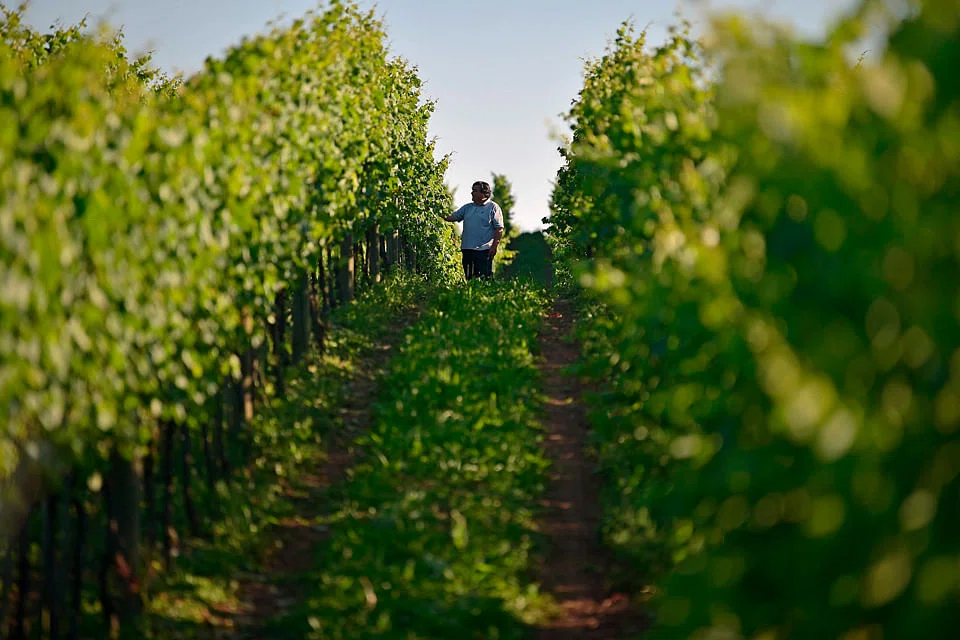
Pinto Bandeira, Brazil
FOUR workers in a wine cave quickly rotate hundreds of stored bottles a quarter-turn to help with fermentation. Are we in France's Champagne country? No, the scene takes place in Brazil, a country better known for its gorgeous beaches and its refreshing caipirinha cocktails.
"In our Serra Gaucha region, we have the ideal climate to produce a quality sparkling wine," wine expert Carlos Abarzua says.
Mr Abarzua works for the Familia Geisse winery in Pinto Bandeira, in Rio Grande do Sul state, wedged near Brazil's southern border with Argentina and Uruguay.
Sparkling wine from Brazil? Not the first thing that comes to mind. The country is better known for its cachaca - the sugarcane-based alcohol used in caipirinhas - and for its big industrial breweries.
Brazil's wine production is far smaller than that of Argentina or Chile, but the southern part of the country is a sort of oasis for grape production owing to its cool climate and favourable growing conditions.
In the 1970s, big multinational producers such as France's Moet & Chandon were drawn to the Serra Gaucha, with its rolling green hills and ample rainfall. The region accounts for 90 per cent of Brazilian wine production.
Since then, the area has increasingly specialised in the production of sparkling and Champagne-style wines.
"Argentina is known for its Malbec, Chile for its Carmenere, Uruguay for its Tannat," says Andre de Gasperin, vice-president of the Brazilian Association of Oenology. "Brazil is not associated with a particular grape variety, but our specialty is sparkling wine."
"The Serra Gaucha is a cooler region, with good altitude, ideal for white grapes, which have good acidity and which ripen well, like in the Champagne region," he adds.
In recent years, sparkling Brazilian wines - principally using Chardonnay, Pinot Noir and Italian Riesling grapes - have won dozens of international prizes.
In the 2018 Catad'Or Wine Awards competition, the biggest in Latin America, the Moscatel from the Garibaldi cooperative was voted South America's best sparkling wine.
And Brazilians are crazy about it: 66.2 per cent of the sparkling wine sold in the country is locally produced, according to the Brazilian Union of Viticulture.
For other wines, the reverse is true: only 11.8 per cent are produced in Brazil. The rest is imported, about half from Chile.
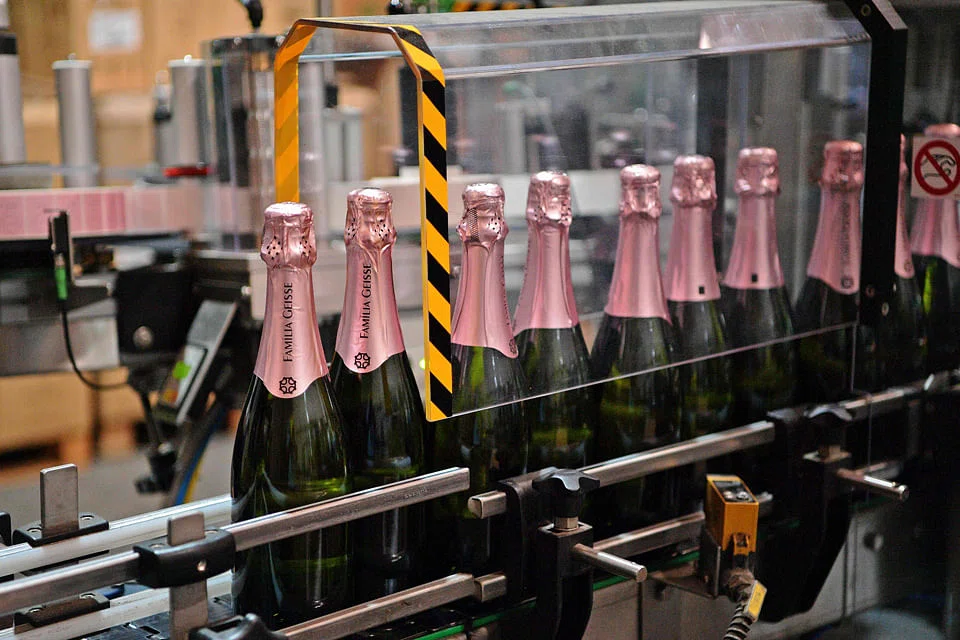
The Familia Geisse, situated in a remote and verdant valley covered with vines, is Brazil's only sparkling wine producer to use the Champagne or traditional method, involving a second in-bottle fermentation.
Most Brazilian wineries use the Charmat or tank method, in which the second round of fermentation takes place not in bottles but in stainless steel tanks.
Along with four other producers in Pinto Bandeira, the Familia Geisse hopes to obtain an Appellation d'Origine Controlee (AOC) - a protected designation of origin - for its sparkling wine.
But the vitality of Brazil's sparkling wine production could be threatened by a trade deal between the European Union and Mercosur, the South American economic and political bloc. If ratified, it could lead to an influx of lower-priced sparkling wine from abroad.
"Under this agreement... many other products will enter into competition with our national market. And we know that the wine sector in Europe is heavily subsidised," said Mr Abarzua.
Jorge Tonietto, a wine specialist with the Brazilian Agricultural Research Corporation, agrees that the EU-Mercosur pact will present a serious challenge to Brazilian wine producers - already struggling with high production costs, burdensome taxes and limited production capacity. But Mr Tonietto remains optimistic: "If we make good products, we will get there. Brazil is a market with a good outlook for growth."
"We have the consumers - we don't need to export our wine," he adds. "This proximity is advantageous; and we can also bank on wine tourism." AFP
Share with us your feedback on BT's products and services