
China’s nascent medical tourism lures foreign patients with cutting-edge, cheap medical care
The country has rapidly emerged as an important player in global medical research and innovation
[BEIJING] Stuart Lye, 58, was living in New Zealand and on borrowed time - doctors had told him he had just three months to live in 2018, when he was diagnosed with high-risk myeloma. While years of treatment, including chemotherapy, stem cell transplants and drugs, had extended his life, his health was worsening and he’d run out of options at home.
He’d heard about CAR-T, a form of immunotherapy. But it’s not yet available commercially in New Zealand, and the clinical trials that are underway are not for his specific cancer. In the closest country where it’s accessible, Australia, the procedure could cost more than A$500,000 (S$450,470).
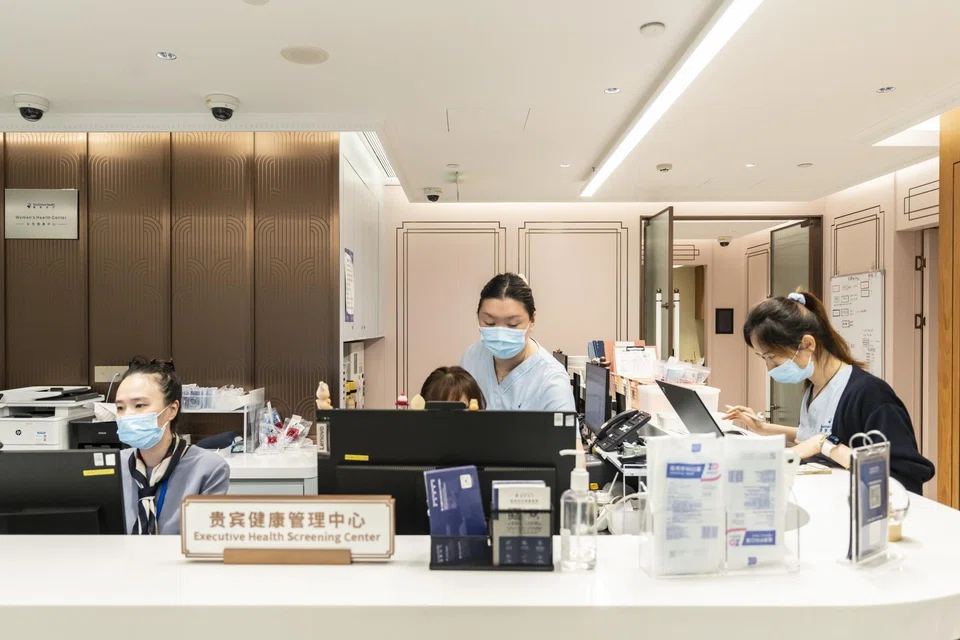
Fortuitously, a fellow New Zealand patient who had received the treatment in China introduced Lye to a hospital in Shanghai and last year, after just 10 days of communication with the centre, he and his wife decided to head abroad. Following seven weeks of undergoing a clinical trial, his cancer was brought under control. The entire process, including hospital care and airfare, cost Lye about US$65,000.
“Looking outside of New Zealand for CAR-T was my only option,” he said. “China was an easy choice as they are at the forefront in research and development, and the treatment is near a 10th of the cost of other countries.”
Lye is one of a growing number of foreigners travelling to China for life-saving treatments as the easier availability of cutting-edge procedures, offered far cheaper than patients can access at home, propels the country into a rising hub for medical tourism.
While traditional hotspots in the region, such as Thailand, South Korea and Malaysia, focus on services such as cosmetic surgery, IVF or physicals, China is trying to differentiate itself by providing some of the world’s most advanced procedures.
“There are two reasons why a patient travels for medical treatments: availability of advanced treatments and price,” said Victor Cao, operations director of Joyful Medical, an agency in Shanghai that connects international patients to advanced cancer therapies in China. “Chinese people used to travel overseas for treatments that were not available at home, but now tables have turned.”
As expanding visa-free policies eased travel in the past year or so, videos are proliferating on social media of foreigners recounting their positive experiences of treatment in China, usually for consumer procedures such as acupuncture and tooth scaling. But one treatment that’s more quietly gaining traction is CAR-T, among the most promising breakthroughs in oncology but unavailable in most countries, or extremely costly.
The process sees doctors collect T cells from the patient’s blood, then modify them in a lab to produce a special receptor, CAR, that can bind to a specific protein on cancer cells. These engineered cells are then multiplied into large numbers and infused back into the patient. The CAR-T cells seek out cancer cells carrying the target antigen and kill them.



In the US, one single infusion can cost between US$300,000 to US$475,000, according to the American Cancer Society.
In China, the equivalent costs about US$150,000 to US$180,000, and it could get even cheaper – its drug regulator recently accepted a marketing application for a therapy aimed to be priced below 300,000 yuan (S$57,036).
China’s medical tourism market remains in its infancy.
Lecheng International Medical Tourism Pilot Zone in Hainan, which was designated as the country’s only special medical zone in 2013, treated just a few thousand foreign medical tourists last year, compared to hundreds of thousands of domestic patients who visited. There, patients can access advanced drugs, devices, and therapies approved in other countries but not elsewhere in mainland China.
But China is pushing to upgrade its economy and reshape its global image from just a manufacturing hub into a provider of high-value services, and demand for medical tourism is surging.
Globally, the market is estimated at around US$34 billion and expected to reach US$126 billion by 2035, according to San Francisco-based Grand View Research.
Meanwhile, China’s sector is projected to grow from US$1.3 billion in 2025 to US$3.4 billion by 2035, according to New York-based firm Market Research Future.
Lye’s experience underscores how China’s longer-term strength may lie in advanced treatments, complex surgeries and even emerging technologies such as brain implants. SinoUnited Health, a Shanghai-based healthcare provider, has already received about 30 foreign patients for CAR-T therapy since it treated the first in late 2024.
“The patients chose China for something they can’t get at home,” said Shi Haoying, the group’s founder and CEO. “I think the growing attention to medical tourism to China is the inevitable result of long-term accumulation and development in many areas, such as growing medical technologies, quality of service and cost-effectiveness.”
It’s not only about cost, but also availability. Although its first CAR-T product was only approved in 2021, China now has seven approved commercial therapies, matching the US, where the treatment originated.
China also leads the world in the number of CAR-T clinical trials, according to ClinicalTrials.gov, the world’s largest public registry database of clinical studies.
Foreign patients also come to China for faster access. Demand is lower at its hundreds of international hospitals, as such therapies are often not covered by China’s insurance system and remain too expensive for most local patients.
“Many new treatments, including in very advanced areas, are made in China but too advanced for the state of its healthcare system and the ability of its patients to pay for these things,” said Jeroen Groenewegen-Lau, an analyst at the Mercator Institute for China Studies. “It’s in China’s interest to integrate into the international system.”
China has rapidly emerged as an important player in global medical research and innovation. By 2024, it had reached parity with the US in the number of experimental medicines entering clinical testing, and completed trials two to five times faster than the US and Europe, according to a McKinsey analysis.
In recent years, China has been the first to test some complex treatments and clinical trials. Its doctors used a homegrown cell therapy in 2024 to treat children with lupus. In 2025, it carried out Asia’s first cross-species kidney transplant. And in March, it became the world’s first country to approve a brain implant for commercial use in people with spinal cord injuries.
Allowing desperate patients to participate in clinical trials for a fee, however, raises concerns that hospitals could prioritise profit above safety. The field of cell therapy is still haunted by the death in 2016 of a student who spent over 200,000 yuan on an experimental cell therapy to treat a rare type of tissue cancer.
“Personally, I would certainly have reservations about rushing off to get into a clinical trial in China,” said Jacob Becraft, co-founder and CEO of Strand Therapeutics, a biotechnology company in Boston. “But China has incentivised many clinical trials and, for a lot of patients, that’s the only option.”
Last month, China started banning hospitals from charging patients fees related to clinical research.
At the same time, it allowed qualified hospitals to commercialise some advanced procedures such as cell therapies, brain-computer interfaces and xenotransplantation – animal-to-human transplants – without requiring traditional drug registration.
The new rules come after “years of concerns over a grey market of unapproved and insufficiently regulated cell therapies”, said Zhao Bing, a healthcare analyst at China Renaissance Securities. “The regulations are intended to shift China’s emerging medical technologies from a period of rapid, loosely supervised expansion towards stronger oversight and regulatory compliance.”
Still, the gap with traditional competitors such as Thailand and Singapore remains wide.
China’s healthcare system has not historically been designed around foreign patients, leaving services fragmented. Access to information is also limited, and the country lacks a dedicated medical visa scheme allowing patients to stay longer.
On Facebook, cancer patients gather on groups such as “CAR-T Cell Therapy Group” to ask about logistics issues such as visas, payment systems such as Alipay and language barriers.
“Why has Thailand been able to develop medical tourism successfully? It had tourism first, and then medical tourism,” said Zhao. “Even foreigners who have lived in China for years still encounter many inconveniences in daily life, so travelling to China for serious treatments will unlikely become mainstream anytime soon.”
Still, for patients like Lye, the decision has paid off.
Today, he lives quietly with his family in Hamilton on New Zealand’s North Island. Monthly blood tests have so far been showing stable results. He quit his police job and now works about 20 hours a week as a caretaker at a primary school, plays golf and has become a point of contact for other patients considering similar treatment in China.
“It is not a cure,” he said. “But if I need to and if there is the opportunity, I would go back to China to do it again.” BLOOMBERG
Decoding Asia newsletter: your guide to navigating Asia in a new global order. Sign up here to get Decoding Asia newsletter. Delivered to your inbox. Free.
Share with us your feedback on BT's products and services