

China’s Anta Sports buys 29% Puma stake for US$1.8 billion, rules out full takeover
The deal is expected to help German sportswear group increase its sales in the lucrative Chinese market
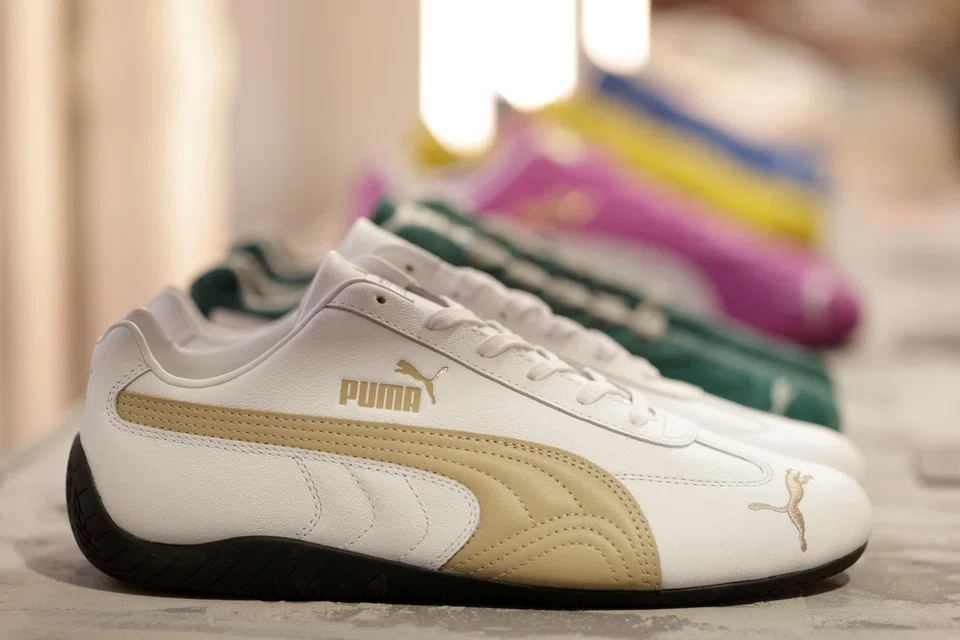
[BEIJING] China’s biggest sportswear brand Anta Sports Products said on Tuesday (Jan 27) that it would buy a 29.06 per cent stake in Puma from the Pinault family for 1.5 billion euros (S$2.3 billion), making it the biggest shareholder in the German sportswear maker.
The deal is expected to help Puma increase its sales in the lucrative Chinese market, and help Anta in its quest to become a more globalised business.
The US$27.8 billion Hong Kong-listed sportswear company will pay 35 euros per share in cash to Pinault family holding company Artemis, which also controls Paris-listed luxury conglomerate Kering.
The deal will help Artemis reduce its high debt load.
The offer represents a 62 per cent premium to Puma’s closing share price of 21.63 euros on Monday, and comes as the German firm seeks to revive its fortunes after it lost ground to Nike and Adidas.
It also faces competition from fast-growing brands like New Balance and Hoka. Reuters was first to report the deal earlier this month.
Puma has more scope for growth in China, a senior Anta executive told Reuters.
“Puma has more potential in the Chinese market, where they are underrepresented with only 7 per cent of their global revenues. We have a lot of insight on how to make Puma more successful in China,” said Wei Lin, Anta global vice-president for sustainability and investor relations.
Anta, which has a track record of acquiring and revamping Western sports and lifestyle brands, said that Puma was a global business which was complementary to its existing brands and could increase its international competitiveness.


Anta owns Fila, Jack Wolfskin, Kolon Sport and Maia Active. It is also the largest shareholder of Amer Sports, which includes Salomon, Wilson, Peak Performance and Atomic.
“Anta’s strong post-acquisition execution and operational empowerment have also given us confidence in its revitalisation of Puma business in the future,” Citigroup analysts said in a research note on Tuesday.
Anta announced that it would seek Puma board seats once the deal was finalised, but would not seek a full takeover of the company.
The transaction comes as the German sportswear group struggles to revive sales and investor confidence under new CEO Arthur Hoeld.
Puma has been under pressure as demand has weakened, and recent footwear launches, including the Speedcat, failed to generate the momentum executives had hoped for.
Hoeld, who took over last year, has outlined a turnaround focused on brand heat, performance products, and cost discipline.
Lin said that Anta had confidence in Hoeld and his team.
In October, Puma said that it would provide fewer discounts, improve marketing and cut its product range, in addition to cutting 900 jobs as part of a turnaround strategy.
Reuters reported in early January that Anta had offered to buy about 29 per cent of Puma from the Pinault family firm and had secured financing for the acquisition, although talks at the time had stalled over valuation.
Artemis, run by Francois-Henri Pinault, chairman of Kering, had previously described its Puma stake as non-strategic. The Pinault family took the holding from Kering in 2018, when the group repositioned itself as a pure luxury player.
“This disposal is consistent with the ongoing strategy implemented by Artemis to focus on controlled assets and to redeploy its resources towards new value-creating sectors,” Artemis noted.
The deal is subject to antitrust clearances, shareholder approval at Anta, and regulatory approvals in China and other jurisdictions. Anta said that it expects to convene an extraordinary general meeting, with closing targeted after conditions are met. REUTERS
Decoding Asia newsletter: your guide to navigating Asia in a new global order. Sign up here to get Decoding Asia newsletter. Delivered to your inbox. Free.
Share with us your feedback on BT's products and services
TRENDING NOW

Once staunchly pro-China, Malaysian Chinese businesses are now distancing themselves from Beijing

Looking beyond looming CEO succession, should UOB potentially pursue a transformative merger?

Could stablecoins be the future of money?

Grab CEO’s wife Chloe Tong on life with Anthony Tan and finding her purpose

