

China's Haier wants to connect kitchens to Web with GE deal
Hong Kong
WHEN Haier Group set its sights on entering the US market in 1999, it took a year before executives at the Chinese appliance maker secured a meeting with retailer Wal-Mart Stores Inc to show off its air-conditioners.
Haier, which at the time made one out of every three refrigerators sold in China, held little appeal for American consumers wary about the Chinese brand's quality and more comfortable with homegrown labels, according to a 2003 book The Haier Way.
Haier won't need to wait that long again. Last week's US$5.4 billion deal to buy General Electric Co's appliance unit, second only to Whirlpool Corp in the US, paves the way for the Chinese company to shed its image as a maker of cheap fridges and vault into the top echelon of high-end makers of Internet-connected kitchen products ranging from ovens to washers. "Haier will use this partnership with GE to transform itself - maybe to start applying what it already does in China on a global scale," said Torsten Stocker, a former partner at consulting firm AT Kearney's consumer practice.
Besides the purchase, Haier forged a "long-term strategic partnership" with Fairfield, Connecticut-based GE to jointly expand in high-tech manufacturing areas such as healthcare and the industrial Internet. According to Bill Fischer, a professor of management at the Lausanne-based IMD business school, that was Haier's biggest coup.
"I believe that Haier sees the partnership as potentially more important than the acquisition itself," said Prof Fischer, who's written a book about Haier's transformation.
The tie-up between Haier and GE was discussed "at the senior-most level" of both companies and potential global projects that draw on each other's expertise have been identified, a Haier spokesman said. A joint working group is being put together to narrow down details, according to the spokesman.
"The mention of other areas like healthcare is interesting as if you look at the whole picture of GE - it's a top healthcare equipment manufacturer globally, for example," said Feng Zhang, consumer appliances analyst for Euromonitor International. "Consumer appliances have limited revenue compared to industry solutions."
For a start, taking over GE Appliances gives Haier ownership of the second-largest US seller of major appliances such as refrigerators and dishwashers, according to Euromonitor International. That comes as growth at Haier's Shanghai and Hong Kong-listed units have plateaued amid China's slowing economy and weak property market, after posting years of soaring growth.
Shares of Haier Electronics Group Co, the company's Hong Kong listed subsidiary, fell one per cent to HK$12.24 as at 10.53am local time. The benchmark Hang Seng index rose 1.1 per cent. Shanghai-listed Qingdao Haier has been suspended since Oct 16 pending a "significant acquisition".
Still, worldwide sales at Haier's two listed units reached US$25.2 billion in 2014, triple that of GE's appliances and lightings unit. It's a far cry from the company's early days, when Haier tried to build a reputation as a company that responded quickly and creatively to the needs of neglected consumers.
In the late 1990s, Haier executives designed a vegetable washer after noticing farmers clean their produce in washing machines, according to the website of the company based in the eastern coastal Qingdao city. It took a similar strategy for its first forays into the US by churning out low-priced appliances such as mini-fridges meant for college dorms, and smaller wine cellars used by city dwellers.
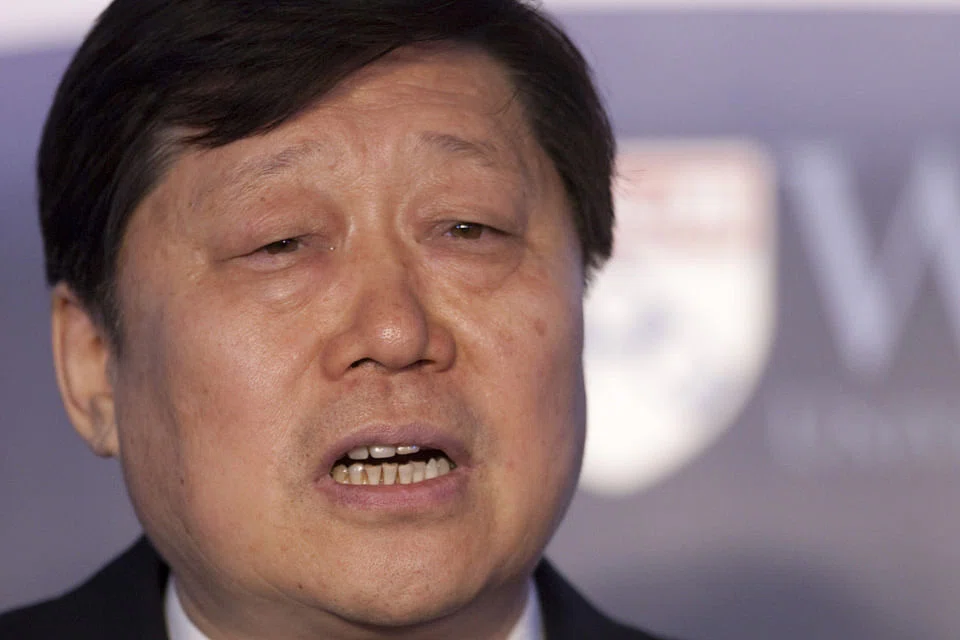
Haier founder and chairman Zhang Ruimin had bigger ambitions for American customers: establish a respected brand and break out of the low-cost game, according to a report by China Daily in 2012.
Under Mr Zhang, who in 1984 took charge of a loss-making collectively-owned Qingdao refrigerator factory that became Haier, the company became the first from China to build a manufacturing facility in the US in 2000. The company garnered accolades from the then-governor of South Carolina, where the factory was based, for helping counter the trend of off-shoring in American manufacturing jobs.
More recently, Haier's innovations have included remote monitoring of appliances' functions and allowing customers to customise the appliances that they buy, said Mr Stocker, who started this month as chief operating officer of Singapore-based electronics distributor Thakral Corp's lifestyle division. "It is under-appreciated in the US how advanced Haier is in product and manufacturing quality and the extent to which they have integrated products with the Internet," Shanghai-based Mr Stocker said.
Despite Haier's efforts to introduce consumers to its higher-end smart appliances such as a certified air-conditioner that works with Apple Inc devices such as the iPhone and iPad, American consumers remained largely unmoved. Haier's US market share for consumer appliances has barely improved, from 0.7 per cent in 2006 to 1.1 per cent last year, according to Euromonitor.
Haier's low US penetration after 15 years is a major factor behind Haier's bold bid for GE Appliances, said Euromonitor's Mr Zhang. "GE already has the brand name, loyal customer base and distribution network in the US."
GE's "Made-in-America" brand positions Haier well in the emerging markets of the Asia-Pacific, Africa and the Middle East. Dishwashers, in which the US manufacturer's appliance unit has a foothold, is also the appliance segment projected to grow the fastest in the next five years, he said.
Haier can make use of GE Appliances' cutting-edge technological standards to connect ordinary household appliances with smart-home systems, making breakthrough developments in smart appliances, the Chinese company said in an exchange filing. BLOOMBERG
TRENDING NOW

Nvidia reinstates Jensen Huang as CEO; Trump says move poses no national security risk

Beyond the greenback, Vietnam’s big borrowers turn to Asian-currency bonds

Indonesia’s coal tycoon Low Tuck Kwong replaced as Bayan Resources president-director

Six workers file employment claims against Crystal Jade Food Manufacturing

