China's wealthy 'little sisters' powering the economy
These independent women in their 30s are educated, hardworking and unafraid of asserting their spending power
Beijing
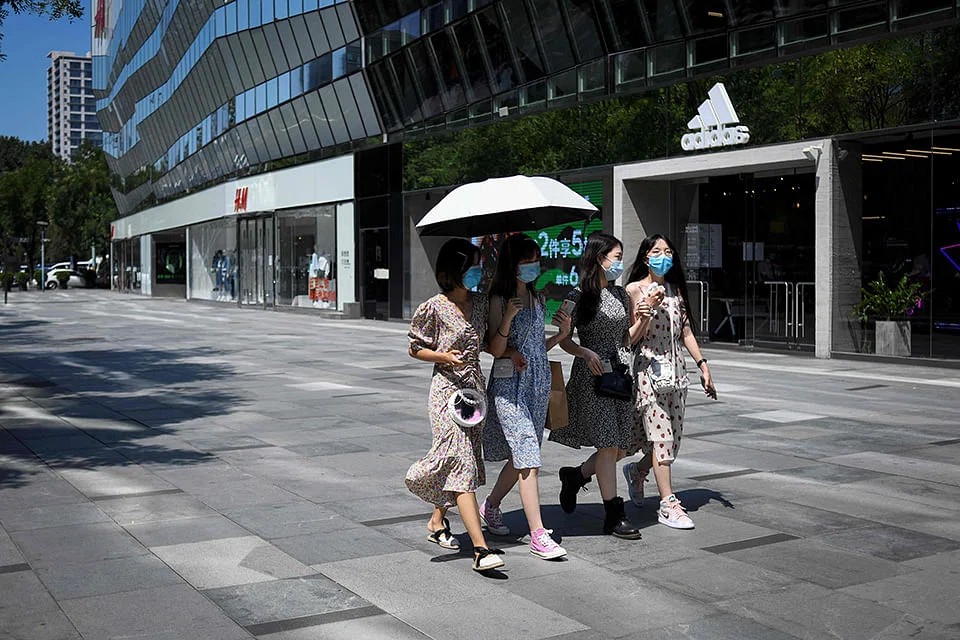
THEY are typically over 30 years old, educated, hardworking and unafraid of asserting their spending power. Some have children, but many others choose not to, preferring to save all their money for themselves.
China's "little sisters", a term used to avoid citing a women's age, have emerged stronger during the Covid-19 pandemic, partly due to the release of several popular TV shows highlighting this category of women in society.
A woman who is, say, 27 years old and does not have children is still regarded as a "leftover" in China these days.
"I don't want children. I don't think it's a good investment. What's most important to me is to own an apartment and have financial stability", said Luo Ying, a 30-year-old creative director for an advertising agency in Hangzhou.
She spends all her salary on clothes, travelling, food and Japanese manga.
"I share everything with my friends: shopping, luxury items and cosmetics. We often buy the same bags and travel together", she added.
If the spending power of women is nothing new in China - 70 per cent make the purchasing decisions of the household - the fact that these "30-plus" women can openly speak of their desire for independence is a growing trend, say observers.
"They are part of the first generation to have graduated from university, have good stable jobs and high spending power. As a society matures, so do behaviours", said Stuart Gietel-Basten, a professor of social science and public policy at the Hong Kong University of Science and Technology.
This is a big shift from even 10 years ago when women were expected to marry and have children before 30, settle down and care for the older generation.
While that is still true in most of China today, the paradigm is shifting quickly with the emergence of a new urban middle class.
"The age of marriage is receding. Children don't hesitate to spend on themselves, rather than saving for their parents", said Prof Gietel-Basten.
The women's market is expected to generate between 4.5 trillion (S$903 billion) and 5 trillion yuan this year and up to 18 trillion yuan over the next decade, according to official government statistics.
China's entertainment industry has been quick to capitalise. Sisters Who Make Waves is one of the most popular reality TV series these days, with female celebrities aged over 30 who compete to debut in a seven-member girl group.
The show's first episode in June was viewed more than 370 million times online. The Chinese media has reported that 14 more such shows are scheduled before the end of the year.
This has much to do with the population switching to digital entertainment due to the pandemic, but it's not the only reason. The show has also sparked debate with many cheering the big shift in mentalities.
Luxury brands have also noticed the trend. They are now catering to older females, offering specific products. Penetration for L'Oreal's beauty products for women between 45 and 49 years old was 92.1 per cent in 2019, up from 89.4 per cent in 2017.
Investment funds such as Shenzhen-based Bosera Fund Management are also offering "women-only" funds aimed at capturing that segment of the population.
"Even though an overall consumption recovery has lagged expectations so far post-Covid, an emerging trend appears to be the rise of the 'little sister' economy," said UBS economist Wendy Liu.
"Collectively, their rising disposable income and aspirations for the 'good life' have had a strong impact on demand for cosmetics, duty-free items, healthcare, and mobile games and Internet content.
"More importantly, the 'little sister' economy may impact spending by families and children across the spectrum of e-commerce, entertainment, education, maternity care and childcare products and services," she said.