

Coronavirus curbs leave Hubei poultry farmers helpless
The ban on the movement of live poultry has stopped their chickens and eggs from reaching markets
 Add BT as a preferred source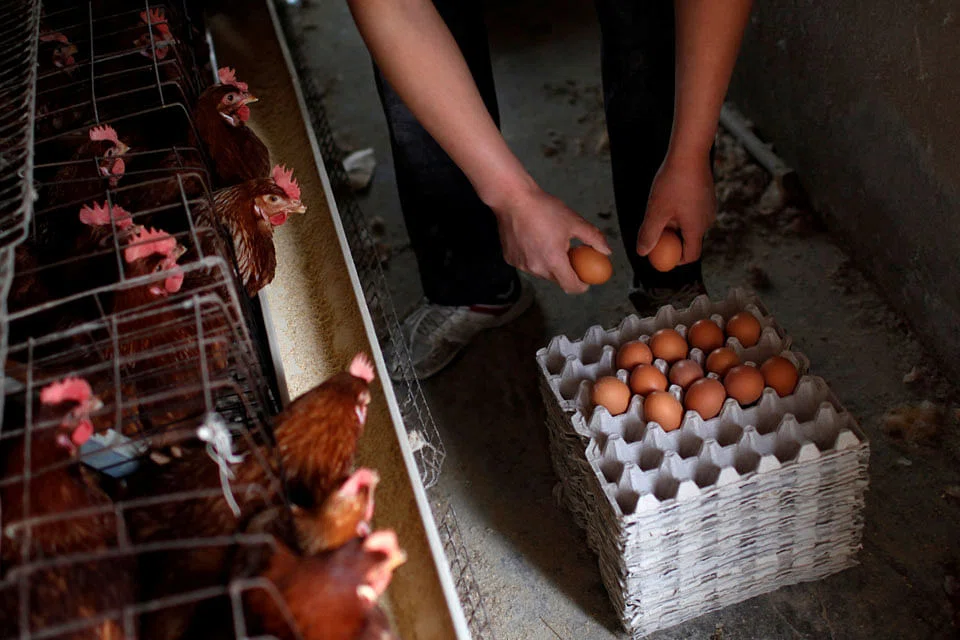
Beijing
SOME poultry farmers in the province at the heart of the coronavirus outbreak are having to euthanise young birds because the new rules designed to contain the disease have paralysed live animal transport, feed supply and slaughterhouses.
Some farmers have halved rations of depleted feed stocks for their chickens; others have disposed of the birds, said an official at the Hubei Poultry Association, which made an urgent appeal to the government last week to allow in feed supplies.
"So many young birds were safely disposed of," said the official, who did not say how many animals had been killed or how. He declined to be identified because he is not allowed to talk to media.
The ban on the movement of live poultry, believed to be a potential disease risk, has stopped farmers in Hubei from getting chickens and eggs to market. Hubei is home to the city of Wuhan, where the coronavirus that has now killed 425 and infected more than 20,000 nationwide was first identified.
"Farmers have no way of getting by," said one farmer who preferred to be identified only by her surname Chen and who produces about 7,000 eggs a day near Huanggang city.
Navigate Asia in
a new global order
Get the insights delivered to your inbox.
"I am using up my feed stocks and don't know how I'm going to get my eggs out." Videos have circulated on Chinese social media this week appearing to show farmers in unspecified locations burying chicks, ducklings and adult ducks alive, as well as eggs.
Reuters could not verify the veracity of the videos, nor when and where they were filmed.
China produced 22 million tonnes of poultry meat last year, up 12 per cent on the year earlier amid a pork shortage caused by African swine fever.
Hubei slaughters about 500 million birds each year and is an important egg producer.
Analysts said that provinces elsewhere have been impacted too, with villages and counties across China erecting blockades on roads in a bid to keep the coronavirus out.
Hatcheries that sell day-old chicks or ducklings to farmers to raise before being sent to slaughterhouses are especially hard hit.
With severe restrictions on transport, farmers are unable or unwilling to buy new chicks to restock their farms, said Dong Xiaobo, China general manager for France's Orvia, China's second-biggest supplier of breeding ducks.
"Prices hit a bottom of 5 cents per duckling. Nobody knows what to do with their production," he said.
Many slaughterhouses are also operating at reduced capacity because they cannot find sufficient labour, said Pan Chenjun, senior analyst at Rabobank.
With a life-cycle of about 42 days, supplies of fast-growing meat chickens could plunge in about two months, said Ms Pan, though the impact would likely be short-term unless coronavirus-related measures are extended. REUTERS
READ MORE:
Share with us your feedback on BT's products and services
TRENDING NOW

Middle East-linked energy supply shocks put Asean Power Grid back in focus

‘We’re not a bubble tea brand’: Chagee aims to double Asia-Pacific footprint to 600 stores by 2027

Meet the women who run one of Singapore’s most trusted hotel brands

Family office for US$12 billion Tetra Pak Fortune exits Hong Kong

