

F&B, grocery players like Sheng Siong, DFI still whet appetite of investors
Delisting of RE&S also signals interest in F&B by private equity

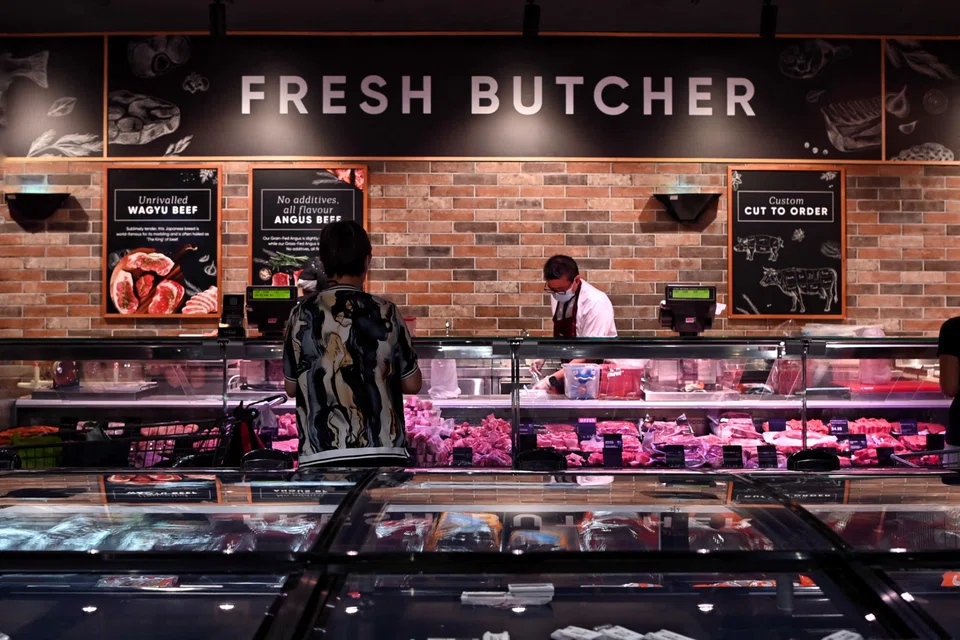
DESPITE a fiercely competitive environment, Singapore-listed food and beverage (F&B) players are still a draw for investors.
The thirst for yield has also drawn private equity interest to certain businesses in the F&B and grocery sectors.
RHB Singapore senior research analyst Alfie Yeo noted that as a whole, core earnings of Singapore’s consumer sector is expected to have a compound annual growth rate of 7 per cent from FY2023 to FY2026, driven by revenue and margin expansion.
As at July, the food products sector – which includes grocery retailers, restaurant operators and branded packaged food manufacturers – is trading at a compelling 11 times forward price-to-earnings (P/E) ratio. This is 1.5 standard deviations below the long-term mean of 21 times.
Yeo also expects the pick-up in regional gross domestic product growth to bode well for consumption.
A report by the Angsana Council, DBS, and Bain and Company found that South-east Asia is likely to outpace China in GDP growth over the next decade, projecting an average annual rate of 5.1 per cent up to 2034.
The optimism for the sector comes despite several recent merger and acquisition deals amid lacklustre share price performance and low trading liquidity.
Japanese restaurant operator RE&S Holdings , which operates the Ichiban Boshi and Mister Donut brands, in May announced that it received a privatisation proposal from a unit of private equity firm Southern Capital Group.
The offer made by way of scheme arrangement was approved by shareholders, with the company expected to be delisted around Oct 17.

Earlier in April, Japanese department store Isetan Singapore, which features a supermarket segment, was privatised by its parent company, Japan-listed Isetan Mitsukoshi. The stock was delisted on Sep 19.
Meanwhile, beleaguered seafood restaurant operator No Signboard went through several hurdles to settle its financial challenges, from undergoing a six-to-one share consolidation to selling its No Signboard trademark back to the original owners of the restaurant.
The counter has been renamed Bromat Holdings, and no longer has the original Mattar Road No Signboard Seafood restaurant in its portfolio.
Gearing up F&B companies
Commenting on the RE&S deal, Phillip Securities research head Paul Chew noted that the company was being privatised at “steep valuations of 28 times its P/E ratio”.
It is likely the buyer may have plans to merge with other similar companies in its portfolio or inject new capital for expansion into new geographies or areas, he said.
This is as F&B is generally a “management-intensive, weak-margin and ultra-competitive industry”, he explained.
To attract equity investors, F&B operators require scale – which can be achieved through expansion overseas, or building central kitchens – or unique business models, such as franchising.
“While growth may not be attractive, F&B generates healthy cash flows, which may attract private equity to gear up such businesses to enhance their returns,” Chew said.
Investors’ picks
Within F&B, some counters are trading at more compelling valuations.
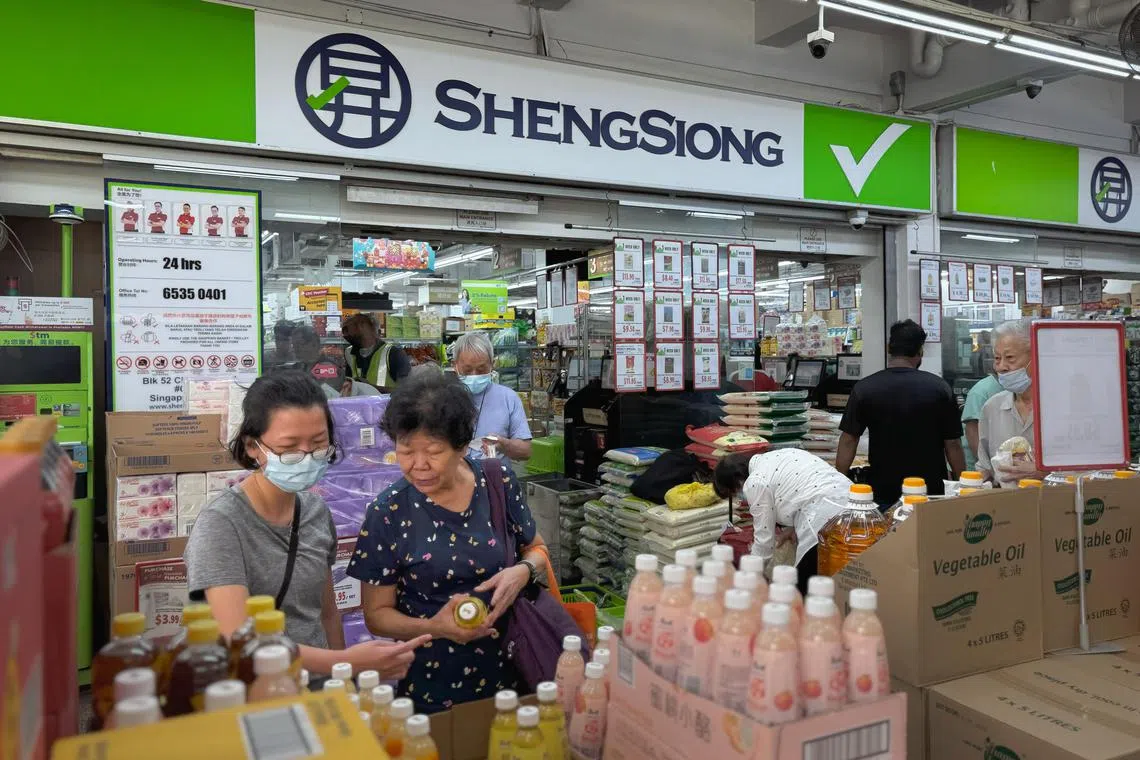
RHB’s Yeo prefers grocery retailers over midstream and downstream F&B players, noting that grocery retailers’ earnings growth should be more resilient than that of other F&B segments. These grocers include DFI Retail Group and Sheng Siong Group .
Yeo reckons that multi-format retailer DFI Retail will have an earnings recovery for the full-year FY2024, following its first-half earnings and outlook.
Meanwhile, mainboard-listed Sheng Siong Group is likely to have steady consumer demand as well as several store opening opportunities, he added.
Yeo sees midstream branded food manufacturers having higher input costs and lower margin risks due to the rise in prices of commodities, such as coffee and cocoa. Such players include instant coffee maker Food Empire and beer maker Thai Beverage.
He is generally positive on Thai Beverage’s position as a beneficiary of economic recovery in Vietnam and Thailand, where it is a market leader. Food Empire, too, has growth prospects in several places such as Russia and neighbouring markets.
Meanwhile, he is “selective on downstream foodservice players as outlet expansion decelerates in favour of improving profitability”, he said. These include Japanese restaurant operator Japan Foods and coffee shop operator Kimly . “In light of the higher risk environment, we advocate grocery retailers over midstream and downstream players at this juncture,” he said.
TRENDING NOW

What role can Japan play in Asean’s future?

IOI Properties and CapitaLand Investment closer to acquiring One Raffles Place in joint bid
AI bubble may burst soon amid financing concentration, rising rates: Ray Dalio

OCBC sheds S$8 billion in value as shares close nearly 6% down; analysts cautious on banks

