Fight between casino moguls casts spotlight on FBI
New York
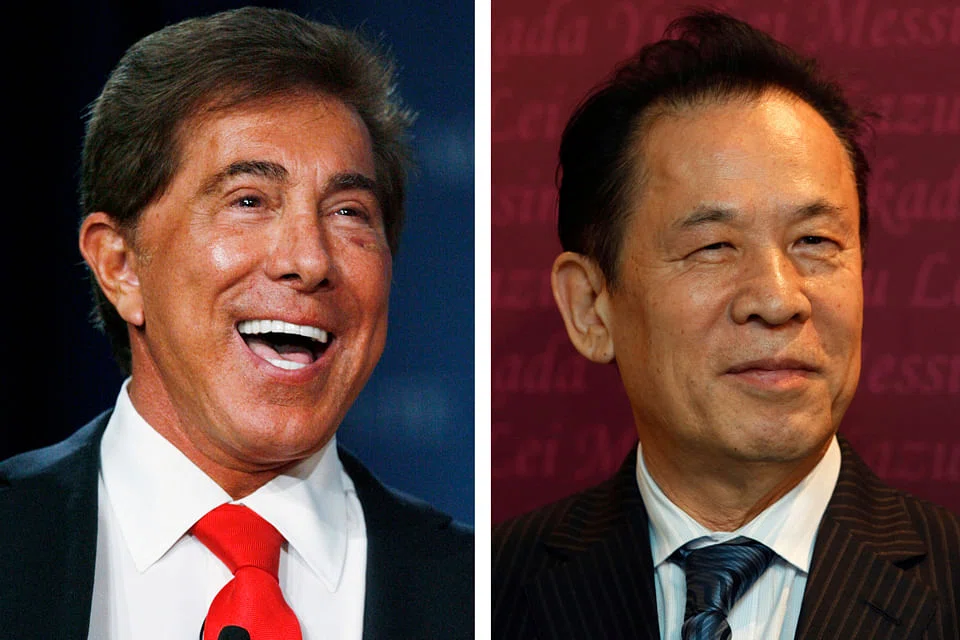
IN April 2015, a sworn statement submitted in a Nevada lawsuit between rival casino moguls Steve Wynn and Japan's Kazuo Okada contained an unusual assertion. Its author said that Wynn's head of security had asked to meet him in Japan and then persuaded him to travel to the US to talk to federal agents pursuing a different matter: a criminal bribery probe into Mr Okada.
The person who provided the statement, Yoshitaka Fujihara, then an executive at Mr Okada's Universal Entertainment Corp, said that he did not pay for his business-class flights, lodging and meals for two meetings with the Federal Bureau of Investigation (FBI) in California. Wynn Resorts has since acknowledged covering those costs and making other arrangements for Mr Fujihara, as well as other potential witnesses, to meet with the FBI.
Mr Fujihara's account helped prompt the judge in the Nevada case to allow questioning into Wynn Resorts' role in facilitating the separate criminal investigation into Mr Okada. As a result, the case has opened a rare window into the workings of a US overseas bribery probe and the role played by a company in the investigation of a rival, according to a Reuters review of court documents and interviews with people involved.
As previously reported by Reuters, the FBI has since 2012 been examining whether a US$40 million payment from Okada-affiliated companies to a Manila middleman was a bribe to secure tax breaks for his company's new US$2.4 billion casino in the Philippines. Under the Foreign Corrupt Practices Act (FCPA), it is a crime for companies with US operations to bribe foreign government officials.
Mr Okada has denied making improper payments, and no charges have been brought. Mr Fujihara, who has since left Universal, could not be reached. Universal did not respond to requests for comment or make Mr Okada available for an interview.
The civil case in which Mr Fujihara submitted his statement, at the request of Mr Okada's lawyers, stems from a prior business relationship between the two casino titans that soured when Mr Wynn dismissed Mr Okada from the board of Wynn Resorts in 2012. At the time, Mr Wynn claimed that Mr Okada had spent over US$100,000 to wine and dine and provide gifts to Philippine gaming officials, and filed suit claiming the Japanese billionaire had breached his duties as a director. Mr Okada said that the payments were not illegal and that his ouster was unjustified.
The criminal bribery investigation into Mr Okada was initiated after Wynn filed its civil suit, according to people familiar with the probe. In a statement responding to Fujihara's assertions, the Wynn Resorts head of security, James Stern, said that he reported to FBI agents in Las Vegas around March 2012 that former Okada employees had contacted him with allegations of wrongdoing more serious than those in the civil suit.
Mr Stern, a former FBI agent himself who had postings in Tokyo and speaks Japanese, said in his statement that he was later contacted about a current Okada employee willing to talk. Mr Stern said that his first encounter with Mr Fujihara was in late November 2012 in a hotel room at the ANA Intercontinental Hotel in Tokyo.
Mr Stern said that he "explained that Wynn Resorts and I were cooperating with the government's criminal investigation, and inquired whether Mr Fujihara was willing to speak to and meet with investigators from the FBI". He said that Mr Fujihara agreed to his request. Mr Stern said that he then "coordinated arrangements" for Mr Fujihara and another former Okada associate, Toshihiko Kosaka, to travel to San Francisco to meet the FBI. Mr Kosaka did not respond to a request for comment.
It was a role well suited to Mr Stern, an expert interrogator who had contacts within the Japanese police and was head of Asia organised crime at the FBI before joining Wynn in 2007. All told, he connected 11 current and former Okada employees with the FBI by making introductions, organising flights, scheduling meetings, and covering expenses for these potential witnesses on trips from Japan to locations such as Los Angeles, Hawaii and Guam, according to people familiar with the situation.
Wynn Resorts spent more than US$100,000 on travel, meals and accommodations for the potential witnesses, according to an Okada court filing that cited Wynn Resorts expense reports.
The total number of witnesses Mr Stern brought to the FBI has not been disclosed in the ongoing civil case. Mr Fujihara is the only former Okada associate to submit a statement to the court.
Overseas corruption probes are difficult for the US to conduct because of language differences, the challenges and costs related to locating and interviewing witnesses, and other issues, legal specialists said. As a result, the government leans on companies that are subject to the FCPA to uncover and report foreign bribes on their own, and corporations often assist investigations into wrongdoing by their own employees or when they believe they are a victim of a crime, the specialists said.
But in interviews with half a dozen law professors and former FCPA prosecutors, none said that they had heard of a situation in which federal agents had coordinated with a business rival of a target company to contact witnesses and pay for their travel to the US in an overseas bribery investigation.
Such reliance could suggest that the government probe might not have been pursued in the same way without the rival's help, and that private interests were helping set the government's agenda, these specialists said. A spokesman for the US Department of Justice declined to comment.
Jay Albanese, a professor at Virginia Commonwealth University, said that the notion of introducing potential witnesses to the FBI and paying for their travel fell into a legal grey zone with no known precedent in cases brought under the FCPA in federal court. "There is clearly an ethical boundary in the methods by which witnesses and suspects who are foreign nationals are brought to the US when necessary for interviews," Prof Albanese said. "The law is not yet clear in this area."
In court papers, Wynn Resorts said that Mr Stern acted as a go-between and did not participate in any witness interviews with the FBI, and that the company followed federal guidelines for paying for travel and accommodations when assisting in an investigation. It also cited a non-FCPA case in which a court found a company's cooperation with a US government investigation of a rival with which the company was engaged in civil litigation to be legitimate. REUTERS