

Flush with cash, Chinese hog producer builds world's largest pig farm
Huge, industrialised facilities are replacing small, traditional farms, but higher density carries big risk of disease
 Add BT as a preferred source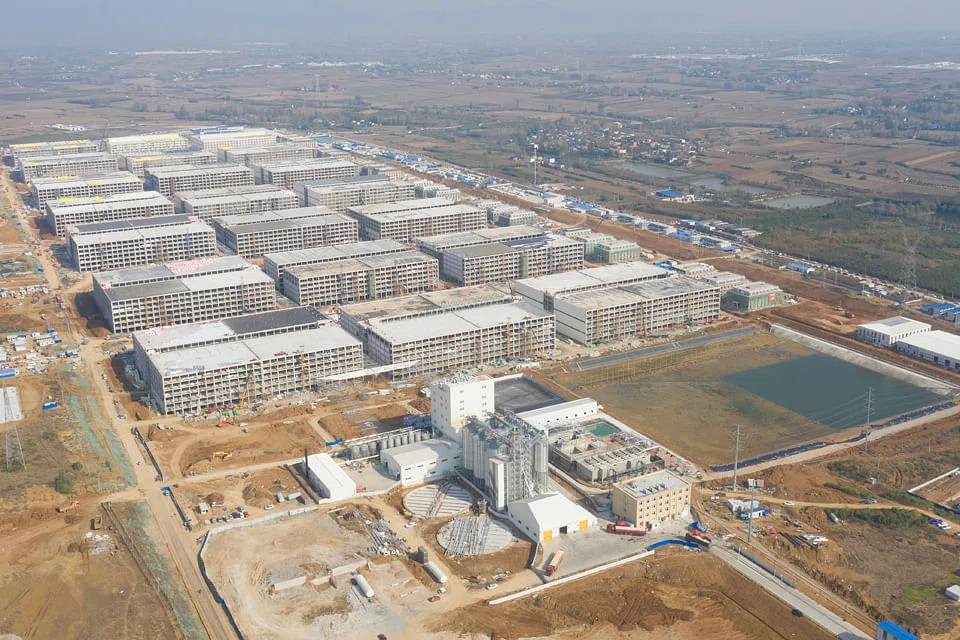
DeeperDive is a beta AI feature. Refer to full articles for the facts.
Nanyang
BEHIND the walls of a hulking industrial compound in rural China, top pig producer Muyuan Foods is trying to raise more hogs on a single site than any company in the world - a risky investment with deadly African swine fever lingering.
The new farm, which began construction in March and started operations at the first of its 21 buildings in September, epitomises the breakneck pace at which huge, industrialised hog breeding facilities are replacing small, traditional farms, many of which were wiped out by the worst animal disease outbreak in recent history.
The shift, under way for years, has accelerated sharply, fuelled by huge profits at corporate producers since African swine fever ravaged the country's herd and sent pig prices soaring to double the previous record.
Corporate farms weren't spared by the epidemic, but as prices jumped, they quickly recouped their losses. Muyuan's profits grew 1,413 per cent in the first nine months of 2020 to 21 billion yuan (S$4.3 billion).
"We have hit a very favourable period for development. Pig prices are very high, our profits are really good, and cash flow is really ample," Qin Jun, Muyuan's vice-general manager, told Reuters at the company's headquarters in Nanyang city in central China.
Navigate Asia in
a new global order
Get the insights delivered to your inbox.
In the race to take share, companies such as Muyuan are designing higher-density automated farms, betting that they can keep disease out while increasing efficiency to satisfy the country's huge appetite for pork.
Muyuan's new mega farm near Nanyang, which will eventually house 84,000 sows and their offspring, is by far the largest in the world, roughly 10 times the size of a typical breeding facility in the United States. It aims to produce around 2.1 million pigs a year.
If it works as planned - and other producers follow suit - the world's top pork consumer could reduce purchases from the global market, upending a booming meat trade that has supported farmers across the world.
Muyuan will spend about 40 billion yuan this year on new pig farms, Mr Qin said, about eight times what it spent two years ago, and roughly double the capital that carmaker Tesla is projected to spend.
Small farmers, meanwhile, are struggling to get back on their feet amid costly new disease-prevention requirements.
China's hog herd, the world's largest, shrank by around half in 2019, causing an 11-million tonne pork shortfall. Imports of all proteins have since surged, sending prices from Brazil to Denmark to record highs.
"It has an experimental element," Mr Qin said of the 3-billion-yuan farm.
"We will employ fewer people and use more technology," he said, pointing to "intelligent" feeding systems, manure cleaning robots, and infrared cameras to detect when pigs have a fever.
The mega farm can house five times as many pigs as a regular farm on the same area. Its density carries huge risk, however, with diseases including the swine fever virus still circulating in China, and no vaccine or cure available.
"Large farrow-to-finish projects with high animal density are a long-term concern because once a pathogen enters, it's very difficult to control or eliminate," said Gordon Spronk, chairman of Pipestone Holdings, a Minnesota-based pig producer and veterinary services company.
Muyuan said it has overhauled its production process since the swine fever outbreak. Grain for feed is sterilised before being piped into the on-site feed mill from outside, avoiding possible contamination of the farm by trucks.
Inside the pig housing, air is filtered, and thermal imaging cameras are being trialled to check pigs' body temperatures. To protect the farm's biosecurity, Reuters was not given access to the farm.
The new measures are impressive as long as they are managed properly, said Michael Ellerman, vice-general manager at Aspire, a Suzhou-based pig farm consultancy.
Production costs across the industry are still much higher than before the swine fever outbreak, but output is lower because of a shortage of breeding pigs.
"The risk is that prices could fall below cost. If prices fall below 20 yuan (per kilogramme) next year, some big companies are going face losses," said Xiao Lin, an analyst at Shenzhen-based Win & Fun Investment.
Muyuan's costs are lower than most, at just over 14 yuan per kilogramme in the third quarter, it says. More automation could lower costs further. But a disease outbreak would undo any gains. REUTERS
Decoding Asia newsletter: your guide to navigating Asia in a new global order. Sign up here to get Decoding Asia newsletter. Delivered to your inbox. Free.
Share with us your feedback on BT's products and services
TRENDING NOW

Shelving S$5 billion office redevelopment plan proved ‘wise’ as geopolitical risks mount: OCBC chairman

China pips the US if Asean is forced to choose, but analysts warn against reading it like a sports result

Beijing’s calculated silence on the Iran war

Middle East-linked energy supply shocks put Asean Power Grid back in focus

