Greater awareness and government support are birthing an IVF boom
Fertility service providers are also seeking to go regional in anticipation of future demand

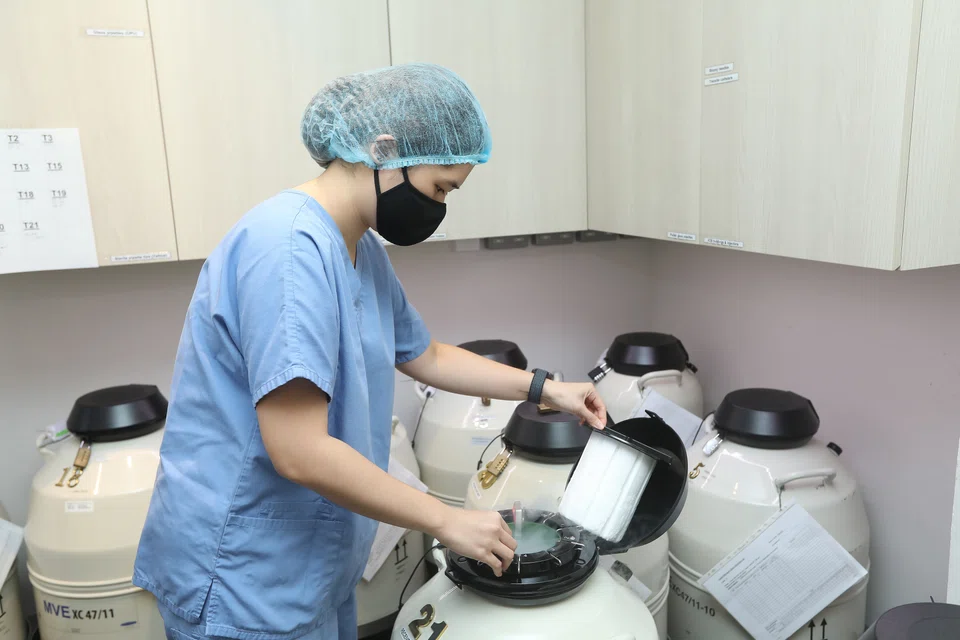
GOVERNMENT support to boost low birth rates and growing awareness of fertility services are supporting increased demand for in-vitro fertilisation (IVF) and related treatments, both in Singapore and across South-east Asia.
Private healthcare providers are finding opportunities to expand organically and through acquisitions, and to work with governments on raising national birth rates.
Listed healthcare company Thomson Medical Group , which has a long association with obstetrics, gynaecology and paediatrics, views fertility services as a particular bright spot.
Group chief executive and executive director Melvin Heng said Thomson Medical has noted a 70 per cent increase in the number of IVF cycles done in Singapore over the last 10 years, and now does “in excess of 1,000” annually in its centres.
An IVF cycle typically includes an initial consultation with a fertility specialist, fertility treatment, and the procedure itself. Additional services such as blood work and ultrasounds may be required.
The latest figures from Singapore’s Ministry of Health show about 10,500 cycles of assisted reproductive technology treatments were done in Singapore in 2022. These treatments include IVF and other fertility services, such as intracytoplasmic sperm injection and gamete intrafallopian transfer.
Virtus Health, which started out in Australia and opened its first fertility centre in Singapore in 2015, said its Virtus Fertility Centre here has also experienced steady growth.
Asia managing director Tim Kwan said annual patient growth rate has been around 10 per cent.
Formerly listed on the Australian stock exchange, Virtus was acquired in 2022 by private equity (PE) group BGH Capital after a fierce battle with another PE buyer – CapVest – enticed by its fertility promise.
Growing demand
Roughly one in six adults around the world experiences infertility, based on data from the World Health Organization (WHO).
The disease is defined by WHO as a failure to achieve a pregnancy after 12 months or more of regular unprotected sexual intercourse, but its diagnosis and treatment is not often prioritised in national policies.
An alarmingly low birth rate in many nations is, however, changing that stance. Governments are also doing more to promote childbearing in general.
Singapore last year raised the age limit for elective egg freezing to 37, from 35. Prime Minister Lawrence Wong said in his recent National Day Rally that new parents will gain an extra six weeks of government-paid leave from Apr 1 next year, with the amount raised to 10 weeks from Apr 1, 2026.
Virtus’ Kwan also noted more conversations about low birth rates and greater awareness of fertility health, which have led to more couples coming forward for assessments.
“We have also received numerous inquiries from couples seeking a second opinion based on their fertility assessments from other fertility clinics and hospitals,” he said.

The clinic in 2022 expanded its recovery area to accommodate more beds and increase the space available for its andrology (or male healthcare) laboratory – to cater to more patients coming in for semen analysis.
In August, Virtus announced it was incorporating artificial intelligence-based software into its IVF processes.
Trained on a data set of more than 10,000 embryos cultured in incubators from January 2014 to December 2018, the software can, for example, identify embryos with the highest potential to develop a foetal heart, the earliest indication of developing a foetus.
Thomson Medical is also looking to expand its fertility services in Singapore. It has three operating theatres dedicated to IVF in its Singapore laboratory, and is considering opening a second laboratory.
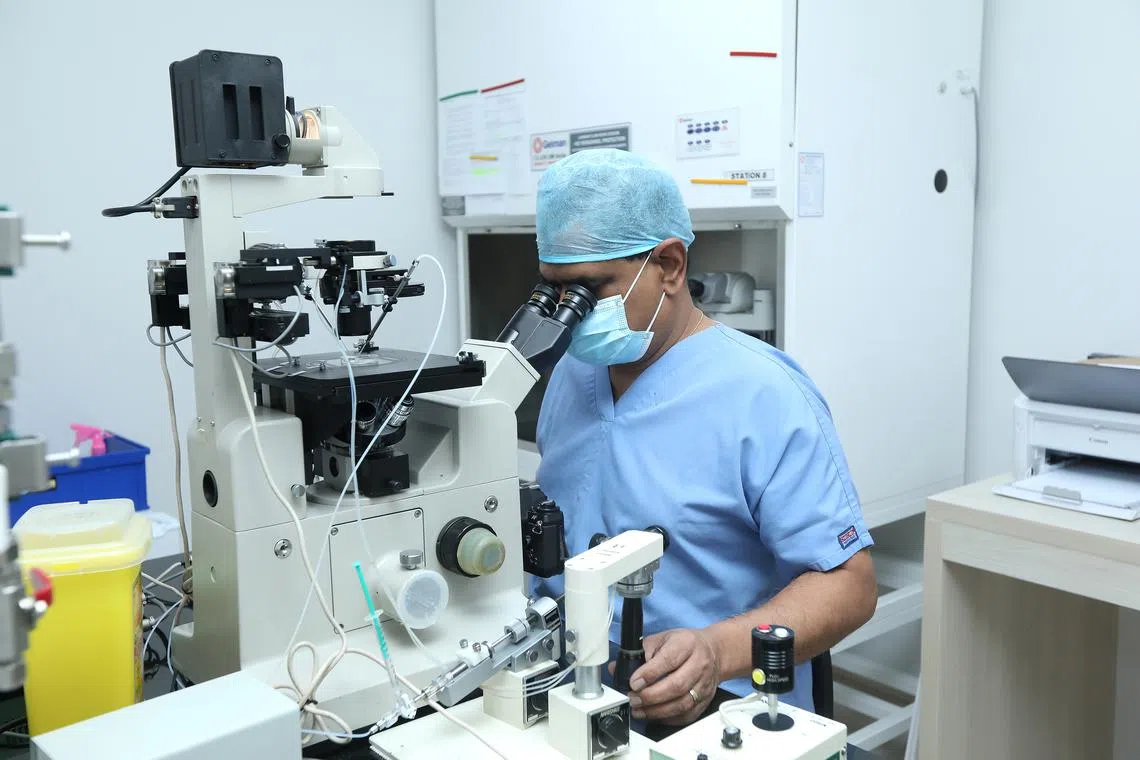
CGS International analyst Tay Wee Kuang said a trend of later pregnancies could generally be beneficial for healthcare companies.
“Many healthcare services companies see obstetrics and gynaecology as a key area of growth, as later pregnancies tend to suggest a higher level of care is required,” he said.
“Furthermore, deliveries within the hospitals mean that parents will require paediatrics services for their children.”
Going regional
The need to increase birth rates at a national level is creating opportunities for private healthcare players to collaborate with government entities.
Merck Healthcare, a unit of German conglomerate Merck, has signed a memorandum of understanding with Malaysia’s National Population and Family Development Board to share research and resources that will assist in policy formulation.
Merck Healthcare’s Asia-Pacific senior vice-president Alexandre de Muralt said the company recognises a need to collaborate with government bodies to address fertility issues in the Asia-Pacific region, which includes Asean.
Although Asean is predominantly a developing region, with relatively healthy birth rates, demand is rising for fertility treatments.
Thomson Medical has five fertility laboratories in Malaysia, and may increase that number. The group’s latest acquisition, FV Hospital in Vietnam, is poised to have a whole floor dedicated to IVF and reproductive science.
Although Vietnam has a young workforce, Thomson Medical’s Dr Heng said this is likely to change in the next three to five years.
He noted that IVFMD, a Vietnamese IVF company with six hospitals, has plans to grow its portfolio to 10 hospitals this year.
Thomson Medical has grouped all its fertility services under one umbrella, Thomson Fertility, as it hopes to become a one-stop centre for couples looking to have a child. This way, Dr Heng said, the operations across geographies can be “more collaborative” as well.
He sees space for mergers and acquisitions within the industry, as he notes that not many providers are present across multiple geographies.

Among the major players in Malaysia, for instance, only one – Alpha Fertility – has a presence in Singapore. Several companies are strong within their base countries but have only one clinic in other markets.
“People delaying childbearing is definitely impactful to South-east Asia,” he added. “Some people postulate that assisted reproductive therapy might be one of the major ways people will conceive in the future.”