

Hairy crabs are selling out in China as consumers splurge
 Add BT as a preferred source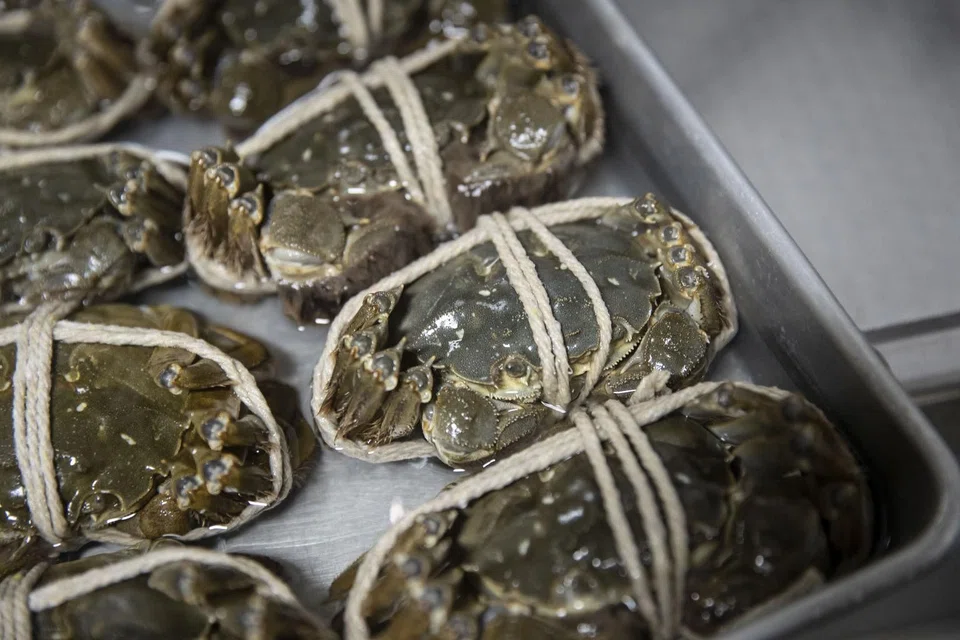
DeeperDive is a beta AI feature. Refer to full articles for the facts.
[SHANGHAI] Late in the afternoon on a recent weekday, workers at an aquaculture farm near Shanghai used long pincers to move 300 gramme crabs from muddy ponds into small pools of freshwater. By morning, the crabs - their shells cleansed of dirt - will be packed into gift boxes and shipped to customers all over China.
These are no ordinary crustaceans: They're hairy crabs, a delicacy that can cost as much as 2,700 yuan (S$550) for a box of eight and can only be purchased for a few weeks in autumn. Prices for some of the most popular crabs have doubled compared to a year ago.
Even as China's economy suffers from the Covid-19 outbreak, the pandemic has been good for farm owner Ma Mingjun's business. In normal years, many Chinese give hairy crabs as gifts to special relatives, important customers or government officials, but now big-spending consumers who haven't been able to shop in Paris or Milan are treating themselves to more home-grown luxuries.
"Almost all the hairy crabs in our pools have been reserved, much faster than last year," Mr Ma said. "To offset the frustration of travel restrictions, many customers are buying bigger crabs to share with their families."
It's not just the pandemic helping demand for hairy crabs. Eastern China is a major production hub, and for many years most of the supply stayed in the Shanghai area. Consumers elsewhere often had difficulty getting them.
Now, with the expansion of logistics operations to service e-commerce operations like Alibaba Group and JD.com, farmers can more easily send crabs long distance. Cainiao, the logistics subsidiary of Alibaba, can deliver fresh crabs to domestic buyers within two days of receiving orders, and consumers in Singapore this year can get deliveries of crabs purchased on Alibaba's Taobao platform.
Navigate Asia in
a new global order
Get the insights delivered to your inbox.
Demand for hairy crabs in China was about 120 billion yuan last year and is expected to reach 150 billion yuan this year, according to consultancy AskCI Consulting. The bestseller this year costs 1,600 yuan per box, up from 800 yuan in 2019.
Chinese consumers usually steam the tiny crustaceans for about 15 minutes before serving them with vinegar, minced ginger and rice wine. Diners first pull off the legs, poking into them with chopsticks to dig out the meat. Usually the next step is to take off the shell and access the roe, although some connoisseurs can consume the meat and roe while keeping the shell intact.
The seasonal delicacy is one of many pricey items gaining in popularity. LVMH, Kering and Estee Lauder Cos reported mid-double digit sales growth in China for the second quarter, while duty-free stores in the southern province of Hainan recorded a 167 per cent jump in sales during the week-long October national holiday.
In part, that's because travel bans and quarantine requirements have forced Chinese travellers to choose local destinations, said Xu Ruyi, head of reports for North Asia at London-based consultancy Mintel Group.
"Many wealthy Chinese who used to 'buy buy buy' overseas are spending domestically," said Ms Xu. "High-income consumers are more resilient amid economic uncertainties and more willing to spend on something that can bring them pleasure in compensation for the hard year."
Responding to concerns about seafood safety, farmers are also using live-streaming to reassure consumers of the cleanliness of their facilities. Influencers are doing on-location appearances and offering discounts.
Back at his farm near Shanghai, Mr Ma expects his crabs to reach their peak flavour in early November, and has his staff ready to work overtime to get them delivered.
"We'll work all night till dawn," he said. "Everyone deserves something nice in this difficult year."
BLOOMBERG
Decoding Asia newsletter: your guide to navigating Asia in a new global order. Sign up here to get Decoding Asia newsletter. Delivered to your inbox. Free.
Share with us your feedback on BT's products and services
TRENDING NOW

Japan stocks look set for new highs in 2025 on earnings, reform

Beijing’s calculated silence on the Iran war

China pips the US if Asean is forced to choose, but analysts warn against reading it like a sports result

Richard Eu on how core values, customers keep Singapore’s TCM chain Eu Yan Sang relevant

