Home gardening blooms around the world during lockdowns
 Add BT as a preferred source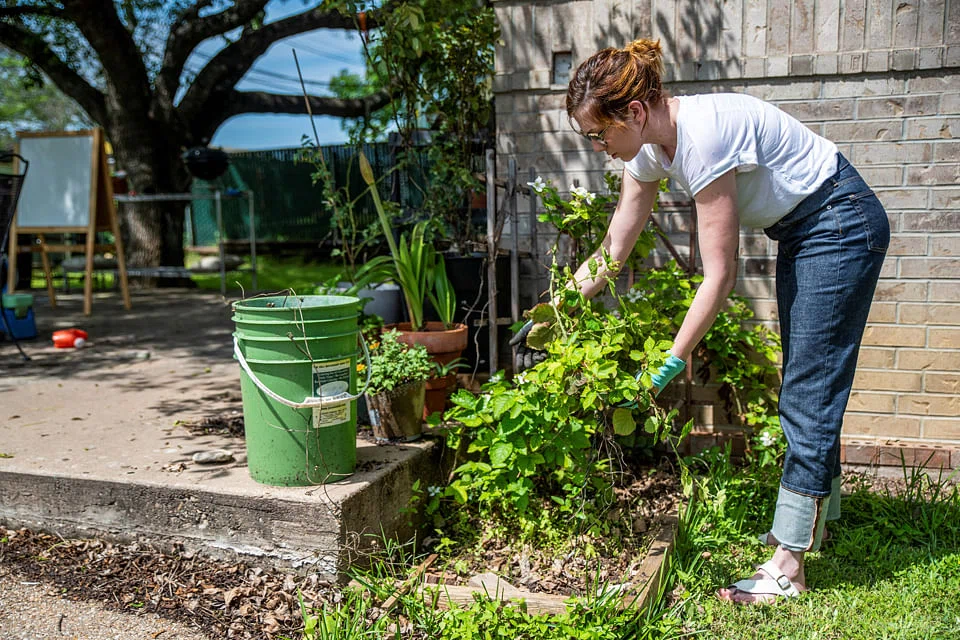
Chicago
JAIME Calder all but gave up on gardening after moving from the fertile soils of Illinois to dusty Texas, but the coronavirus changed her mind.
The magazine editor and her family of five planted collard greens, chard, onions, blackberries, watermelons and peppers this year, expanding their garden while buckling down at home during the pandemic.
People around the world are turning to gardening as a soothing, family friendly hobby that also eases concerns over food security as lockdowns slow the harvesting and distribution of some crops. Fruit and vegetable seed sales are jumping worldwide.
"It's supplementary gardening," said Ms Calder. "There's no way this would sustain a family of five. But we're amping it up, so we can try and avoid the store a little more in the coming months."
Russians are isolating in out-of-town cottages with plots of land and rooftop farms are planned in Singapore, which relies heavily on food imports.
Furloughed workers and people working from home are also looking for activities to occupy their free time, after the cancellations of major sporting events and the closure of restaurants, bars and theatres. Parents too are turning to gardening as an outdoor activity to do with children stuck at home after schools shut.
"Planting a few potatoes can be quite a revelation to a child," said Guy Barter, chief horticulturist at Britain's Royal Horticultural Society, which has seen a five-fold rise in queries for advice on its website during the lockdown. Gardeners without yards are even planting potatoes in trash bags, he noted.
Gardening could trim retail demand for produce but trips to the grocery store will still be necessary. Bert Hambleton, retail consultant for Hambleton Resources, said that supermarkets will continue to see an overall increase in produce demand as would-be restaurant-goers eat at home instead of dining out.
US seed company W Atlee Burpee & Co sold more seed than any time in its 144-year history in March as the contagious respiratory virus spread, chairman George Ball said.
When they cannot find seeds in stores, would-be gardeners in Britain are seeking advice on how to extract them from tomatoes and squash purchased in supermarkets, Mr Barter said. In Russia, demand for seeds rose by 20 per cent to 30 per cent year-on-year in March, according to online retailer Ozon.
Seed demand typically goes up in tough economic times, said Tom Johns, owner of Territorial Seed Company in Cottage Grove, Oregon. "It doesn't take long for people to become very concerned about the food supply - either the cost of food or getting food," Mr Johns added.
Johnny's Selected Seeds in Fairfield, Maine, saw a 270 per cent jump in orders the week of March 16, after US President Donald Trump declared a national emergency over the coronavirus.
Canada-based Stokes Seeds, which ships to the US and Canada, received 1,000 online orders during the weekend of March 21, four times more than normal, president Wayne Gayle said.
With so many digging into gardening for the first time, there has also been a push to pool resources and collective knowledge on home food production.
Nathan Kleinman, co-director of Philadelphia-based Experimental Farm Network, said that more than 2,000 people signed up and attended weekly calls to discuss gardening best practices as they begin putting seeds in the ground. "The reaction was overwhelming," he revealed. "It struck a nerve with a lot of people."
Melanie Pittman, an teacher who lives on five acres near Crete, Illinois, said while everyone was stocking up on toilet paper, her partner ran over to the local home improvement store to stock up on seeds and gardening tools. Ms Pittman is more than doubling her garden, planting corn, beans, tomatoes, potatoes, onions and growing mushrooms.
She is also working with other growers in her community to expand her reliance on local food. "I try to reach out to other individuals who are growing food in the area, to avoid the overlap - 'I grow tomatoes, you grow carrots'," she said.
Gardening may be a rare positive trend to emerge from the crippling pandemic, said Diane Blazek, executive director of the US industry group National Garden Bureau. "We'll come out in the end and hopefully everyone will be eating better and gardening more and more self-reliant." REUTERS
Decoding Asia newsletter: your guide to navigating Asia in a new global order. Sign up here to get Decoding Asia newsletter. Delivered to your inbox. Free.
Share with us your feedback on BT's products and services