IHH Healthcare confident Malaysia will remain key medical tourism hub despite headwinds
The group also highlights transitional care opportunities in Singapore, and Ebitda breakeven in its China clinics

DESPITE the strengthening ringgit and possible competition from recent reforms in Indonesia’s healthcare sector, Singapore-listed IHH Healthcare is still bullish on Malaysian medical tourism, its management said on Friday (Aug 30).
This comes as the group’s expanding network aims to grow its reach and access to foreign patients.
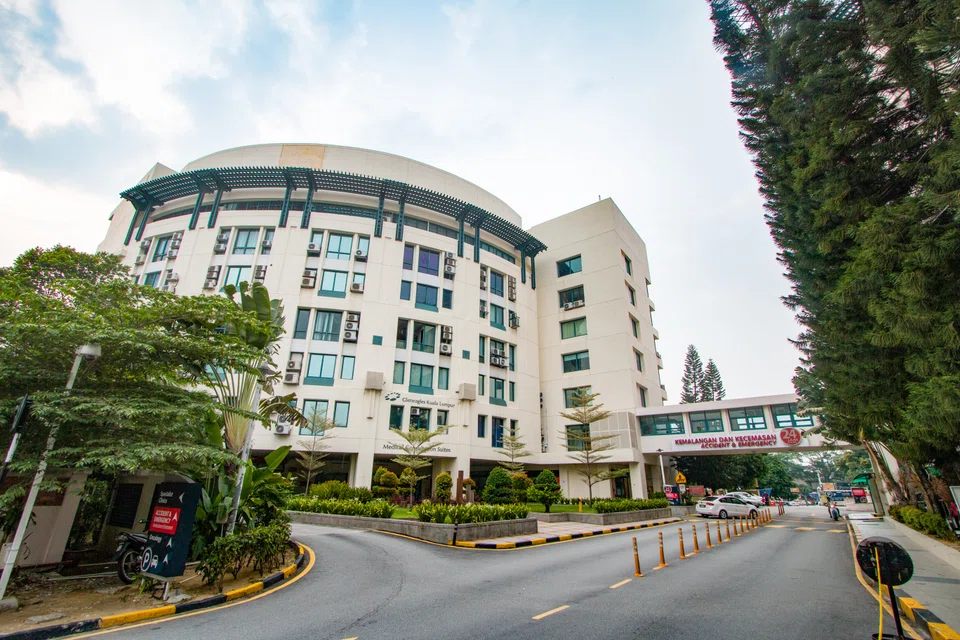
It has added a new Sarawak hospital and expanded its current hospitals, including Gleneagles Hospital Kuala Lumpur.
Dr Prem Nair, group chief executive of IHH Healthcare, said that the group has a year-to-date 50 per cent growth in medical tourism revenue in Malaysia.
“We’re expanding our reach to tap... a growing demand for medical tourism, predominantly attracting patients from Indonesia,” he said during the group’s second-quarter analyst briefing, after IHH Healthcare on Thursday reported a more than doubling in profit to RM623 million (S$188 million) for Q2 ended Jun 30.
Group chief financial officer Dilip Kadambi added that both domestic and foreign volumes in Malaysia have “grown very robustly”, and foreign patients contribute “a range of 6 to 7 per cent” to the group’s gross revenue, similar to previous quarters.
IHH Healthcare’s acquisition of Timberland Medical Centre in Sarawak, completed in March, positions the group to attract patients from Indonesia, a key source for medical tourists in Malaysia.
While the ringgit has “strengthened somewhat” in recent months, it continues to be very competitive, noted Dr Nair.
The country also has other factors in its favour, he added, highlighting its accessibility, clinical competence and presence of a national body, the Malaysia Healthcare Travel Council, that facilitates medical tourism.
“We are quite bullish on medical travel in Malaysia,” he said.
IHH Healthcare previously announced that it will grow its Malaysian bed capacity by 46 per cent, or 1,300 beds, in the next five years.
Its private hospital, Gleneagles Hospital Kuala Lumpur, will be expanded by 2027, with a new medical block adding 260 new beds.
A market for future expansion
IHH Healthcare’s management is also aware of upcoming healthcare reforms in Indonesia, as the government aims to retain its patients.
An August RHB report said that Indonesia’s outgoing president, Joko Widodo, had estimated the country loses US$11.5 billion in medical treatment revenue per year, as citizens seek treatment abroad.
To combat this, Indonesia in July last year passed a healthcare Bill that addresses the shortage of specialist doctors there by streamlining the process for foreign doctors and Indonesian graduates of foreign institutions to practise in Indonesia.
A special economic zone (SEZ) for healthcare was also established in Bali, targeting international tourists.
Dr Nair said that such developments were positive and have made the market a place for IHH Healthcare to consider future expansion.
However, he believes that the announced reforms and the SEZ will likely take “several years” to have an effect, as hiring foreign doctors and bringing them into the country will take time.
“I don’t think it’s going to affect medical tourism (in Malaysia) for now,” he noted, adding that IHH Healthcare will watch Indonesia closely to see what the group could do there in the future.
The group is not in any hurry to enter new markets at the moment, he shared. It currently has operations in Singapore, Malaysia, Turkey and Europe, India and Greater China.
Out-of-hospital opportunities
In Singapore, the group highlighted that it is developing out-of-hospital opportunities, such as a new transitional care facility (TCF), TCF@East, with 200 beds.
Such facilities were set up by the Ministry of Health (MOH) during the Covid-19 pandemic to prevent hospitals from being overwhelmed, and are for medically stable patients from public hospitals waiting for long-term care arrangements, such as home care.
Health Minister Ong Ye Kung previously said that TCFs will be retained after the pandemic. They are generally run by private healthcare providers.
IHH Healthcare’s TCF@East is expected to admit its first patients in January.
Dr Nair explained: “This venture brings us out of our traditional strengths with primary and quaternary care, and into a new and less-familiar step-down care landscape.”
He noted that such facilities are refurbished from existing buildings, with the cost of refurbishment fully funded by MOH, while private players operate the facility. “That’s a model that’s worked very well, in terms of Ebitda (earnings before interest, taxes, depreciation, and amortisation),” said Dr Nair.
Kadambi added that compared to a hospital, Ebitda break-even for a TCF is likely to come much sooner.
As for China, which was previously loss-making, its clinics are now Ebitda break-even and expected to remain positive, said Dr Nair. This comes after the group revamped its operations there to link up its clinics, single ambulatory care centre and tertiary hospital Parkway Shanghai, and enhanced its referral mechanisms.
The group has spent some time consolidating its clinics, moving some operations to the ambulatory care centre, said Dr Nair. Parkway Shanghai is also not yet operating at full capacity, and the group intends to work on it next.
“In China, (our operations) will be focusing on outpatient growth, post-treatment and follow-up care, and referrals from the ambulatory care centre to Parkway Shanghai and back,” he pointed out.
Shares of IHH Healthcare are trading up 0.5 per cent or S$0.01 at S$1.91, as at 3.22 pm on Friday.
TRENDING NOW
Genting Singapore trails MBS, but helps anchor Malaysian parent group’s finances
Siti Hasmah Mohamad Ali, wife of former Malaysian PM Mahathir Mohamad, dies aged 100
He built the Vingroup empire. Now South-east Asia’s richest man is handing some key roles to his sons
Why US midterm elections could power the next stock market rally