

Interest-paying e-wallets a challenge for Indian banks
Central bank has licensed 11 such entities, called payment banks, which operate a lot like PayPal
Mumbai
A FLEET of Indian startups and telecom operators want customers to ditch their boring bank accounts and put their money into digital wallets. Their sales pitch: It pays interest, it's secure, and it's easier to pay for a cab or order takeout without running to the cash machine.
"If they can give discounts or other offers, then I will go for it," said Neha Mungekar, 28, a Mumbai-based urban planner who does a lot of online shopping and is considering leaving money in an e-wallet offered by PayTM Mobile Solutions or another provider after hearing the accounts can now pay interest.
That's a concern for the nation's largest banks, because 40 per cent of the money they lend comes from millions of small depositors such as Ms Mungekar. If more like her start shifting to digital money, they risk draining those deposits.
Last month, the Reserve Bank of India (RBI) gave licences to 11 entities to operate so-called payment banks that will function a lot like PayPal Holdings in the United States, but with a distinction - customers can get interest on the money they leave there.
"By allowing more players in the financial services space, the RBI is forcing the existing banks to become fitter and effective," said Hatim Broachwala, a banking analyst at Nirmal Bang Institutional Equities in Mumbai. "The game is changing, and those who can't shape up will lose out."
The bulk of the growth for India's banking behemoths State Bank of India (SBI), ICICI Bank and HDFC Bank has come from opening thousands of new branches. At the same time, the country is now in the midst of a smartphone boom, and younger Indians are shunning branches and turning to apps for their banking needs, mirroring global trends.
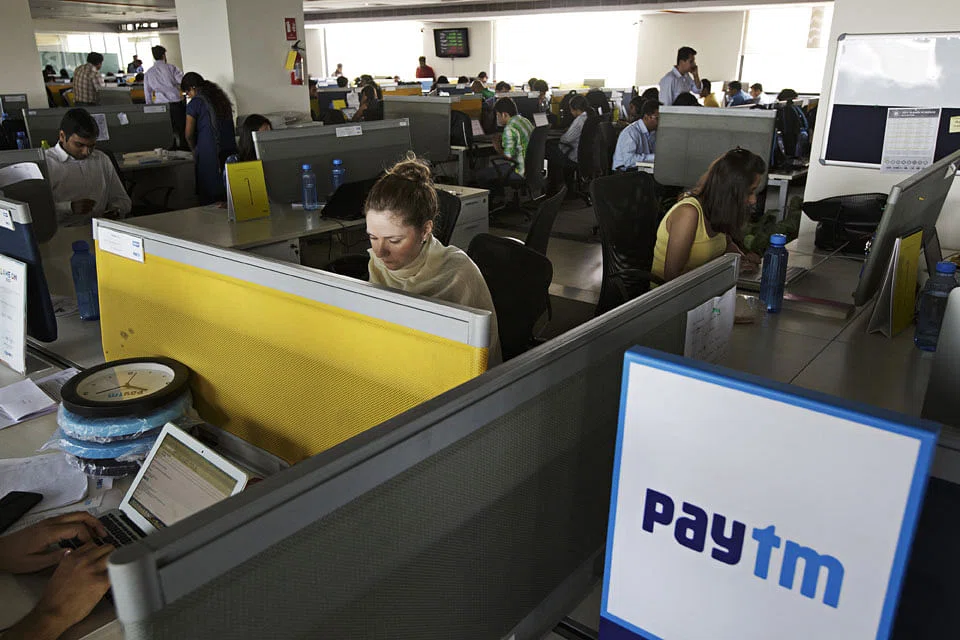
That's where nimbler startups such as the Jack Ma-backed One97 Communications, which operates PayTM, think they have an edge. Because they don't have the headaches or costs of running branches and negotiating with labour unions, they can focus on crafting financial products geared at smartphones, taking a lesson from China's success.
Alibaba Group Holding, Baidu and Tencent Holdings built entire ecosystems in China by letting users pay, invest and manage their finances by phone.
PayTM started off as a service for adding credit to burner phones, and has evolved into the country's largest e-wallet repository, allowing customers to pay utility bills, buy bus tickets and pay for Uber Technologies rides.
Now it plans to build on its base of urban middle-class clientele to become a pseudo bank - accepting deposits, offering peer-to-peer money transfers, even providing a debit card for cash withdrawals. The payment banking licence was the first step.
"The traditional business model of banks is based on a float economy," One97 founder Vijay Shekhar Sharma said, referring to banks lending out depositors' money and profiting from the margin. "We say a new era of business model is based on transactions."
E-wallets may be attractive for people wary of sharing their bank or card details on the Internet. They also make it easier to reward customers with discounts and offers redeemable at online or brick-and-mortar outlets.
Apart from One97, other payment bank licensees include three large telecom operators, industrial conglomerates, the state-owned postal service, and billionaire Mukesh Ambani's Reliance Industries, which plans to run its venture with SBI.
Payment banks can't lend and can only invest the client's money in the safest government securities. Their revenue comes from a small commission on each transaction. Their new licences are part of RBI governor Raghuram Rajan's mission to cut the nation's addiction to cash and to increase efficiency at the banks.
About 80 per cent of India's consumer payments in 2014 were with hard currency, according to Euromonitor, making it among the most cash-intensive economies on the planet. Handling all that cash has risks and costs the economy US$3.5 billion, according to a January report from Tufts University commissioned by MasterCard.
The high stakes for India's banks were on display at a recent public event attended by Mr Rajan and Arundhati Bhattacharya, chairman of SBI. The two openly disagreed about the potential threat to the banks from the decision to allow new entrants to pay interest on deposits.
"I really think we can have a revolution," Mr Rajan said on Aug 20, referring to payment banks' ability to bring more of India's unbanked masses into the financial system, a day after announcing the new licences. "Payment banks are an add-on to the banks rather than competitors."
Ms Bhattacharya disagreed, arguing that new entrants would make it even more difficult for India's banks, burdened with bad loans, to thrive.
"What if they go for poaching rates, then many of the commercial banks could lose a portion of the deposits," she said, expressing concern that they could offer higher interest rates. "It might cannibalise the existing business." Bloomberg






