

Israeli quest to revive ancient dates bears fruit
 Add BT as a preferred source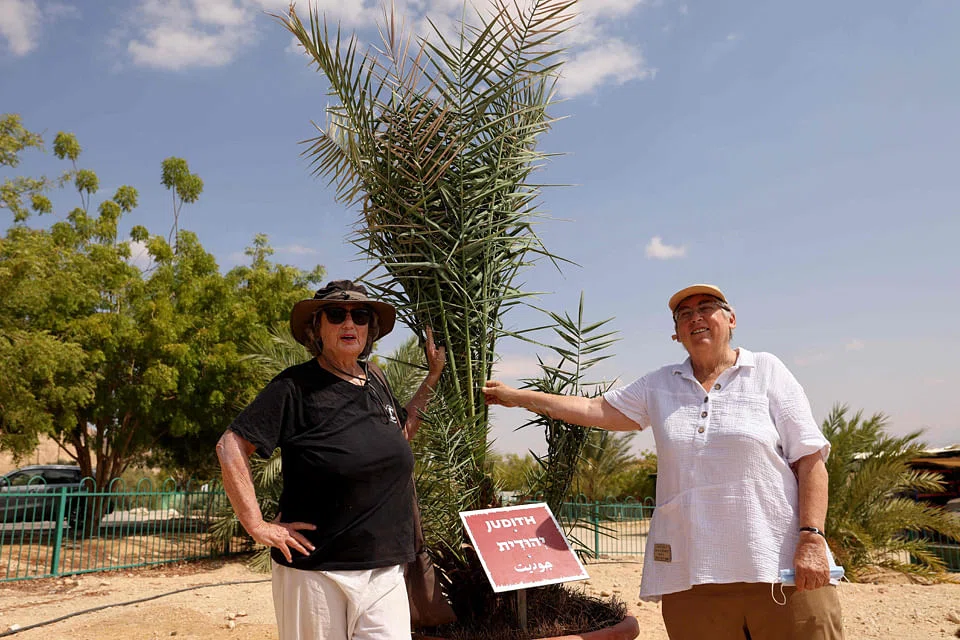
DeeperDive is a beta AI feature. Refer to full articles for the facts.
Kibbutz Ketura, Israel
WHEN Sarah Sallon first thought of cultivating 2,000-year-old date palm seeds from a Roman-era fortress towering above the Dead Sea, she received a less than encouraging response.
"The botanical archaeologists said 'you're completely mad. It will never work'," the 72-year-old British-Israeli expert on natural medicine told AFP.
But Dr Sallon's bet that the Dead Sea's unique, bone-dry environment could enable the seeds from the Masada fortress to flourish has been proven right.
With lots of patience and care, she and project partner Elaine Solowey managed to grow date palms from seeds dating back to the Kingdom of Judah, which emerged in the 11th century BC.
The kingdom was "renowned for the quality and quantity of its dates", praised at the time for their "large size, sweet taste... and medicinal properties", the two wrote in an article for Science magazine.
Navigate Asia in
a new global order
Get the insights delivered to your inbox.
Bringing back the ancient variety with Dr Solowey, a specialist in sustainable agriculture, was not just a novelty project, Dr Sallon said, but offered "a beacon of hope" for a planet battling the climate crisis and mass species extinction.
"Perhaps these amazing species that are everywhere around us will not disappear," she said, suggesting that "nature has tricks up its sleeves".
Before embarking on her date palm revival, Dr Sallon had read about 500-year-old lotus flower seeds that had germinated.
In 2004, she asked Israel's Bar Ilan University for access to a few of its preserved date palm seeds found in 1960 under debris at Masada, the Herodian-era mountain-top Jewish encampment famous for having been besieged by Roman forces in the first century.
Undeterred after being called "mad" by botanical archaeologists at Bar Ilan, Dr Sallon showed them evidence of ancient seeds being germinated elsewhere.
With that and "a lot of hassling", she obtained five seeds and then approached Dr Solowey, based on Kibbutz Ketura, near Israel's border with Jordan.
Dr Solowey recounted how Dr Sallon sent her the ancient seeds from the fortress with the instruction to "try to sprout them". She spent several months considering the best approach, before deciding to use an enzyme-based fertiliser while ruling out the use of any man-made chemicals.
In her greenhouse, where she grows many dozens of plants, she tried to sprout three of the seeds, but for weeks saw no signs of life.
Then, one day in March 2005, small cracks opened in the earth of one of the date palm pots, a sign that roots were beginning to take hold.
Out of the three seeds planted, just one thrived, acquiring the nickname "Methuselah" after the biblical figure known for his longevity. But "Methuselah" was a male plant and therefore bore no fruit.
Having proven that cultivation can work, Dr Sallon went in search of more seeds in hopes of sprouting a female plant.
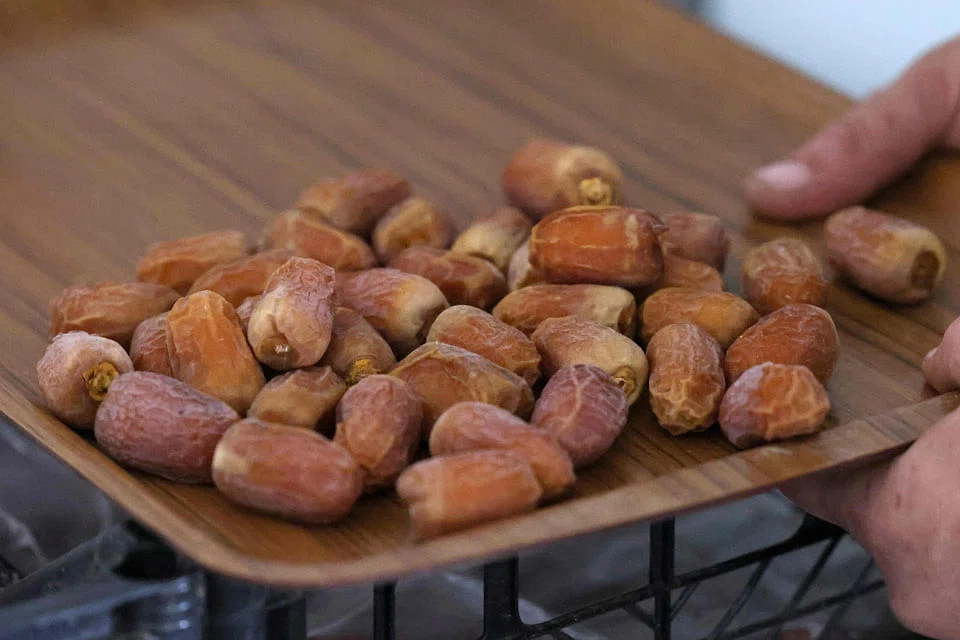
Then last year, after a long wait, a date palm named "Hannah" produced about 100 dates.
An even more bountiful harvest followed this August: 800 light brown dates, slightly dry but with a delicate honey flavour.
Samples will be available for sale soon, the team promises.
There is also hope that Hannah's sister "Judith", planted recently, will produce more dates. AFP
Decoding Asia newsletter: your guide to navigating Asia in a new global order. Sign up here to get Decoding Asia newsletter. Delivered to your inbox. Free.
Share with us your feedback on BT's products and services
TRENDING NOW

Shelving S$5 billion office redevelopment plan proved ‘wise’ as geopolitical risks mount: OCBC chairman

OCBC is said to emerge as lead bidder for HSBC Indonesia assets

Middle East-linked energy supply shocks put Asean Power Grid back in focus

Eurokars Group introduces rental car franchises Enterprise Rent-A-Car, National Car Rental, and Alamo to Singapore

