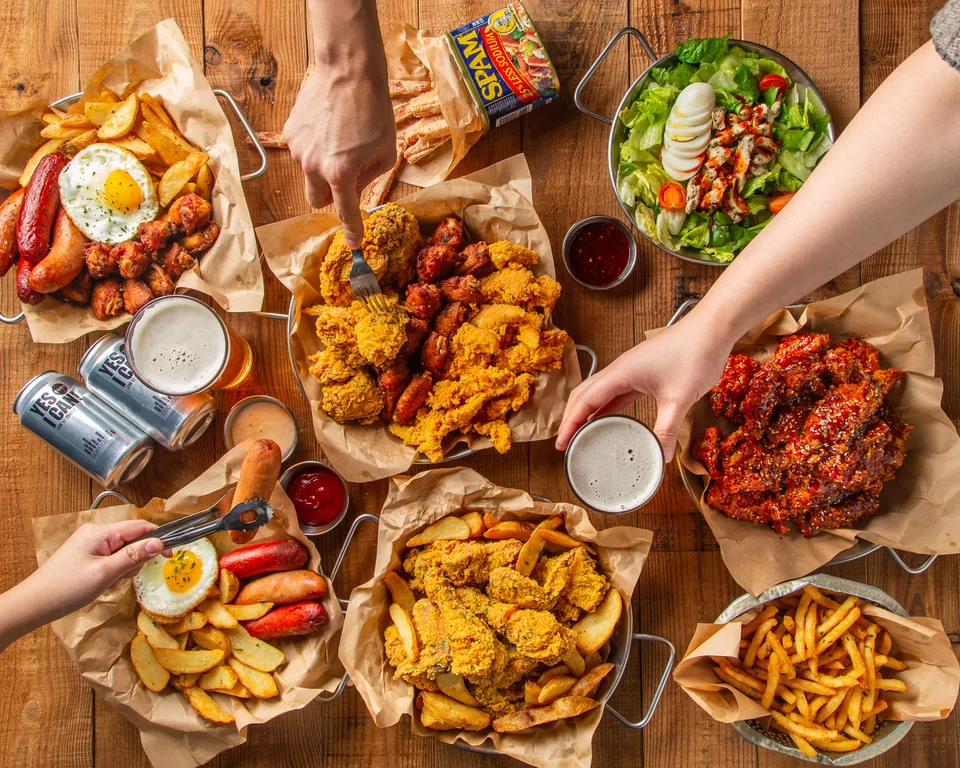
Katrina Group serves up fried chicken, craft beers to ride South Korean wave

AFTER a Covid-driven consolidation of brands in its stable, restaurant operator and hospitality player Katrina Group is refreshing its offerings with new concepts and cuisines – including taking a shot at South Korean food.
This comes amid changing consumer lifestyles and preferences post-pandemic, and is in line with the group’s strategy to rebrand and rejuvenate its portfolio, said chief executive officer Alan Goh.
Among Katrina Group’s new brands slated to open this year are South Korean craft beer and fried chicken restaurants Daily Beer and Daily Chicken.
The company had in December signed a master franchise agreement with DailyBeer Co, the owner of both brands, to run their restaurants in Singapore.
This followed a November agreement to establish a joint venture company that will handle these restaurants’ operations. Katrina Group will hold 80 per cent of the joint venture, while DailyBeer will hold the other 20 per cent, the company said in a bourse filing.
Catalist-listed Katrina Group is no stranger to juggling restaurant concepts that cut across various cuisines. It currently operates seven brands, including Japanese concepts Tomo Tokyo and Tomo Izakaya, Mexican establishment Sanchos and Vietnamese noodle house So Pho.
Branching out
But the group had only recently considered adding South Korean food to its repertoire.
Katrina Group had during the pandemic consolidated its nine brands then into five, and were seeking ways to branch out and refresh its portfolio.
“We want to continue to grow the business, so that we are able to maximise the reach of our resources and capabilities,” said Goh, who founded the group in 1995.
Goh noticed that the South Korean wave was “still riding high” during and after the pandemic, and became interested in delving into the space.
While there are many South Korean fried chicken restaurants across Singapore, he found that DailyBeer had an edge due to its focus on craft beer.
“DailyBeer targets young professionals… and it is sort of unique in the sense that, instead of the usual bottles, its craft beer comes on tap,” he pointed out. This, he added, would enable the group to reach out to a new target audience.
The popularity of the chain was also apparent in its number of outlets across South Korea, which stands at around 370, both directly owned and franchised. “We want to explore new brands that are successful and current,” noted Goh.
Under the agreement, Katrina Group plans to open at least one restaurant a year until 2028. The first is slated to be launched in mid-2024. While DailyBeer has hundreds of outlets in South Korea, the agreement with Katrina Group is the first time it has gone beyond its domestic market.
Leveraging partner strengths
Through this partnership, Goh also hopes Katrina Group would be able to leverage the expertise of DailyBeer’s operations, which he described as “lean” in terms of manpower.
This could be due to their procedures and processes, he explained. For instance, a kitchen that normally requires five to seven cook staff may be streamlined to three. “We want to learn from others, that’s why we (opt to) franchise,” said Goh. Streamlining operations is crucial as manpower remains one of the food and beverage (F&B) industry’s cost pressures amid falling sales. “Industrywide, we face these cost pressures from rental to utilities,” said Goh.
The group’s revenue has not yet returned to its pre-pandemic levels. Its nine-month revenue fell 4.5 per cent to S$44.6 million, from S$46.8 million, led by declines in the group F&B segment, which fell 10.9 per cent. This was attributed to the decrease in the number of outlets during the period under review, which, along with higher administrative costs, led to a net loss of S$925,000 for the first nine months of 2023.
However, Goh continues to see the the group’s F&B segment as its main growth driver, and hopes that the refreshed swathe of brands will be able to suit new consumer trends.
Hospitality shines
Meanwhile, Katrina Group’s hospitality segment, which comprises its serviced apartments ST Residences and co-living hotels ST Signature, is a bright spot for the group.
The segment raked in nine-month revenue of S$13.5 million, up 14.4 per cent from S$11.8 million in the corresponding year-ago period. The increase was largely due to the reopening of borders and contribution from the 20-unit ST Residences Balestier that was launched in August 2022.
Net profit from its hospitality segment stood at S$2.6 million for the first nine months of 2023, compared to a net loss of S$3.5 million from the F&B segment in the same period.
While the segment currently accounts for around 25 per cent of the group’s total revenue, Goh is positive that the return of tourists will boost the hospitality business.
“We hope to explore more opportunities with ST Signature… coupled with our high occupancy rate (of around 87 per cent) and returning Chinese tourists on the new visa, we’re very keen to expand,” he added.