Keeping watch on wearable technology

Will launch of the Apple Watch help put wearables in the hands of the masses this year?
Published Fri, Mar 13, 2015 · 09:50 PM

    Singapore

    THEY'VE done it with music players, smartphones and mobile payments, and they are pitched to do it again with wearable technology.

    Apple, which set the tech and consumer retail world abuzz this week with the launch of its Apple Watch, now has industry pundits asking a bigger question: Will 2015 be the year that wearables leap from being a buzzword among in-the-know techies to being products of mass consumption?

    Although typically associated with the flashy fitness bands hanging on the wrists of everyone from professional athletes to fashion-forward recreational joggers, a broader definition of wearables is any technological device that can be worn on your body to help you access the Internet, or information in general, in a more convenient way.

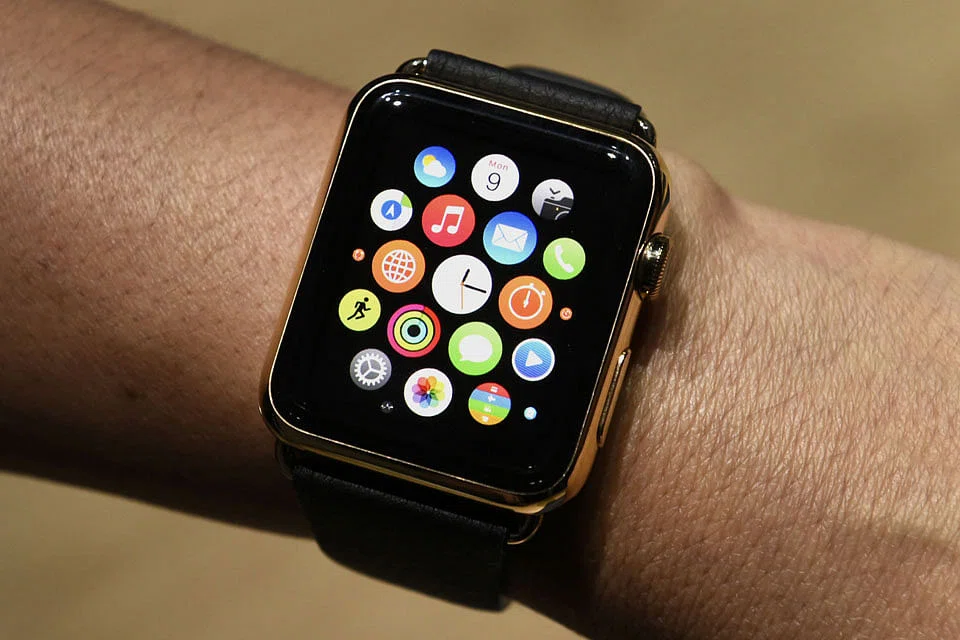
    Beside telling the time, the Apple Watch can track fitness, send text messages, access e-mail and make payments. The watches are priced between US$349 and US$10,000 and will be first launched in nine countries on April 24, and in Singapore later in the year.

    While the Cupertino-headquartered company isn't the first in this field - Kickstarter-fuelled American start-up Pebble is widely acknowledged to have set off the smartwatch trend in 2013 - Apple joins a steady succession of technology giants nudging their way into this "mass niche", say observers.

    Samsung earlier lent some heft to the movement with its Gear and Gear S smartwatches; Sony came on board with its SmartWatch 2, LG with its Watch Urbane, while Google brought more consistency to the game with Android Wear, a version of its mobile operating system adapted for use on smartwatches.

    China's Huawei Technologies also announced their Huawei Watch earlier this month, tipped to be a stainless steel smartwatch featuring a sapphire display, the same material used in high-end timepieces.

    Smartwatches aside, there are the fitness trackers, such as Nike's Fuelband and the Fitbit line of trackers, which triggered a stream of competitors in their wake; HTC's RE Vive headgear was developed with games publisher Valve and its RE Grip, designed with fitness brand Under Armour.

    Globally, 70 million units of smartwatches, fitness bands and other trackers are expected to be sold this year, up 38 per cent from 2014. While still "a lowly penetrated market", growth figures are likely to continue in the double-digits and hit 514 million units in 2020, said global research agency Gartner.

    So what exactly is helping to propel such technologies into the mainstream?

    Besides the assurance given by big-name tech players and retail brands, early adopters say its as much a matter of balancing form along with function.

    Valerie Cheng, chief creative officer of JWT, said: "It all comes down to how good a product is. I'm eager to get the Apple Watch even though I don't wear a watch. It just looks cool and I am intrigued enough."

    The advertising and marketing agency last year teamed up with women's advocacy group Aware to design the Guardian Angel pendant, a subtle fashion accessory that can trigger a call to one's phone during an uncomfortable moment or send an SOS text message and coordinates of one's location to a pre-designated number.

    The wearable-tech trend has also found its way onto the portfolios of notable fashion heavyweights: Diane von Furstenberg designed frames for the Google Glass last year; Ralph Lauren has come up with a bag with an internal LED light and a USB port; Rebecca Minkoff has Bluetooth-equipped bracelets that light up when your phone receives a text or call.

    Closer to home, however, innovations have largely focused on function over form.

    Besides the Guardian Angel pendant, the notable made-in-Singapore wearables include the Star 21 wristband by Oaxis, which incorporates an element of gamification into calorie-counting, and the Vibease, a smart personal massager. Another gadget is the T.Jacket by T.Ware, a vest that provides deep-touch pressure to wearers to stimulate a hug and is used by special-needs schools across the island.

    After three years of successfully marketing its Tinke health sensor in global markets, Singapore-based Zensorium will soon debut its latest smartwatch Being, which not only monitors your heart rate, activities and sleep cycles, but also keeps tabs on your mood.

    Juliana Chua, principal of Zensorium's business innovation group, said customers from the United States and Europe now outnumber their local buyers 500 to one.

    "One possible way to increase the market adoption in Singapore is to shift the pragmatic mindset that views wearables as a solution to a substantive problem.

    "And for that, we need word-of-mouth epidemics to take place."

    But the pragmatic mindset may not necessarily be a hindrance to mass adoption, as seen in the initiatives by organisations such as Singapore Power and even the Singapore Army to turn to wearables for heightened productivity.

    Launched a fortnight ago, Singapore Power's hands-free smart glasses are expected to help more than 2,000 field crew to view reference visuals and daily assignments on the go, and set up video conferences to seek real-time input from their supervisors.

    While there are few surveys specific to Singapore on the take-up rate of wearables here, Philip Lim, chief executive officer of Exploit Technologies (ETPL), A*Star's technology-transfer arm, predicts that there will be a shift from the "me" to the "we" this year.

    He said: "While most wearable devices have focused on personal use ... we are now moving towards the next wave of wearables that focus on connectivity for smart living, e-payments, social networking and gaming." He added that he expects more collaborations among players ranging from designers, manufacturers and retailers to hardware vendors, software platforms and end users to occur this year.

    ETPL's first showcase specific to wearables during the Start Up Asia conference last May attracted more than 400 visitors and gave 10 prototypes a debut platform; a second showcase held in November pulled the covers off another 11 prototypes in the fields of child care, stroke rehabilitation and assistance for the visually handicapped.

    Tech enthusiast and industry veteran Howard Lo is bullish about the mass adoption of smartwatches and fitness bands in Singapore, but is more reserved when it comes to "intrusive" wearable tech - those that can record audio and video that can invade another person's space and privacy.

    Deep dilemmas remain, for instance, over the ownership and use of information collected by such devices and their manufacturers, and the potential exposure to complications such as theft, identity fraud, discrimination and unwanted marketing.

    These issues are further multiplied when devices are used in work places such as financial institutions, government offices, banks and military institutions.

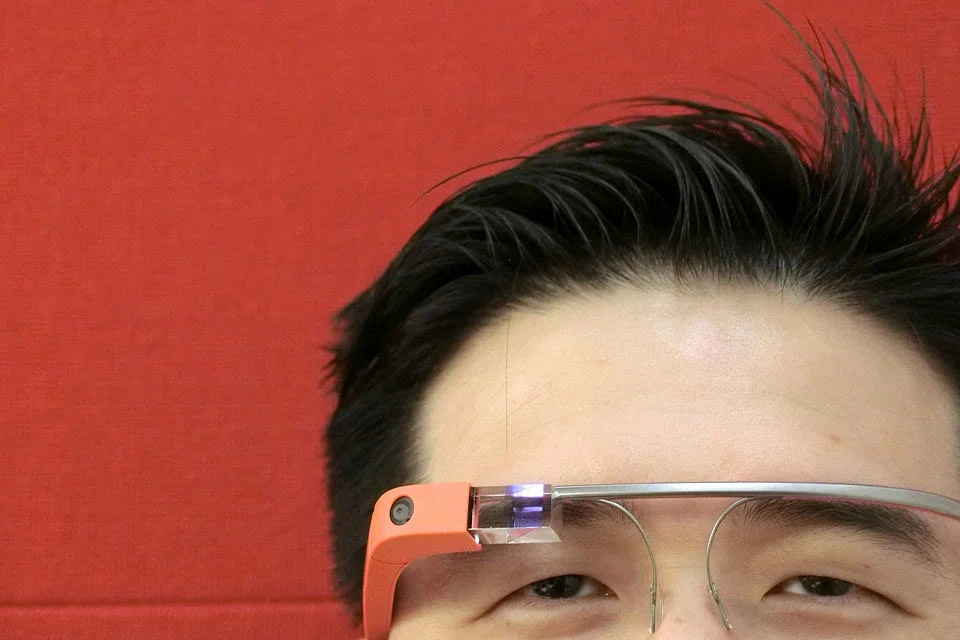
    Citing the discontinuation of the Google Glass two months ago, Mr Lo said "It was reaching for the moon and had features that were too bold for mainstream acceptance."

    Will the same be said of the Apple Watch eventually? Only time will tell - even if it has to be read through a shiny gold interface with scratch-proof sapphire glass.