

KidZania Singapore operator Sim Leisure dreams of creating Asia’s theme parks of tomorrow
Founder and executive chairman Sim Choo Kheng’s hopes are for the company to be an operator that is ‘not necessarily the biggest, but the most successful in terms of efficiency and profitability’

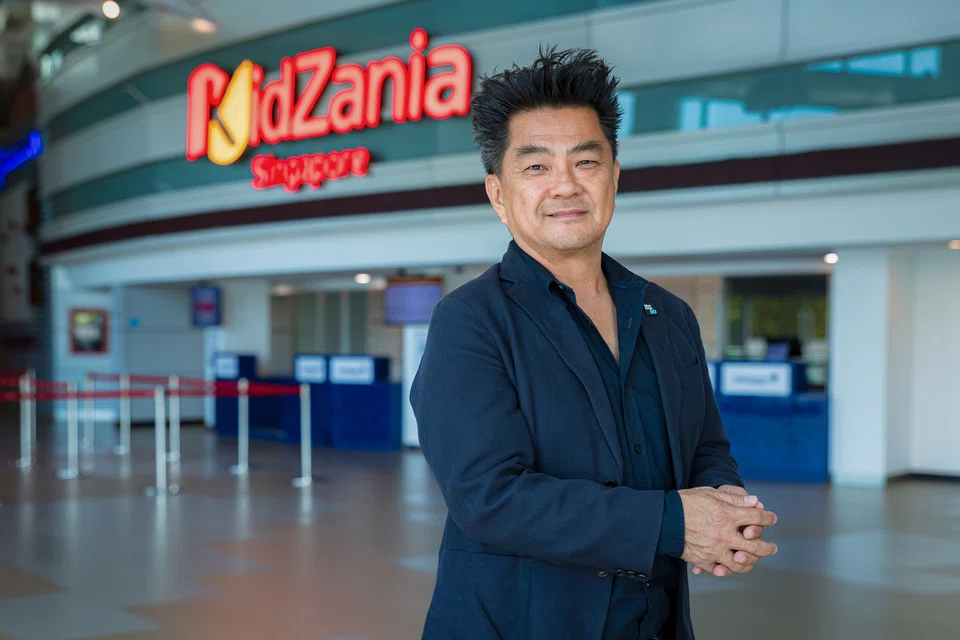
WHEN indoor edu-tainment park KidZania Kuala Lumpur was looking for a buyer during the Covid-19 pandemic, Sim Leisure Group’s founder and executive chairman Sim Choo Kheng saw an opportunity to turn the ailing attraction around.
He had long admired the career role-playing aspect of the KidZania brand owned by a Mexican company and franchised globally, and believed it was a good fit for Asian families, who are concerned about their children’s future.
The group paid RM3.8 million (S$1.2 million) for the entire stake in the loss-making operator, a company linked to Malaysian sovereign wealth fund Khazanah Nasional.
Since Sim Leisure reopened KidZania Kuala Lumpur in 2021, the park has received around 230,000 visitors a year – and has turned profitable, said Sim.
The Catalist-listed theme park operator is looking to replicate this success with KidZania Singapore, which reopened in May this year.
Sim Leisure acquired KidZania Singapore in 2023 from the liquidators of the operator, another Khazanah-linked entity, for RM380,000 – a steep discount to the RM165 million that the entity reportedly invested into the park.
The company later clarified in a bourse filing that for this acquisition, it had dealt only with the liquidators of the entity that had gone into receivership, and that Khazanah was not involved in the deal.
On the two KidZania parks, Sim told The Business Times: “I love the brand, and believed I could make it work as a business.”
This, he has done: The park in Sentosa is on its way to pulling similar visitor numbers as its Kuala Lumpur peer.
Sim noted that as the group was able to snap up these “bargains” during the pandemic, that period – generally a difficult one for tourism operators – was “not that bad” for Sim Leisure specifically. “Covid gave us a lot of opportunities… and also weakened our competition, as many operators went out of business,” he explained.
The group was in the red during the pandemic, but was able to stay afloat, courtesy of its cash reserves and profits from its theme park construction business.
In particular, its building operations in Dubai were considered an essential service, given that construction fuelled the economy there, said Sim. The group did not disclose revenue and profit for that segment in its bourse filings in 2020 and 2021.
In 2020, the group completed the expansion of Bollywood Parks Dubai within the multi-themed leisure resort, Dubai Parks and Resorts. The following year, it finished the expansion of the resort’s Motiongate park.
Two decades in Middle East
The group’s foray into the Middle East goes back to 2004, when it set up its first remote office in Bahrain to lead the building of two water parks.
Since then, Sim Leisure has contributed to many attractions and parks there. The parks in which it has had a hand include Yas Waterworld in Abu Dhabi, built by state-owned real estate developer Aldar Properties, as well as Ski Dubai and Snow Oman, both part of Emirati real estate conglomerate Majid Al Futtaim’s portfolio.
Sim noted that as countries in the Middle East modernised, the demand for entertainment options went up. This demand is now concentrated in Saudi Arabia, where tourism infrastructure is going on in earnest under the umbrella of Vision 2030, a government programme to diversify the country’s economy.
He added that among theme park construction groups vying for contracts in the Middle East, Sim Leisure is likely the only one from South-east Asia – putting the group in a good position to secure jobs because the group brings “Asian value” to the way it does business.
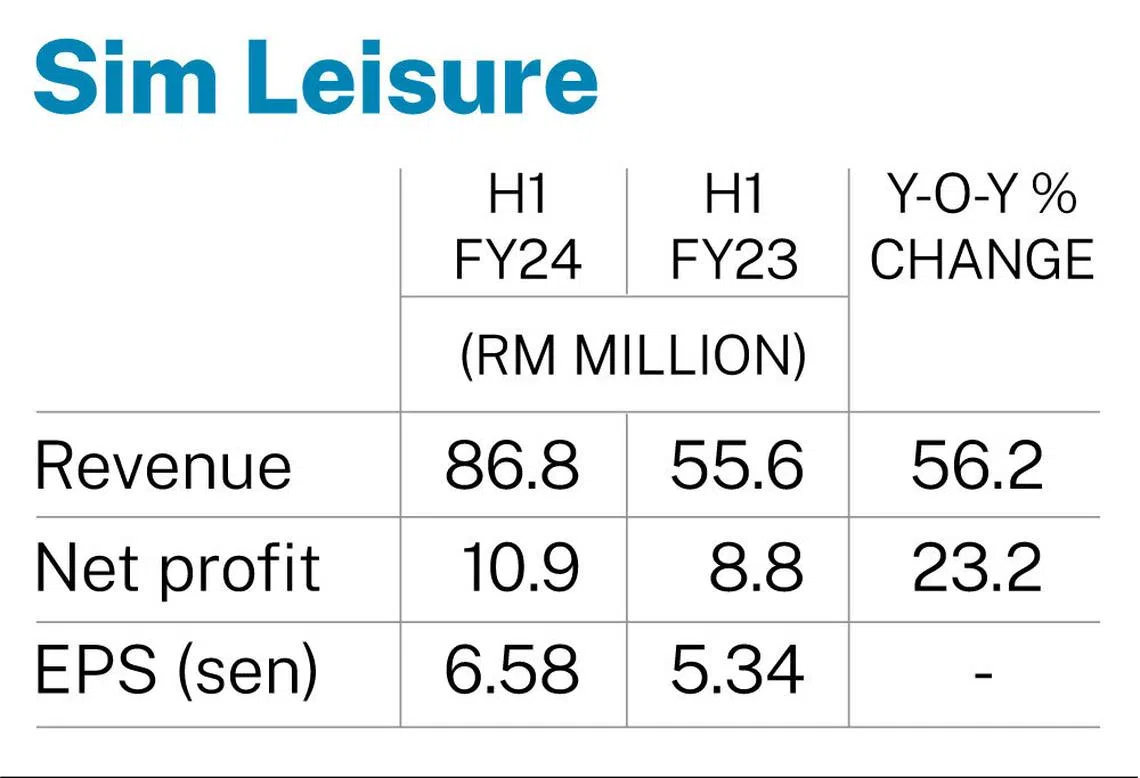
In its latest financial results, Sim Leisure posted a first-half net profit of RM10.9 million, up 23.2 per cent from RM8.8 million in the corresponding year-ago period. Revenue came in at RM86.8 million, up 56.2 per cent from RM55.6 million.
Topline growth was mainly driven by revenue from the theme attractions segment, which included work on theme park Six Flags Qiddiya in Saudi Arabia, and new and existing projects in the United Arab Emirates.
The great escape
While theme park construction is a burgeoning segment, Sim said that his passion lies in creating theme park concepts from the ground up. He has his sights set on becoming “the most successful leisure company in the world”.
He noted that theme parks are usually unprofitable – even popular ones that appear to have large crowds. This is because they require huge investments to build up, and revenue from admissions and amenities within the parks may not be enough to cover the sum, he said.
His hopes, therefore, is for Sim Leisure to be a theme park operator that is “not necessarily the biggest, but the most successful in terms of efficiency and profitability”.
Alongside the two KidZanias, the group also has Escape, its original outdoor adventure park brand.
In Sim’s view, the new generations’ preference for play is moving away from the more common rollercoaster-fronted theme parks, and into new forms that include outdoor play – think high elements, ziplines and water features.
“I want to create… a park based on how children used to play,” he said, referring to activities such as tree-climbing and swimming in rivers.
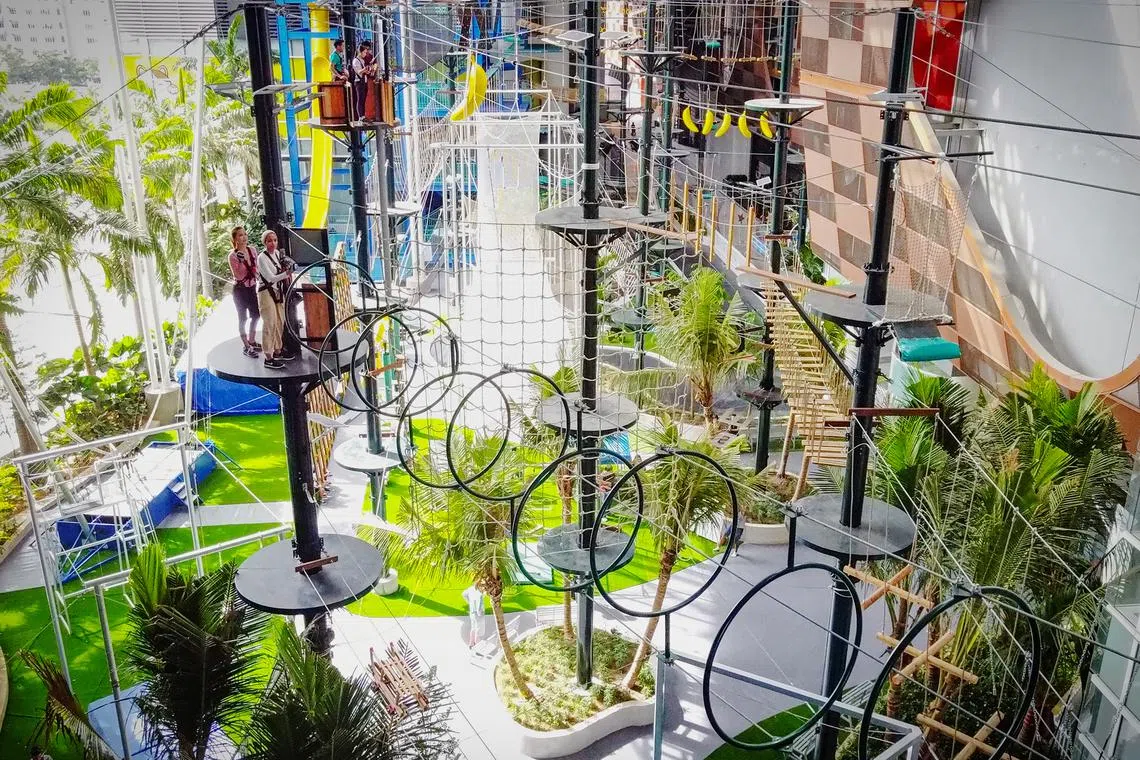
Interest was low when Escape Penang opened in 2012, but visitors have since warmed up to it; the park with more than 30 games and rides now pulls in 230,000 visitors a year. The brand has expanded across Malaysia, including its outlets in Petaling Jaya and Ipoh.
“We are also looking at franchising (Escape) in South-east Asia and China,” he said.
The focus on these markets come as they are likely to have heightened demand for such leisure parks, due to their large populations with a growing budget for entertainment.
“The percentage of our disposable income spent on leisure in this part of the world is still very low. (But) we know it is going to grow – not only in gross domestic product growth (terms)… but the percentage of disposable income spent on leisure will grow,” he said.
Sim Leisure has also taken the Escape concept into malls for those who prefer to stay indoors. Escape Johor Bahru, for instance, is in Paradigm Mall, and offers activities such as a slingshot and climbing elements.
Delving into indoor entertainment, Sim Leisure is also banking on virtual reality (VR) to become the next big thing. In this vein, the company was granted master licensing rights from Australian company Haven XR to develop VR theatres in both China and Asean.
One example Sim raised was for the experience to simulate an outdoor rollercoaster – which can be developed at a fraction of the space and cost.
He believes that it will be popular among the current generation of children, who have grown up around technology; they are familiar with on-screen entertainment, “so they are so drawn to it, it’s natural”, he noted.
Shares of Sim Leisure Group closed up 8.1 per cent at S$0.80 on Friday (Dec 13), up 55.3 per cent in the year to date.
TRENDING NOW

First Resources blames El Nino, outside fires for Kalimantan hotspots amid haze scrutiny

High Court rules against Julius Baer’s Singapore trust arm in US$50 million family trust dispute

Singapore key exports jump by higher-than-expected 68.4% in September, led by non-electronics

MSCI proposes downgrading Indonesia to standalone market status

