

Marks & Spencer to exit the Philippines’ shifting retail market
The country has drawn global retailers seeking to tap into its young, consumption-driven population
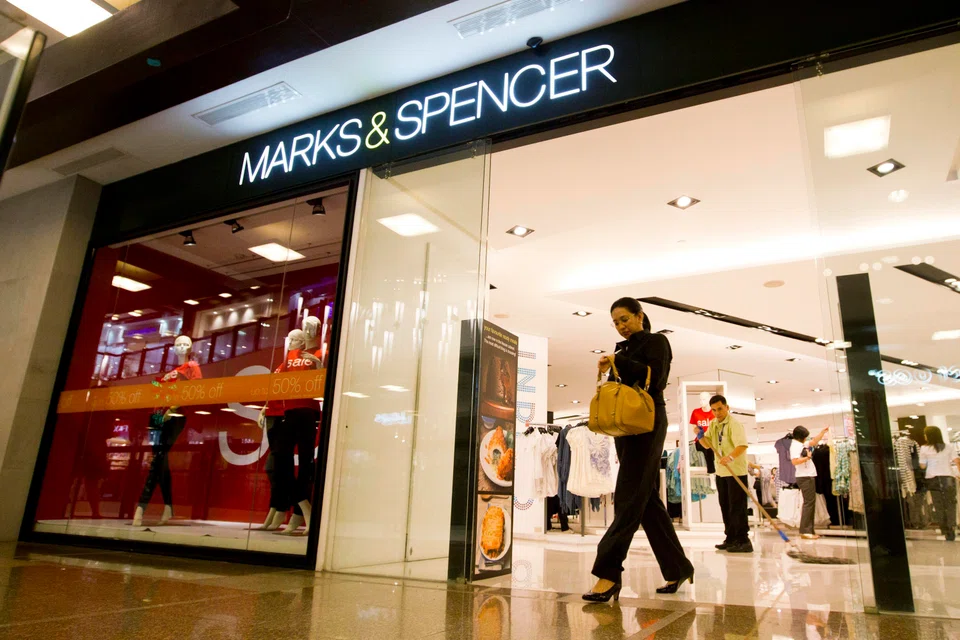
[MANILA] Iconic British retailer Marks & Spencer will leave the Philippines after four decades as changing consumer preferences reshape the retail landscape, its local franchise holder said.
The move ends a partnership of almost 40 years between Stores Specialists Incorporated (SSI) and Marks & Spencer, with SSI saying in a statement that the final day of store operations will be May 2.
Marks & Spencer’s exit reflects the shifting dynamics of the Philippine retail market, which remains attractive to international brands but is becoming increasingly competitive.
As one of South-east Asia’s fastest-growing economies in recent years, the country has drawn global retailers seeking to tap into its young, consumption-driven population. At the same time, expanding homegrown labels and the rise of digital platforms are reshaping buying habits, prompting some foreign brands to reassess their presence.
Procter & Gamble said late last year that it would stop producing and selling some products, while Citigroup exited its consumer business in 2022 as part of a global overhaul.
Meanwhile, Tesla entered the Philippine market with its first store in 2024, followed by Pop Mart’s first permanent outlet in 2025.

SSI, a wholly owned subsidiary of the Philippines’ largest speciality retailer SSI Group, said that it is now focusing on brands that better match the current market as consumer preferences shift. “Retail is constantly transforming,” it said. “Change is inevitable, tastes evolve, and therefore so should we.”
The company said that it will work closely with employees, partners, and stakeholders as it winds down Marks & Spencer’s operations in the Philippines. BLOOMBERG
Decoding Asia newsletter: your guide to navigating Asia in a new global order. Sign up here to get Decoding Asia newsletter. Delivered to your inbox. Free.
Share with us your feedback on BT's products and services
TRENDING NOW

DBS, OCBC, UOB rout lops billions off STI as inflation, rate concerns spook investors

Grab CEO’s wife Chloe Tong on life with Anthony Tan and finding her purpose

OCBC sheds S$8 billion in value as shares close nearly 6% down; analysts cautious on banks

Deal between tycoon friends sparks scrutiny of Philippine power sector

