

McDonald's, a rare holdout in Russia, has been mum on its plans
 Add BT as a preferred source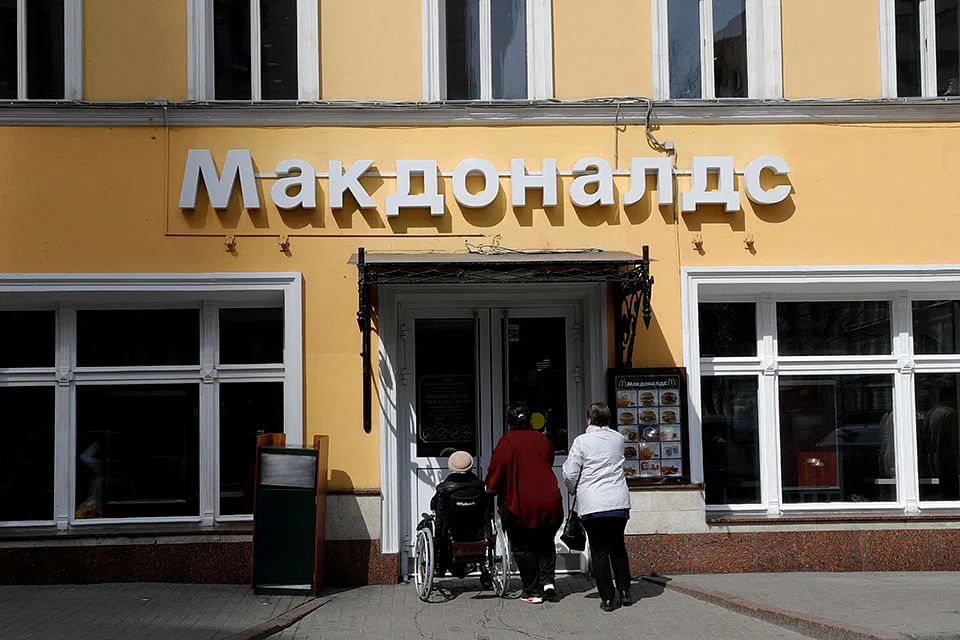
DeeperDive is a beta AI feature. Refer to full articles for the facts.
[CHICAGO] McDonald's large presence in Russia and Ukraine, where the company has close to 1,000 locations, is creating a thorny situation for the fast-food operator with no easy solutions.
As European and US companies increasingly suspend operations in the region after Russia's invasion and stepped-up authoritarian measures, McDonald's has yet to comment or lay out its plans.
The majority of its Russian locations are owned and operated directly by the company, as opposed to franchisees, making them particularly lucrative. While only about 2 per cent of all McDonald's restaurants are in Russia or Ukraine, they account for about 9 per cent of global revenue.
"It's certainly not great for McDonald's," said Kevin McCarthy, senior vice president at Neuberger Berman, which owns 2.5 million shares of McDonald's. "They do have this owned exposure there."
The risks McDonald's faces are expansive, ranging from operating in a war zone to a public-relations backlash for failing to withdraw from a country that is killing civilians.
US and European sanctions on Russia, as well as President Vladimir Putin's retaliatory measures, have also rapidly made doing business more complicated.
Navigate Asia in
a new global order
Get the insights delivered to your inbox.
Higher commodity prices sparked by the conflict are creating yet another headache on top of pre-existing inflationary pressures.
It's not clear whether the sanctions are affecting McDonald's operations. The company hasn't said whether its restaurants in Russia and Ukraine are open and operating.
Corporate filings show 84 per cent of the 847 McDonald's locations in Russia are company-owned, along with all of its 108 restaurants in Ukraine.
Cowen analyst Andrew Charles said last week that the exposure to Russia and Ukraine is "immaterial" to McDonald's because despite the large chunk of revenue, the countries account for less than 3 per cent of operating profit.
That amounts to less than US$311 million of the US$10.4 billion in operating profit that McDonald's reported last year.
"It would be really hard for them to stop serving customers right now, especially in Russia, and then start back up again assuming there's a cease-fire and all of this settles down," BTIG analyst Peter Saleh said. "There would be some cost, if you shut down, you have to lay off all your employees," he said. "And then to restart you have to rehire all those employees and train people. For sure, you would have some issues with hiring and staffing."
There could also be public-relations problems, as well, if the company is viewed as abandoning the market and then trying to come back, he said.
If McDonald's were to take a step back from Russia, it would mark a historic reversal for the company that's become a face of globalised business.
With its 1990 arrival in Moscow, which was then part of the Soviet Union, the company became a powerful symbol in the ascent of capitalism over communism. A reported 30,000 people lined up at the restaurant on its first day of operations.
The company could opt for a similar strategy as Starbucks, which said last week it will donate royalties from its 130 licenced cafes in Russia to Ukrainian relief efforts.
Rival Restaurant Brands International's Burger King, which has about 800 franchised restaurants in Russia, and Yum! Brands, whose KFC and Pizza Hut locations in Russia are also mostly franchised, have each released statements condemning the attacks.
Kiara Sotelo, a Chicago-based McDonald's worker and a leader with the "Fight for US$15" movement to raise the minimum wage, criticised the company's inaction.
"It's shameful that McDonald's is putting profits ahead of taking a stand for democracy in Ukraine and around the world," Sotelo said in a statement. BLOOMBERG
Decoding Asia newsletter: your guide to navigating Asia in a new global order. Sign up here to get Decoding Asia newsletter. Delivered to your inbox. Free.
Share with us your feedback on BT's products and services
TRENDING NOW
Ministry of Home Affairs Permanent Secretary Pang Kin Keong to retire
Shelving S$5 billion office redevelopment plan proved ‘wise’ as geopolitical risks mount: OCBC chairman

Richard Eu on how core values, customers keep Singapore’s TCM chain Eu Yan Sang relevant

China pips the US if Asean is forced to choose, but analysts warn against reading it like a sports result

