

Mulberry banks on UK heritage even as Brexit vote nudges up costs
 Add BT as a preferred source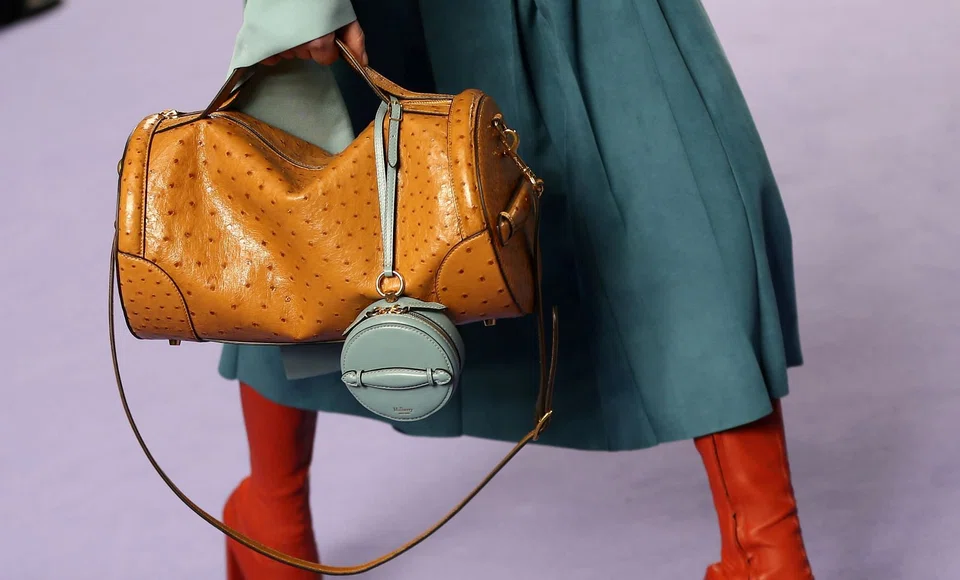
DeeperDive is a beta AI feature. Refer to full articles for the facts.
[LONDON] Handbag maker Mulberry is committed to manufacturing in Britain even as it grapples with higher leather import costs since the Brexit vote, and the company could even consider opening another factory in England, its chief executive said.
Mulberry produces about 55 per cent of its leather goods at two manufacturing plants in the west of England, and Britain remains its biggest market even as it expands overseas.
Raw material costs - such as leather from Italian tanneries - were now higher as a result of Britain's 2016 decision to leave the European Union after the pound weakened against other currencies, CEO Thierry Andretta told Reuters in an interview.
"Every supplier we have is related to the euro or the U.S. dollar," Mr Andretta said. "This is something that is always a challenge for us because we are still committed to having two-thirds of our collection at (up to) 995 pounds, but it is becoming challenging." Under Mr Andretta, who joined in 2015 after a string of profit warnings at the firm, Mulberry reversed an ill-fated attempt to go more upmarket. Around 75 per cent of its leather goods now cost just under 1,000 pounds (S$1,841), or less.
In spite of a tougher balancing act on costs, Mulberry was "fully, fully committed" to Britain, Mr Andretta added, speaking on Monday.
The label - whose bags have been sported by celebrities including Prince Harry's fiancee, actress Meghan Markle - trades off its UK heritage and the skills of its craftsmen.
Navigate Asia in
a new global order
Get the insights delivered to your inbox.
"We want to continue this and I hope one day when we grow perhaps we will even consider opening another factory," said Mr Andretta, who used to run Italian fine jewellers Buccellati and has worked at labels like LVMH's Celine.
Manufacturing bases outside Britain include Italy and Spain.
The brand is expanding sales overseas, branching into Japan with a partner.
Mulberry's like-for-like retail sales, which compares stores that have been trading for a year or more, were down 1 per cent in the United Kingdom in the six months to end-September and fell 3 per cent overseas in that period. But international revenue growth sped up thereafter.
The label, majority-owned by Singapore billionaires Christina Ong and Ong Beng Seng, will roll out a China-based distribution centre later in 2018 to help it expand online shopping and speed up deliveries, Mr Andretta said.
Revived spending from Chinese consumers, who account for around a third of luxury goods purchases worldwide, fuelled strong revenue growth at industry leaders like Louis Vuitton owner LVMH in 2017.
Mulberry is also trying to capture a younger clientele with updated designs and strategies. From February, its catwalk collections will be instantly available, rather than months later as is usual.
New designs like the Amberley bag and a revamped version of the brand's classic Bayswater are now among bestsellers, Mr Andretta said.
"We are growing strongly with the digital generation," Mr Andretta said. Sales of older bag models were slowing slightly, offset by growth in newer versions, he added. "The younger consumer is moving to the modern version of Mulberry."
REUTERS
Share with us your feedback on BT's products and services
TRENDING NOW

From 1MDB to ‘corporate mafia’: Is Malaysia facing a new governance test?

Higher costs, lower returns: Why are Singaporeans still betting on real estate?

South-east Asian markets account for 8.8% of global capital inflows from 2021 to 2024: report

Richard Eu on how core values, customers keep Singapore’s TCM chain Eu Yan Sang relevant

