

Nestle CEO assures weight-loss drugs no threat to coffee business
 Add BT as a preferred source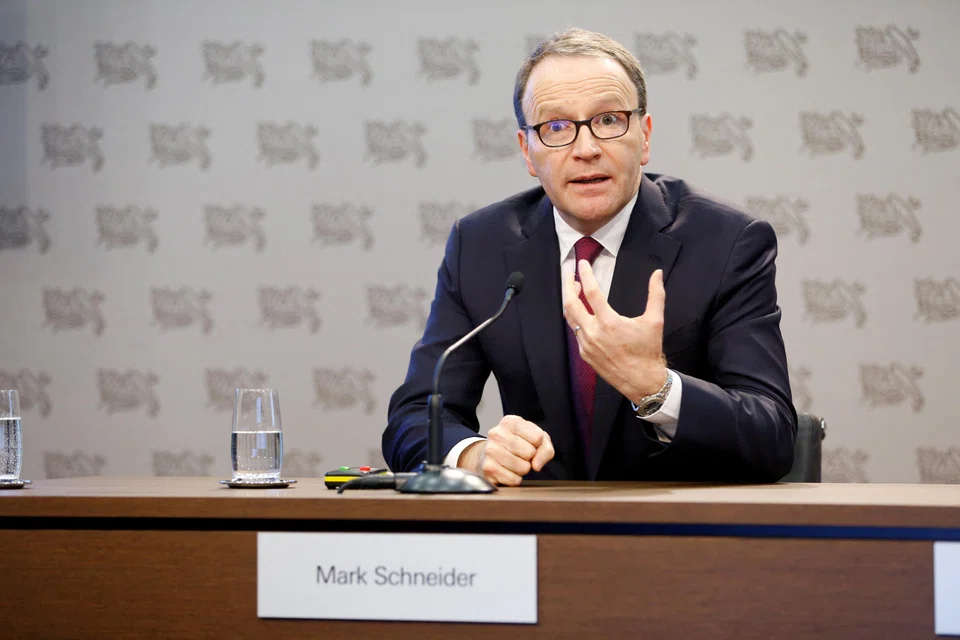
DeeperDive is a beta AI feature. Refer to full articles for the facts.
NESTLE sees no threat to its huge coffee business from the rising popularity of weight-loss drugs like Eli Lilly’s Zepbound and Novo Nordisk’s Wegovy, chief executive Mark Schneider said on Wednesday (Dec 20).
Instead the executive sees opportunities for Nestle to expand its health science business, providing protein bars, powders and drinks for people taking the drugs, known as GLP-1 agonists.
“To dispel the myths, we haven’t seen evidence that GLP-1 patients have a reduced appetite for coffee,” Schneider wrote in a post on LinkedIn.
Coffee is critical for Nestle, the world’s biggest food company which includes Nescafe Nespresso capsule coffees among its brands.
The category makes up around 20 per cent of the Swiss company’s annual sales which last year reached 94.4 billion Swiss francs (S$145.4 billion).
The popularity of the new drugs has prompted concerns in the consumer and retail industry over whether food and drink sales will be impacted.
Navigate Asia in
a new global order
Get the insights delivered to your inbox.
The drugs, originally designed to treat type 2 diabetes, have been shown to reduce food cravings and cause the stomach to empty more slowly.
Patients taking the drugs could lose lean muscle mass, a situation which could be countered by increasing protein intake and exercise, Schneider said.
“While GLP-1 patients may consume less sugar-laden or fatty foods, they will need to meet their nutritional needs through other foods, beverages, and supplements,” said Schneider.
SEE ALSO


Nestle was already seeing increasing demand for protein powders, bars and drinks, he said, while vitamin and nutritional supplements had potential.
“Within Nestle Health Science alone, we already have more than 1.5 billion Swiss francs of revenue coming from products that provide nutritional benefits suitable to GLP-1 patients,” Schneider said.
Although the business was mainly focussed on North America, where GLP-1 adoption was highest, Nestle was examining a broader geographical rollout of its products, Schneider said.
New products would also be launched next year to exploit the trend, Schneider said, without giving details. REUTERS
Decoding Asia newsletter: your guide to navigating Asia in a new global order. Sign up here to get Decoding Asia newsletter. Delivered to your inbox. Free.
Share with us your feedback on BT's products and services
TRENDING NOW

Autobahn Rent A Car directors declared bankrupt over S$50 million each owed to DBS

Higher costs, lower returns: Why are Singaporeans still betting on real estate?

Richard Eu on how core values, customers keep Singapore’s TCM chain Eu Yan Sang relevant

Loyang Valley sold for S$880 million to SingHaiyi-led consortium

