Pop Mart’s US sales fall 45% as it struggles to find next Labubu
Still, the cooldown matters because America has become the toymaker’s most important overseas market
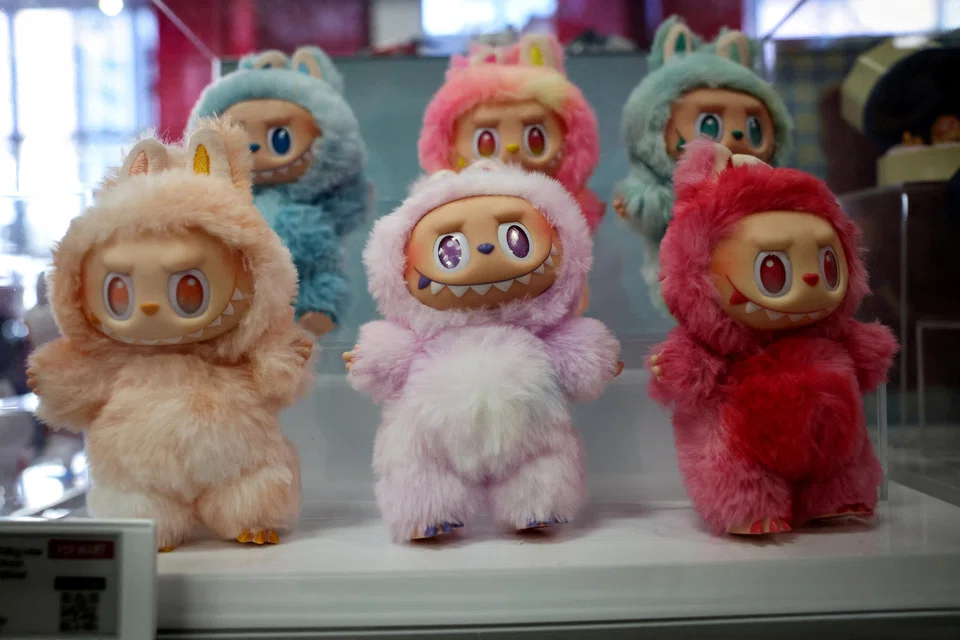
POP Mart International Group’s overseas growth engine is showing signs of strain, with a sharp slowdown in US sales underscoring the challenges facing the Chinese toymaker in its efforts to diversify beyond Labubu.
US sales fell 45 per cent year on year in March, reversing gains of 41 per cent in February and 130 per cent in January, according to Bloomberg Second Measure, which tracks credit and debit card transactions.
Card-spending data captures only a slice of total sales – it excludes cash, gift cards, and many third-party retail transactions, and can swing based on promotional campaigns rather than underlying demand. Part of the March reversal probably reflects that: Pop Mart unveiled more products and promotions in the first two months of 2026 than it did in the third.
Pop Mart declined to comment.
Still, the cooldown matters because the US has become Pop Mart’s most important overseas market. The region generated 18 per cent of Pop Mart’s revenue last year, around 6.8 billion yuan (S$1.3 billion) up from just 5.5 per cent the year before.
The breakout success was almost entirely thanks to Labubu, the snaggle-toothed monster plush whose bag-charm-sized version became a fashion accessory from Sydney to Los Angeles. The toy went viral in 2025, helping push Pop Mart’s revenue past 37 billion yuan and double its share price as the frenzy spread globally.
But the sales data indicates waning consumer appetite which, if it continues, may be a drag on Pop Mart’s overall growth, according to Melinda Hu, a consumer analyst at Sanford C Bernstein. She forecast a 16 per cent growth in revenue in 2026, lower than the “at least 20 per cent growth” Pop Mart CEO Wang Ning guided at the company’s earnings briefing last month.
The weak trajectory in the US contrasts with its performance in China, where growth has slowed but the company’s diverse range of character toys has underpinned relatively steady shopper interest. Pop Mart’s footprint has also helped at home.
It’s got 445 stores across mainland China alongside an extensive vending-machine network, compared with 64 in North America, 42 of which were added last year. The company has previously set a target of reaching more than 100 by this year-end, including plans for flagship stores at Times Square and Fifth Avenue in New York in the fourth quarter.
SEE ALSO
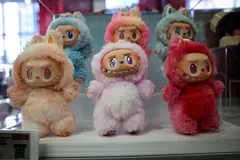

“It would require a second and third scalable IP beyond Labubu,” alongside better offline productivity and more localised content and collaborations to reignite US sales, said Hu. The US remains constrained by a shallower fan base for non-Labubu characters, and it’s difficult to convert casual interest into repeat collectors, she said.
Despite the March slowdown, Bernstein still expects North America to outpace the rest of Pop Mart’s international markets in 2026, projecting a revenue growth of 24 per cent on the back of store expansion, product launches and marketing investment in the second half.
Whereas Twinkle Twinkle, Skullpanda and Crybaby can still draw crowds and command premiums on resale platforms in China, the characters have not won over Western consumers in the same way.
Pop Mart’s shares listed in Hong Kong have tumbled about 28 per cent since the company reported full-year earnings in late March. BLOOMBERG
Decoding Asia newsletter: your guide to navigating Asia in a new global order. Sign up here to get Decoding Asia newsletter. Delivered to your inbox. Free.
Share with us your feedback on BT's products and services